
Lytenava Injection Uses, Dosage & Side Effects
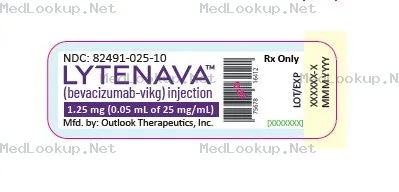
These highlights do not include all the information needed to use LYTENAVA safely and effectively. See full prescribing information for LYTENAVA. LYTENAVA™ ( bevacizumab-vikg) injection, for intravitreal use Initial U.S. Approval…
Uses and indications
LYTENAVA is indicated for the treatment of patients with neovascular (wet) age-related macular degeneration (nAMD).
Contraindications
- Ocular or periocular infections (4.1)
- Active intraocular inflammation (4.2)
- Hypersensitivity (4.3) 4.1 Ocular or Periocular Infections
LYTENAVA is contraindicated in patients with ocular or periocular infections. 4.2 Active Intraocular Inflammation
LYTENAVA is contraindicated in patients with active intraocular inflammation. 4.3 Hypersensitivity
LYTENAVA is contraindicated in patients with known hypersensitivity to bevacizumab products or any of the ingredients in LYTENAVA. Hypersensitivity reactions may manifest as severe intraocular inflammation.
Side effects
The following adverse reactions are discussed in greater detail in other sections of the label:
- Hypersensitivity [see Contraindications (4)]
- Endophthalmitis and Retinal Detachments [see Warnings and Precautions (5.1)]
- Increases in Intraocular Pressure [see Warnings and Precautions (5.2)]
- Thromboembolic Events [see Warnings and Precautions (5.3)]
Precautions
• Endophthalmitis and retinal detachments may occur following intravitreal injections. Patients should be instructed to report any symptoms suggestive of endophthalmitis or retinal detachment without delay to permit prompt and appropriate management (5.1).
• Increases in intraocular pressure have been seen within 60 minutes of an intravitreal injection (5.2).
• There is a potential risk of arterial thromboembolic events (ATEs) associated with VEGF inhibition (5.3). 5.1 Endophthalmitis and Retinal Detachments
Intravitreal injections have been associated with endophthalmitis and retinal detachments. Proper aseptic injection technique should always be used when administering LYTENAVA. In addition, patients should be monitored following the injection to permit early treatment should an infection occur [
see Dosage and Administration
(2.3)
and Patient Counseling Information
(17)]. 5.2 Increases in Intraocular Pressure
Increases in intraocular pressure have been noted post-injection (up to 60 minutes) while being treated with LYTENAVA. Monitor intraocular pressure prior to and following intravitreal injection with LYTENAVA and manage appropriately [
see Dosage and Administration
(2.4)]. 5.3 Thromboembolic Events
Although there was a low rate of arterial thromboembolic events (ATEs) observed in the LYTENAVA clinical trials, there is a potential risk of ATEs following intravitreal use of VEGF inhibitors. ATEs are defined as nonfatal stroke, nonfatal myocardial infarction, or vascular death (including deaths of unknown cause).
Dosage
Injection: 1.25 mg (0.05 mL of 25 mg/mL) colorless to light brown, opalescent solution for intravitreal injection in a single-dose vial.