
Cinryze Injection, Powder, Lyophilized, For Solution
These highlights do not include all the information needed to use CINRYZE® safely and effectively. See full prescribing information for CINRYZE. CINRYZE (C1 esterase inhibitor [human]) for intravenous use, freeze-dried powder for…
Uses and indications
CINRYZE is a C1 esterase inhibitor indicated for routine prophylaxis against angioedema attacks in adults, adolescents, and pediatric patients (6 years old and above) with Hereditary Angioedema (HAE).
Contraindications
CINRYZE is contraindicated in patients who have manifested life-threatening immediate hypersensitivity reactions, including anaphylaxis, to the product.
Side effects
The most common adverse reactions (≥5%) observed were headache, nausea, rash, vomiting, and fever.
Precautions
• Hypersensitivity reactions may occur. Have epinephrine immediately available for treatment of acute severe hypersensitivity reaction (5.1)
• Serious arterial and venous thromboembolic (TE) events have been reported at the recommended dose of C1 esterase inhibitor (human) products, including CINRYZE, following administration in patients with HAE. Risk factors may include presence of an indwelling venous catheter/access device, prior history of thrombosis, underlying atherosclerosis, use of oral contraceptives, certain androgens, morbid obesity, and immobility. Benefits of CINRYZE for routine prophylaxis of HAE attacks should be weighed against the risks of TE events in patients with underlying risk factors. Monitor patients with known risk factors for TE events during and after CINRYZE administration. TE events have been reported following administration of a C1 esterase inhibitor (human) product when used off-label at higher than labeled doses. (5.2)
• CINRYZE is made from human plasma and may contain infectious agents e.g., viruses and, theoretically, the Creutzfeldt-Jakob disease agent. (5.3) 5.1 Hypersensitivity Reactions
Severe hypersensitivity reactions may occur. The signs and symptoms of hypersensitivity reactions may include the appearance of hives, urticaria, tightness of the chest, wheezing, hypotension and/or anaphylaxis experienced during or after injection of CINRYZE.
Consider treatment methods carefully because hypersensitivity reactions may have symptoms similar to HAE attacks.
In case of hypersensitivity, discontinue CINRYZE infusion and institute appropriate treatment. Have epinephrine immediately available for treatment of acute severe hypersensitivity reaction.
[see
Patient Counseling Information (17)]. 5.2 Thromboembolic Events
Serious arterial and venous thromboembolic (TE) events have been reported at the recommended dose of C1 esterase inhibitor (human) products, including CINRYZE, following administration in patients with HAE. Risk factors may include presence of an indwelling venous catheter/access device, prior history of thrombosis, underlying atherosclerosis, use of oral contraceptives, certain androgens, morbid obesity, and immobility. Benefits of CINRYZE for routine prophylaxis of HAE attacks should be weighed against the risks of TE events in patients with underlying risk factors. Monitor patients with known risk factors for TE events during and after CINRYZE administration.
TE events have been reported following administration of a C1 esterase inhibitor (human) product when used off-label at higher than labeled doses1.
In an open-label trial further investigating the use of CINRYZE for prevention (n=146) of HAE attacks, 5 serious TE events (including myocardial infarction, deep vein thrombosis, pulmonary embolism and 2 events of cerebrovascular accident) occurred. Subjects had underlying risk factors for TE events.
In the post-approval open-label study (n=20) there were no systemic TE events in subjects who received CINRYZE up to 2,500 U (not exceeding 100 U/kg) every 3 or 4 days for up to 12 months. One subject developed a blood clot in an intravenous central catheter, which was treated without systemic complication.
[see Adverse Reactions (6.1)]. 5.3 Transmissible Infectious Agents
Because CINRYZE is made from human blood, it may carry a risk of transmitting infectious agents, e.g., viruses, and, theoretically, the Creutzfeldt-Jakob disease (CJD) agent
[see Description (11)].
ALL infections thought by a physician possibly to have been transmitted by CINRYZE should be reported by the physician or other healthcare provider to Takeda Pharmaceuticals U.S.A., Inc. [1-877-TAKEDA-7 (1-877-825-3327)]. The physician should discuss the risks and benefits of this product with the patient, before prescribing or administering it to the patient.
[see
Patient Counseling Information (17)]
Dosage
For intravenous use only.
- CINRYZE (Freeze-Dried powder for Reconstitution) is a lyophilized preparation available in a single-dose vial that contains 500 IU human C1 esterase inhibitor.
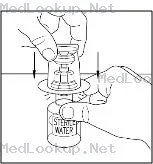
- Each vial must be reconstituted with 5 mL of Sterile Water for Injection, USP (diluent).
- One reconstituted vial must be used to make a single, 500 IU, dose. Two reconstituted vials must be used to make a single, 1,000 IU dose.