
Budesonide Capsule, Coated Pellets
These highlights do not include all the information needed to use BUDESONIDE DELAYED-RELEASE CAPSULES safely and effectively. See full prescribing information for BUDESONIDE DELAYED-RELEASE CAPSULES. BUDESONIDE delayed-release ca…
Uses and indications
Budesonide delayed-release capsules are corticosteroid indicated for: • Treatment of mild to moderate active Crohn's disease involving the ileum and/or the ascending colon, in patients 8 years and older. (1.1)
• Maintenance of clinical remission of mild to moderate Crohn's disease involving the ileum and/or the ascending colon for up to 3 months in adults. (1.2) 1.1 Treatment of Mild to Moderate Active Crohn’s Disease
Budesonide delayed-release capsules are indicated for the treatment of mild to moderate active Crohn's disease involving the ileum and/or the ascending colon in patients 8 years of age and older. 1.2 Maintenance of Clinical Remission of Mild to Moderate Crohn’s Disease
Budesonide delayed-release capsules are indicated for the maintenance of clinical remission of mild to moderate Crohn's disease involving the ileum and/or the ascending colon for up to 3 months in adults.
Contraindications
Hypersensitivity to budesonide or any of the ingredients in budesonide delayed-release capsules. (4) Budesonide delayed-release capsules are contraindicated in patients with hypersensitivity to budesonide or any of the ingredients of budesonide delayed-release capsules. Serious hypersensitivity reactions, including anaphylaxis have occurred
[see Adverse Reactions (6.2)].
Side effects
Most common adverse reactions (≥ 5%) in adults are: headache, respiratory infection, nausea, back pain, dyspepsia, dizziness, abdominal pain, flatulence, vomiting, fatigue and pain. (6.1)
To report SUSPECTED ADVERSE REACTIONS, contact Northstar Rx LLC at 1-800-206-7821 or FDA at 1-800-FDA-1088 or www.fda.gov/medwatch. The following clinically significant adverse reactions are described elsewhere in labeling: • Hypercorticism and adrenal axis suppression
[see Warnings and Precautions
(5.1)]
• Symptoms of steroid withdrawal in those patients transferred from other systemic corticosteroids [see Warnings and Precautions (5.2)]
• Immunosuppression and increased risk of infection [see Warnings and Precautions (5.3)]
• Kaposi's sarcoma [see Warnings and Precautions (5.4)]
• Other corticosteroid effects
[see Warnings and Precautions (5.5)] 6.1 Clinical Trials Experience
Because clinical trials are conducted under widely varying conditions, adverse reaction rates observed in the clinical trials of a drug cannot be directly compared to rates in the clinical trials of another drug and may not reflect the rates observed in practice.
Adults
The data described below reflect exposure to budesonide delayed-release capsules in 520 patients with Crohn's disease, including 520 exposed to 9 mg per day (total daily dose) for 8 weeks and 145 exposed to 6 mg per day for one year in placebo controlled clinical trials. Of the 520 patients, 38% were males and the age range was 17 to 74 years.
Treatment of Mild to Moderate Active Crohn's Disease
The safety of budesonide delayed-release capsules was evaluated in 651 adult patients in five clinical trials of 8 weeks duration in patients with active mild to moderate Crohn's disease. The most common adverse reactions, occurring in greater than or equal to 5% of the patients, are listed in Table 1.
Table 1 Common Adverse Reactions
1in 8-Week Treatment Clinical Trials
1Occurring in greater than or equal to 5% of the patients in any treated group.
2Prednisolone tapering scheme: either 40 mg in week 1 to 2, thereafter tapering with 5 mg per week; or 40 mg in week 1 to 2, 30 mg in week 3 to 4, thereafter tapering with 5 mg per week.
3This drug is not approved for the treatment of Crohn's disease in the United States.
Adverse Reaction
Budesonide Delayed-Release Capsules
9 mg
n=520
Number (%)
Placebo
n=107
Number (%)
Prednisolone
2
40 mg
n=145
Number (%)
Comparator
3
n=88
Number (%)
Headache
107(21)
19(18)
31(21)
11(13)
Respiratory Infection
55(11)
7(7)
20(14)
5(6)
Nausea
57(11)
10(9)
18(12)
7(8)
Back Pain
36(7)
10(9)
17(12)
5(6)
Dyspepsia
31(6)
4(4)
17(12)
3(3)
Dizziness
38(7)
5(5)
18(12)
5(6)
Abdominal Pain
32(6)
18(17)
6(4)
10(11)
Flatulence
30(6)
6(6)
12(8)
5(6)
Vomiting
29(6)
6(6)
6(4)
6(7)
Fatigue
25(5)
8(7)
11(8)
0(0)
Pain
24(5)
8(7)
17(12)
2(2)
The incidence of signs and symptoms of hypercorticism reported by active questioning of patients in 4 of the 5 short-term clinical trials are displayed in Table 2.
Table 2 Summary and Incidence of Signs/Symptoms of Hypercorticism in 8-Week Treatment Clinical Trials
1Prednisolone tapering scheme: either 40 mg in week 1 to 2, thereafter tapering with 5 mg/week; or 40 mg in week 1 to 2, 30 mg in week 3 to 4, thereafter tapering with 5 mg/week.
2Statistically significantly different from budesonide delayed-release capsules 9 mg.
3including hair growth increased, local and hair growth increased, general.
Budesonide Delayed-Release Capsules
9 mg
n=427
Placebo
n=107
Prednisolone
1
40 mg
n=145
Signs/Symptom
Number (%)
Number (%)
Number (%)
Total
145 (34%)
29 (27%)
69 (48%)
Acne
63(15)
14(13)
33(23)
2
Bruising Easily
63(15)
12(11)
13(9)
Moon Face
46(11)
4(4)
53(37)
2
Swollen Ankles
32(7)
6(6)
13(9)
Hirsutism
3
22(5)
2(2)
5(3)
Buffalo hump
6(1)
2(2)
5(3)
Skin Striae
4(1)
2(2)
0(0)
Maintenance of Clinical Remission of Mild to Moderate Crohn's Disease
The safety of budesonide delayed-release capsules was evaluated in 233 adult patients in four long-term clinical trials (52 weeks) of maintenance of clinical remission in patients with mild to moderate Crohn's disease. A total of 145 patients were treated with budesonide delayed-release capsules 6 mg once daily.
The adverse reaction profile of budesonide delayed-release capsules 6 mg once daily in maintenance of Crohn's disease was similar to that of short-term treatment with budesonide delayed-release capsules 9 mg once daily in active Crohn's disease. In the long-term clinical trials, the following adverse reactions occurred in greater than or equal to 5% and are not listed in Table 1: diarrhea (10%); sinusitis (8%); infection viral (6%); and arthralgia (5%).
Signs/symptoms of hypercorticism reported by active questioning of patients in the long-term maintenance clinical trials are displayed in Table 3.
Table 3 Summary and Incidence of Signs/Symptoms of Hypercorticism in Long-Term Clinical Trials
Budesonide Delayed-Release Capsules
3 mg
n=88
Budesonide Delayed-release Capsules
6 mg
n=145
Placebo
n=143
Signs/Symptom
Number (%)
Number (%)
Number (%)
Bruising easily
4(5)
15(10)
5(4)
Acne
4(5)
14(10)
3(2)
Moon face
3(3)
6(4)
0
Hirsutism
2(2)
5(3)
1(1)
Swollen ankles
2(2)
3(2)
3(2)
Buffalo hump
1(1)
1(1)
0
Skin striae
2(2)
0
0
The incidence of signs/symptoms of hypercorticism as described above in long-term maintenance clinical trials was similar to that seen in the short-term treatment clinical trials.
Less Common Adverse Reactions in Treatment and Maintenance Clinical Trials
Less common adverse reactions (less than 5%), occurring in adult patients treated with budesonide delayed-release capsules 9 mg (total daily dose) in short-term treatment clinical studies and/or budesonide delayed-release capsules 6 mg (total daily dose) in long-term maintenance clinical trials, with an incidence are listed below by system organ class: Cardiac disorders: palpitation, tachycardia
Eye disorders: eye abnormality, vision abnormal
General disorders and administration site conditions: asthenia, chest pain, dependent edema, face edema, flu-like disorder, malaise, fever
Gastrointestinal disorders: anus disorder, enteritis, epigastric pain, gastrointestinal fistula, glossitis, hemorrhoids, intestinal obstruction, tongue edema, tooth disorder
Infections and infestations: Ear infection - not otherwise specified, bronchitis, abscess, rhinitis, urinary tract infection, thrush
Investigations: weight increased
Metabolism and nutrition disorders: appetite increased
Musculoskeletal and connective tissue disorders: arthritis, cramps, myalgia
Nervous system disorders: hyperkinesia, paresthesia, tremor, vertigo, somnolence, amnesia
Psychiatric disorders: agitation, confusion, insomnia, nervousness, sleep disorder
Renal and urinary disorders: dysuria, micturition frequency, nocturia
Reproductive system and breast disorders: intermenstrual bleeding, menstrual disorder
Respiratory, thoracic and mediastinal disorders: dyspnea, pharynx disorder
Skin and subcutaneous tissue disorders: alopecia, dermatitis, eczema, skin disorder, sweating increased, purpura
Vascular disorders: flushing, hypertension
Bone Mineral Density
A randomized, open, parallel-group multicenter safety clinical trial specifically compared the effect of budesonide delayed-release capsules (less than 9 mg per day) and prednisolone (less than 40 mg per day) on bone mineral density over 2 years when used at doses adjusted to disease severity. Bone mineral density decreased significantly less with budesonide delayed-release capsules than with prednisolone in steroid-naïve patients, whereas no difference could be detected between treatment groups for steroid-dependent patients and previous steroid users. The incidence of symptoms associated with hypercorticism was significantly higher with prednisolone treatment.
Clinical Laboratory Test Findings
The following potentially clinically significant laboratory changes in clinical trials, irrespective of relationship to budesonide delayed-release capsules, were reported in greater than or equal to 1% of patients: hypokalemia, leukocytosis, anemia, hematuria, pyuria, erythrocyte sedimentation rate increased, alkaline phosphatase increased, atypical neutrophils, c-reactive protein increased and adrenal insufficiency.
Pediatrics-Treatment of Mild to Moderate Active Crohn's Disease
Adverse reactions reported in pediatric patients 8 to 17 years of age, who weigh more than 25 kg, were similar to those reactions described above in adult patients. 6.2 Postmarketing Experience
The following adverse reactions have been reported during post-approval use of budesonide delayed-release capsules. Because these reactions are reported voluntarily from a population of uncertain size, it is not always possible to reliably estimate their frequency or establish a causal relationship to drug exposure.
Immune System Disorders: Anaphylactic reactions
Nervous System Disorders: Benign intracranial hypertension
Psychiatric Disorders: Mood swings
Precautions
• Hypercorticism and Adrenal Axis Suppression
: May occur with treatment; monitor for signs and symptoms; pediatrics and patients with hepatic impairment may be at increased risk. (2.4, 5.1, 8.4, 8.6)
• Symptoms of Steroid Withdrawal in Patients Transferred from Other Systemic Corticosteroids
: Taper slowly from corticosteroids with high systemic effects; monitor for withdrawal symptoms and unmasking of allergies (rhinitis, eczema). (5.2)
• Immunosuppression and Increased Risk of Infection
: Increased risk of viral, bacterial, fungal, protozoal and helminthic infections, including potentially fatal varicella and measles infection. Monitor patients for new or worsening infection and consider drug discontinuation. Avoid use in patients with fungal infections,
Strongyloides
infestation, cerebral malaria and ocular herpes simplex. Screen for hepatitis B infection. (5.3)
• Karposi's Sarcoma
: Reported to occur in patients receiving corticosteroid therapy, most often for chronic conditions. (5.4)
• Other Corticosteroid Effects
: Monitor patients with concomitant conditions where corticosteroids may have unwanted effects (e.g., hypertension, diabetes mellitus). (5.5) 5.1 Hypercorticism and Adrenal Axis Suppression
Systemic effects such as hypercorticism and adrenal axis suppression may occur with use of corticosteroids, including budesonide delayed-release capsules [see Adverse Reactions (6.1), Clinical Pharmacology (12.2)]. Pediatric patients with Crohn's disease have a slightly higher systemic exposure of budesonide and increased cortisol suppression than adults with Crohn's disease [see Use in Specific Populations (8.4), Clinical Pharmacology (12.2)]. Monitor patients for signs and symptoms of hypercorticism and adrenal axis suppression during treatment with budesonide delayed-release capsules.
Patients with moderate to severe hepatic impairment (Child-Pugh Class B and C respectively) could be at an increased risk of hypercorticism and adrenal axis suppression due to an increased systemic exposure of oral budesonide. Avoid use in patients with severe hepatic impairment (Child-Pugh Class C). Monitor for increased signs and/or symptoms of hypercorticism and consider reducing the dosage in patients with moderate hepatic impairment (Child-Pugh Class B) [see Dosage and Administration (2.4), Use in Specific Populations (8.6), Clinical Pharmacology (12.3)].
Corticosteroids, including budesonide delayed-release capsules, can reduce the response of the hypothalamus-pituitary-adrenal (HPA) axis to stress. In situations where patients are subject to surgery or other stress situations, supplementation with a systemic corticosteroid is recommended. 5.2 Symptoms of Steroid Withdrawal in Patients Transferred from Other Systemic Corticosteroids
Monitor patients who are transferred from corticosteroid treatment with high systemic effects to corticosteroids with lower systemic availability, such as budesonide delayed-release capsules, since symptoms attributed to withdrawal of steroid therapy, including those of acute adrenal axis suppression or benign intracranial hypertension, may develop. Adrenocortical function monitoring may be required in these patients and the dose of corticosteroid treatment with high systemic effects should be reduced cautiously.
Replacement of systemic corticosteroids with budesonide delayed-release capsules may unmask allergies (e.g., rhinitis and eczema), which were previously controlled by the systemic drug. 5.3 Immunosuppression and Increased Risk of Infection
Corticosteroids, including budesonide delayed-release capsules, suppress the immune system and increase the risk of infection with any pathogen, including viral, bacterial, fungal, protozoan, or helminthic pathogens. Corticosteroids can: • Reduce resistance to new infections
• Exacerbate existing infections
• Increase the risk of disseminated infections
• Increase the risk of reactivation or exacerbation of latent infections
• Mask some signs of infection
Corticosteroid-associated infections can be mild but can be severe and at times fatal. The rate of infectious complications increases with increasing corticosteroid dosages.
Monitor patients for the development of infection and consider discontinuation of budesonide delayed-release capsules if the patient develops an infection while on treatment.
Tuberculosis
If budesonide delayed-release capsules is used in patients with latent tuberculosis or tuberculin reactivity, reactivation of tuberculosis may occur. Closely monitor such patients for reactivation. During prolonged budesonide delayed-release capsules therapy, patients with latent tuberculosis or tuberculin reactivity should receive chemoprophylaxis.
Varicella Zoster and Measles Viral Infections
Varicella and measles can have a serious or even fatal course in non-immune pediatric and adult patients taking corticosteroids, including budesonide delayed-release capsules. In corticosteroid-treated patients who have not had these diseases or are non-immune, particular care should be taken to avoid exposure to varicella and measles: • If a budesonide delayed-release capsules-treated patient is exposed to varicella, prophylaxis with varicella zoster immune globulin may be indicated. If varicella develops, treatment with antiviral agents may be considered.
• If a budesonide delayed-release capsules-treated patient is exposed to measles, prophylaxis with immunoglobulin may be indicated.
Hepatitis B Virus Reactivation
Hepatitis B virus reactivation can occur in patients who are hepatitis B carriers treated with immunosuppressive dosages of corticosteroids, including budesonide delayed-release capsules. Reactivation can also occur infrequently in corticosteroid-treated patients who appear to have resolved hepatitis B infection.
Screen patients for hepatitis B infection before initiating immunosuppressive (e.g., prolonged) treatment with budesonide delayed-release capsules. For patients who show evidence of hepatitis B infection, recommend consultation with physicians with expertise in managing hepatitis B regarding monitoring and consideration for hepatitis B antiviral therapy.
Fungal Infections
Corticosteroids, including budesonide delayed-release capsules, may exacerbate systemic fungal infections; therefore, avoid budesonide delayed-release capsules use in the presence of such infections. For patients on chronic budesonide delayed-release capsules therapy who develop systemic fungal infections, budesonide delayed-release capsules withdrawal or dosage reduction is recommended.
Amebiasis
Corticosteroids, including budesonide delayed-release capsules, may activate latent amebiasis. Therefore, it is recommended that latent amebiasis or active amebiasis be ruled out before initiating budesonide delayed-release capsules in patients who have spent time in the tropics or patients with unexplained diarrhea.
Strongyloides Infestation
Avoid budesonide delayed-release capsules in patients with known or suspected
Strongyloides
(threadworm) infection. Corticosteroid-induced immunosuppression may lead to
Strongyloides
superinfection and dissemination with widespread larval migration, often accompanied by severe enterocolitis and potentially fatal gram-negative septicemia.
Cerebral Malaria
Avoid corticosteroids, including budesonide delayed-release capsules, in patients with cerebral malaria.
Ocular Herpes Simplex
Avoid corticosteroids, including budesonide delayed-release capsules, in patients with active ocular herpes simplex. 5.4 Kaposi’s Sarcoma
Kaposi's sarcoma has been reported to occur in patients receiving corticosteroid therapy, most often for chronic conditions. Discontinuation of corticosteroids may result in clinical improvement of Kaposi's sarcoma. 5.5 Other Corticosteroid Effects
Monitor patients with hypertension, diabetes mellitus, osteoporosis, peptic ulcer, glaucoma or cataracts, or with a family history of diabetes or glaucoma, or with any other condition where corticosteroids may have unwanted effects.
Dosage
Consider reducing the dosage of budesonide delayed-release capsules to 3 mg once daily for adult patients with moderate hepatic impairment (Child-Pugh Class B). Avoid use in patients with severe hepatic impairment (Child-Pugh Class C) [see Warnings and Precautions ( 5.1), Use in Specific Populations ( 8.6)] .
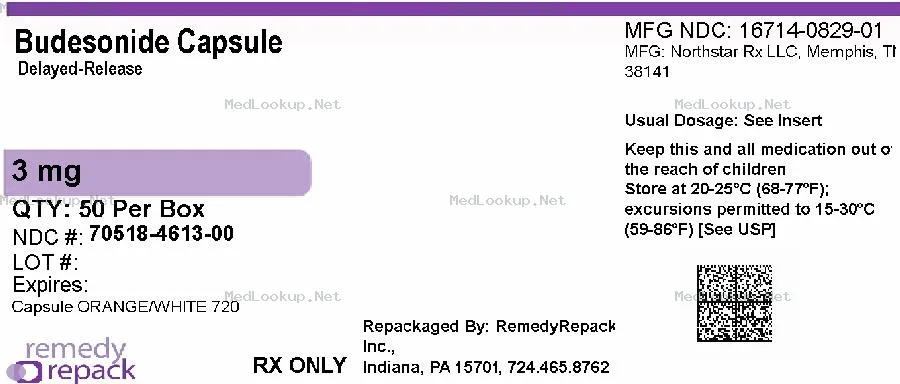
Delayed-Release Capsules: 3 mg (3) Budesonide Delayed-Release Capsules, 3 mg are white to off-white, free flowing pellets, filled in size '1' hard gelatin capsules having opaque light-orange colored cap printed with "720" in black ink and opaque white body.Drug interactions
CYP3A4 Inhibitors (e.g., ketoconazole, grapefruit juice)
: Can increase systemic budesonide concentrations: avoid use. (2.1, 7.1) 7.1 CYP3A4 Inhibitors
Budesonide is a substrate for CYP3A4. Avoid use with CYP3A4 inhibitors. Concomitant oral administration of a strong CYP3A4 inhibitor (ketoconazole) caused an eight-fold increase of the systemic exposure to oral budesonide. Inhibitors of CYP3A4 (e.g., ketoconazole, itraconazole, ritonavir, indinavir, saquinavir, erythromycin, and cyclosporine) can increase systemic budesonide concentrations [see Clinical Pharmacology (12.3)].
Grapefruit Juice
Avoid ingestion of grapefruit juice with budesonide. Intake of grapefruit juice which inhibits CYP3A4 activity with budesonide can increase the systemic exposure for budesonide [see Clinical Pharmacology (12.3)].