
Bromocriptine mesylate Capsule
These highlights do not include all the information needed to use BROMOCRIPTINE MESYLATE CAPSULES safely and effectively. See full prescribing information for BROMOCRIPTINE MESYLATE CAPSULES. BROMOCRIPTINE MESYLATE capsules, for …
Uses and indications
Bromocriptine mesylate is an ergot derivative indicated for the treatment of: • Hyperprolactinemia-associated dysfunction including amenorrhea with or without galactorrhea, infertility, or hypogonadism in adults (1.1)
• Prolactin-secreting adenomas in adults and pediatric patients 11 years of age and older (1.2).
• Acromegaly in adults (1.3).
• Signs and symptoms of idiopathic Parkinson's disease or postencephalitic parkinsonism in adults (1.4).
Limitations of Use
Avoid use of bromocriptine mesylate capsule for the inhibition or suppression of postpartum physiologic lactation because of the risk of serious adverse reactions (1.1, 5.4) 1.1 Hyperprolactinemia-Associated Dysfunction
Bromocriptine mesylate capsules are indicated for the treatment of hyperprolactinemia-associated dysfunction including amenorrhea with or without galactorrhea, infertility or hypogonadism in adults.
Limitations of Use
Avoid use of bromocriptine mesylate for the inhibition or suppression of postpartum physiologic lactation because of the risk of serious adverse reactions
[see Warnings and Precautions (5.4)]. 1.2 Prolactin-Secreting Adenomas
Bromocriptine mesylate capsules are indicated for the treatment of prolactin-secreting adenomas in adults and pediatric patients 11 years of age and older. 1.3 Acromegaly
Bromocriptine mesylate capsules are indicated for the treatment of acromegaly in adults. 1.4 Idiopathic Parkinson’s Disease or Postencephalitic Parkinsonism
Bromocriptine mesylate capsules are indicated for the treatment of the signs and symptoms of idiopathic Parkinson's disease or postencephalitic parkinsonism in adults.
Contraindications
Bromocriptine mesylate capsules are contraindicated in patients with:
- History of cardiac valvular disorders or a history of pericardial fibrosis [see Warnings and Precautions (5.1)].
- History of pleural, pulmonary, or retroperitoneal fibrotic disorders [see Warnings and Precautions (5.2)].
- Uncontrolled hypertension [see Warnings and Precautions (5.3)].
- Hypersensitivity to bromocriptine or to any of the excipients of bromocriptine mesylate capsules or sensitivity to other ergot alkaloids.
Side effects
Cold-sensitive Digital Vasospasm
Vasospam may be prevented in bromocriptine mesylate-treated patients by keeping the fingers warm.
Cold-sensitive digital vasospasm has been observed in some bromocriptine mesylate-treated patients with acromegly. If vasospasm occurs, it can be reversed by reducing the bromocriptine mesylate dosage.
Gastrointestinal Bleeding
Patients with a history of peptic ulcer or gastrointestinal bleeding should be monitored carefully during bromocriptine mesylate treatment.
Cases of severe gastrointestinal bleeding from peptic ulcers have been reported, some fatal, in bromocriptine mesylate-treated patients.
Tumor Expansion
Because the natural history of growth hormone-secreting tumors is unknown, bromocriptine mesylate-treated patients with acromegaly should be carefully monitored and, if evidence of tumor expansion develops, discontinuation of bromocriptine mesylate treatment and alternative procedures should be considered.
Possible growth hormone-secreting tumor expansion has been reported in a few bromocriptine mesylate-treated patients.
Withdrawal Adverse Reactions After Rapid Dosage Reduction or Discontinuation
Prior to bromocriptine mesylate discontinuation, patients with acromegaly should be informed about a potential withdrawal symptom, and closely monitored during and after bromocriptine mesylate discontinuation. Bromocriptine mesylate discontinuation should be undertaken gradually whenever possible. In case of severe withdrawal symptoms, consider re-administration of bromocriptine mesylate in patients with acromegaly at the lowest effective dosage.
Mental Disturbances and Psychotic Symptoms
Bromocriptine mesylate administered alone or concomitantly with levodopa may cause hallucinations (visual or auditory). Hallucinations may be accompanied by abnormal thinking and behavior which may present with one or more symptoms, including paranoid ideation, delusions, confusion, psychotic-like behavior, disorientation, aggressive behavior, agitation, and delirium. Symptoms may be more frequent at higher dosages. Because of the risk of exacerbation of mental disturbances in patients with Parkison's disease-related dementia, consider a lower bromocriptine mesylate dosage in these patients. The use of bromocriptine mesylate in patients with severe psychotic disorders is not recommended [see Warnings and Precautions (5.8)].
Hallucinations usually resolve with bromocriptine mesylate dosage reduction; occasionally, discontinuation of bromocriptine mesylate is required. Rarely, after high bromocriptine mesylate dosage treatment, hallucinations have persisted for several weeks following bromocriptine mesylate discontinuation.
Risk of Exacerbation of Arrhythmias in Patients with a History of Myocardial Infarction with a Residual Arrthythmia
Caution should be exercised when administering bromocriptine mesylate to patients with a history of myocardial infarction who have a residual atrial, nodal, or ventricular arrhythmia.
Withdrawal Adverse Reactions After Rapid Dosage Reduction or Discontinuation
Prior to bromocriptine mesylate discontinuation, patients should be informed about potential withdrawal symptoms, and closely monitored during and after bromocriptine mesylate discontinuation. bromocriptine mesylate discontinuation should be undertaken gradually whenever possible, even if the patient is to remain on levodopa. In case of severe withdrawal symptoms, consider re-administration of bromocriptine mesylate at the lowest effective dosage.
A symptom complex resembling the neuroleptic malignant syndrome (characterized by elevated temperature, muscular rigidity, altered consciousness, and autonomic instability), with no other obvious etiology, has been reported in association with rapid dosage reduction or withdrawal of antiparkinsonian therapy. Symptoms including apathy, anxiety, depression, fatigue, insomnia, sweating, and pain have been reported during taper or after discontinuation of dopamine agonists, including bromocriptine mesylate. These withdrawal symptoms generally have not responded to levodopa.
The following clinically significant adverse reactions are described elsewhere in the labeling:
- Cardiac Valvulopathy and Pericardial Fibrosis [see Warnings and Precautions (5.1)]
- Pleural, Pulmonary, and Retroperitoneal Fibrosis [see Warnings and Precautions (5.2)]
- Hypotension/Orthostatic Hypotension [see Warnings and Precautions (5.3)]
- Risks with Use of bromocriptine mesylate for Postpartum Lactation Inhibition or Suppression [see Warnings and Precautions (5.4)]
- Impulse Control Disorders and Compulsive Behaviors [see Warnings and Precautions (5.5)]
- Falling Asleep During Activities of Daily Living [see Warnings and Precautions (5.6)]
- Visual Impairment in Patients with Prolactin-secreting Adenomas [see Warnings and Precautions (5.7)]
- Exacerbation of Psychosis in Patients with Severe Psychotic Disorders [see Warnings and Precautions (5.8)]
- Risks in Patients with Hereditary Problems of Galactose Intolerance, Severe Lactase Deficiency, or Glucose-Galactose Malabsorption [see Warnings and Precautions (5.9)]
- Additional Clinically Significant Adverse Reactions and Risks in Patients with Acromegaly [see Warnings and Precautions (5.10)]
- Additional Clinically Significant Adverse Reactions and Risks in Patients with Idiopathic Parkinson's Disease or Postencephalitic Parkinsonism [see Warnings and Precautions (5.11)]
Precautions
• Cardiac Valvulopathy and Pericardial Fibrosis: During bromocriptine mesylate treatment, monitor for the development of valvulopathy with a cardiac echocardiogram at intervals of 6 to 12 months or as clinically indicated and monitor for chest pain and signs and symptoms of heart failure (if heart failure occurs, exclude valvular fibrosis and pericarditis). Consider additional clinical and diagnostic monitoring at baseline and as necessary during bromocriptine mesylate treatment. Use bromocriptine mesylate in patients treated with other drugs associated with valvulopathy is not recommended. Discontinue bromocriptine mesylate if the patient has a new diagnosis of valvular regurgitation, valvular restriction, valve leaflet thickening, or pericarditis. (5.1)
• Pleural, Pulmonary and Retroperitoneal Fibrosis: During bromocriptine mesylate treatment monitor for signs and symptoms of progressive fibrosis, (e.g., pleuro-pulmonary disease, renal impairment, ureteral/abdominal vascular obstruction). Consider clinical and diagnostic monitoring for pleural, pulmonary, and retroperitoneal fibrosis at baseline and as necessary during bromocriptine mesylate treatment. If pleural, pericardial, retroperitoneal, or pulmonary fibrosis occur, discontinue bromocriptine mesylate (5.2)
• Hypotension/Orthostatic Hypotension: Check blood pressure at baseline and during treatment with bromocriptine mesylate and monitor for hypotension. Patients with Parkinson's disease being treated with bromocriptine mesylate should be monitored for signs and symptoms of orthostatic hypotension (5.3)
• Risks with Use of bromocriptine mesylate for Postpartum Lactation Inhibition or Suppression: Avoid use of bromocriptine mesylate for the inhibition or suppression of physiologic lactation. Use of bromocriptine, another dopamine agonist for this unapproved use has been associated with cases of hypertension, stroke, myocardial infarction, seizures, and death. (5.4)
• Impulse Control Disorders and Compulsive Behaviors: Specifically ask patients about the development of new or increased gambling urges, sexual urges, uncontrolled spending, binge or compulsive eating or other urges while being treated with bromocriptine mesylate. Consider dosage reduction or stopping bromocriptine mesylate if a patient develops such urges while taking bromocriptine mesylate. (5.5)
• Falling Asleep During Activities of Daily Living: If symptoms of daytime sleepiness or episodes of falling asleep occur while taking bromocriptine mesylate, advise patients not to drive or perform dangerous activities. Consider reducing the dosage or stopping bromocriptine mesylate if patients experience somulence or sudden sleep onset (5.6).
• Visual Impariment in Patients with Prolactin-Secreting Adenomas: Recommend monitoring of visual fields in bromocriptine mesylate-treated patients with macroprolactinoma for an early recognition of secondary field loss due to chiasmal herniation. bromocriptine mesylate-patients with rapidly progressive visual field loss should be evaluated by a neurosurgeon to help decide on the most appropriate therapy (5.7)
• Exacerbation of Psychosis in Patients with Severe Psychotic Disorders: Use of bromocriptine mesylate in patients with severe psychotic disorders in not recommended (5.8) 5.1 Cardiac Valvulopathy and Pericardial Cardiac Fibrosis
Before initiating bromocriptine mesylate, perform a cardiovascular evaluation, including with an echocardiogram, to evaluate for valvular disease. Bromocriptine mesylate is contraindicated in the presence of valvular disease or pericardial fibrosis.
bromocriptine mesylate is not recommended in patients treated with other drugs associated with valvulopathy. Following bromocriptine mesylate treatment initiation, monitor for the development of valvulopathy with a cardiac echocardiogram at intervals of 6 to 12 months or as clinically indicated with new onset edema, cardiac murmur, dyspnea, or heart failure. During bromocriptine mesylate treatment, monitor for chest pain and signs and symptoms of heart failure and if heart failure occurs, valvular fibrosis and pericarditis should be excluded. Consider clinical and diagnostic monitoring such as erythrocyte sedimentation rate, serum creatinine measurements, chest-x-ray, and other investigations and cardiac imaging at baseline and as necessary while patients are treated with during bromocriptine mesylate treatment. Discontinue bromocriptine mesylate capsules if the patient has a new diagnosis of valvular regurgitation, valvular restriction, valve leaflet thickening, or pericarditis.
Cases of cardiac valvulopathy have occurred in bromocriptine mesylate-treated patients. Pericardial effusions, as well as constrictive pericarditis, have been reported in bromocriptine mesylate-treated patients, particularly those on long-term and high-dosage treatment. 5.2 Pleural, Pulmonary, and Retroperitoneal Fibrosis
Bromocriptine mesylate is contraindicated in patients with a history of pleural, pulmonary, or retroperitoneal fibrosis. During bromocriptine mesylate treatment monitor for signs and symptoms of progressive fibrosis, including: • Pleuro-pulmonary disease (e.g., dyspnea, shortness of breath, persistent cough, chest pain).
• Renal impairment or ureteral/abdominal vascular obstruction (e.g., pain in the loin/flank, lower limb edema, abdominal masses or tenderness that may indicate retroperitoneal fibrosis).
Consider clinical and diagnostic monitoring for pleural, pulmonary, and retroperitoneal fibrosis such as with erythrocyte sedimentation rate, serum creatinine measurements, chest-x-ray, and other investigations at baseline and as necessary during bromocriptine mesylate treatment. If pleural, pericardial, retroperitoneal, or pulmonary fibrosis occur, discontinue bromocriptine mesylate.
Pleural and Pulmonary Fibrosis
Patients with unexplained pleuropulmonary disorders should be examined thoroughly and discontinuation of bromocriptine mesylate therapy should be considered.
Pleural effusions, pleural fibrosis, and pulmonary fibrosis have been reported in bromocriptine mesylate-treated patients, particularly those on long-term and high-dosage treatment. In those instances, in which bromocriptine mesylate treatment was stopped, the changes slowly reverted towards normal.
Retroperitoneal Fibrosis
To ensure recognition of retroperitoneal fibrosis at an early reversible stage recommend that patients on long-term and high-dosage treatment should be monitored for its manifestations (e.g., back pain, lower limb edema, impaired kidney function). bromocriptine mesylate should be withdrawn if fibrotic changes in the retroperitoneum are diagnosed or suspected.
Retroperitoneal fibrosis has been reported in a few bromocriptine mesylate-treated patients, particularly those on long-term and high-dosage treatment. Retroperitoneal fibrosis has been reported in a few patients with Parkinson's disease who received long-term bromocriptine mesylate therapy (2 years to 10 years) in dosages that ranged from 30 mg daily to 140 mg daily (9.3 times, 1.4 times, and 1.4 times the maximum recommended bromocriptine mesylate dosage for the hyperprolactionemia-associate dysfunction, acromegaly, and idiopathic Parkinson's disease or postencephalitic parkinsonism indications, respectively
[see Dosage and Administration (2.6)]). 5.3 Hypotension/Orthostatic Hypotension
Hypotension/Orthostatic Hypotension
Check blood pressure at baseline and during treatment with bromocriptine mesylate and monitor for hypotension. Instruct patients to report dizziness or lightheadedness with changes in position to their healthcare provider. Particular care should be exercised in bromocriptine mesylate-treated patients when driving a vehicle or operating hazardous machinery.
Hypotensive reactions may occur during bromocriptine mesylate treatment, especially during the first days of treatment.
Orthostatic Hypotension in Patients with Parkinson's Disease
Patients with Parkinson's disease being treated with dopaminergic agonists, including bromocriptine mesylate, should be monitored for signs and symptoms of orthostatic hypotension, especially during dose escalation, and should be informed of this risk because patients with Parkinson's disease may have an impaired capacity to respond to an orthostatic challenge. 5.4 Risks with Use of Bromocriptine Mesylate for Postpartum Lactation Inhibition or Suppression
Avoid use of bromocriptine mesylate for the inhibition or suppression of postpartum physiologic lactation. Use of bromocriptine mesylate for this unapproved use has been associated with serious adverse reactions, including hypertension, psychotic reactions, acute myocardial infarction, seizures (including status epilepticus), stroke, and death.
• Hypertension has occurred at the initiation of bromocriptine mesylate therapy, but often in the second week of therapy.
• Seizures have been reported with and without the prior development of hypertension.
• Stroke has mostly occurred in postpartum females whose prenatal and obstetric courses had been uncomplicated.
Many of the bromocriptine mesylate-treated patients who experienced seizures (including cases of status epilepticus) and/or strokes reported developing a constant and often progressively severe headache accompanied by visual disturbance hours to days prior to the acute event. Some cases of strokes and seizures were also preceded by visual disturbances (blurred vision, and transient cortical blindness).
In postmarketing experience in the U.S., serious adverse reactions reported in bromocriptine mesylate-treated postpartum patients included 72 cases of seizures (including 4 cases of status epilepticus), 30 cases of stroke, and 9 cases of myocardial infarction. One stroke case was associated with sagittal sinus thrombosis, and another was associated with cerebral and cerebellar vasculitis. One case of myocardial infarction was associated with unexplained disseminated intravascular coagulation and a second occurred in conjunction with use of another ergot alkaloid. 5.5 Impulse Control Disorders and Compulsive Behaviors
Because patients may not recognize impulse control and compulsive behaviors as abnormal, it is important for healthcare providers to specifically ask patients or their caregivers about the development of new or increased gambling urges, sexual urges, uncontrolled spending, binge or compulsive eating, or other urges while being treated with bromocriptine mesylate. Consider dosage reduction or stopping bromocriptine mesylate if a patient develops such urges while taking bromocriptine mesylate.
Patients can experience intense urges to gamble or to spend money, increased sexual urges, binge eating, and/or other intense urges, and the inability to control these urges while taking one or more drugs that increase central dopaminergic tone, including bromocriptine mesylate. In some cases, these urges were reported to have stopped when the dosage was reduced, or the drug was discontinued. 5.6 Falling Asleep During Activities of Daily Living
Before initiating treatment with bromocriptine mesylate, advise patients of the potential to develop drowsiness and specifically ask them about factors that may increase their risk for somnolence with dopaminergic drugs, such as concomitant sedating drugs or the presence of a sleep disorder. If a patient develops daytime sleepiness or episodes of falling asleep during activities that require full attention (e.g., driving a motor vehicle, conversations, eating), consider reducing the bromocriptine mesylate dosage or discontinuing bromocriptine mesylate. If a decision is made to continue bromocriptine mesylate, advise the patient to avoid driving or performing potentially dangerous activities.
Patients treated with dopaminergic drugs, including bromocriptine mesylate, have reported falling asleep while engaged in activities of daily living, including the operation of motor vehicles, which sometimes has resulted in accidents. Patients may not perceive warning signs, such as excessive drowsiness, or they may report feeling alert immediately prior to the event. 5.7 Visual Impairment in Patients with Prolactin-secreting Adenomas
Recommend monitoring of visual fields in bromocriptine mesylate-treated patients with macroprolactinoma for an early recognition of secondary field loss due to chiasmal herniation. bromocriptine mesylate-patients with rapidly progressive visual field loss should be evaluated by a neurosurgeon to help decide on the most appropriate therapy.
In some bromocriptine mesylate-patients patients, a secondary deterioration of visual fields may develop (despite normalized prolactin levels and tumor shrinkage) which may result from traction on the optic chiasm which is pulled down into the now partially empty sella. Reduction of the bromocriptine mesylate dosage may improve the visual field defect (there may be some elevation of prolactin and tumor re-expansion). The relative efficacy of bromocriptine mesylate versus surgery in preserving visual fields in patients with prolactin-secreting adenomas is not known. 5.8 Exacerbation of Psychosis in Patients with Severe Psychotic Disorders
The use of bromocriptine mesylate in patients with severe psychotic disorders is not recommended.
In patients with severe psychotic disorders, treatment with a dopamine receptor agonist including bromocriptine mesylate may exacerbate the psychosis or may diminish the effectiveness of drugs used to treat the severe psychotic disorder. 5.9 Risks in Patients with Hereditary Problems of Galactose Intolerance, Severe Lactase Deficiency, or Glucose-Galactose Malabsorption
Avoid use of bromocriptine mesylate in patients with rare hereditary problems of galactose intolerance, severe lactase deficiency, or glucose-galactose malabsorption. Bromocriptine mesylate contains lactose as an inactive ingredient.
The use of lactose in patients with rare hereditary problems of galactose intolerance, severe lactase deficiency, or glucose-galactose malabsorption increases the risk of diarrhea, abdominal pain, bloating, and malabsorption. 5.10 Additional Clinically Significant Adverse Reactions and Risks in Patients with Acromegaly
Cold-sensitive Digital Vasospasm
Vasospam may be prevented in bromocriptine mesylate-treated patients by keeping the fingers warm.
Cold-sensitive digital vasospasm has been observed in some bromocriptine mesylate-treated patients with acromegly. If vasospasm occurs, it can be reversed by reducing the bromocriptine mesylate dosage.
Gastrointestinal Bleeding
Patients with a history of peptic ulcer or gastrointestinal bleeding should be monitored carefully during bromocriptine mesylate treatment.
Cases of severe gastrointestinal bleeding from peptic ulcers have been reported, some fatal, in bromocriptine mesylate-treated patients.
Tumor Expansion
Because the natural history of growth hormone-secreting tumors is unknown, bromocriptine mesylate-treated patients with acromegaly should be carefully monitored and, if evidence of tumor expansion develops, discontinuation of bromocriptine mesylate treatment and alternative procedures should be considered.
Possible growth hormone-secreting tumor expansion has been reported in a few bromocriptine mesylate-treated patients.
Withdrawal Adverse Reactions After Rapid Dosage Reduction or Discontinuation
Prior to bromocriptine mesylate discontinuation, patients with acromegaly should be informed about a potential withdrawal symptom, and closely monitored during and after bromocriptine mesylate discontinuation. Bromocriptine mesylate discontinuation should be undertaken gradually whenever possible. In case of severe withdrawal symptoms, consider re-administration of bromocriptine mesylate in patients with acromegaly at the lowest effective dosage. 5.11 Additional Clinically Significant Adverse Reactions and Risks in Patients with Idiopathic Parkinson’s Disease or Postencephalitic Parkinsonism
Mental Disturbances and Psychotic Symptoms
Bromocriptine mesylate administered alone or concomitantly with levodopa may cause hallucinations (visual or auditory). Hallucinations may be accompanied by abnormal thinking and behavior which may present with one or more symptoms, including paranoid ideation, delusions, confusion, psychotic-like behavior, disorientation, aggressive behavior, agitation, and delirium. Symptoms may be more frequent at higher dosages. Because of the risk of exacerbation of mental disturbances in patients with Parkison's disease-related dementia, consider a lower bromocriptine mesylate dosage in these patients. The use of bromocriptine mesylate in patients with severe psychotic disorders is not recommended
[see Warnings and Precautions (5.8)].
Hallucinations usually resolve with bromocriptine mesylate dosage reduction; occasionally, discontinuation of bromocriptine mesylate is required. Rarely, after high bromocriptine mesylate dosage treatment, hallucinations have persisted for several weeks following bromocriptine mesylate discontinuation.
Risk of Exacerbation of Arrhythmias in Patients with a History of Myocardial Infarction with a Residual Arrthythmia
Caution should be exercised when administering bromocriptine mesylate to patients with a history of myocardial infarction who have a residual atrial, nodal, or ventricular arrhythmia.
Withdrawal Adverse Reactions After Rapid Dosage Reduction or Discontinuation
Prior to bromocriptine mesylate discontinuation, patients should be informed about potential withdrawal symptoms, and closely monitored during and after bromocriptine mesylate discontinuation. bromocriptine mesylate discontinuation should be undertaken gradually whenever possible, even if the patient is to remain on levodopa. In case of severe withdrawal symptoms, consider re-administration of bromocriptine mesylate at the lowest effective dosage.
A symptom complex resembling the neuroleptic malignant syndrome (characterized by elevated temperature, muscular rigidity, altered consciousness, and autonomic instability), with no other obvious etiology, has been reported in association with rapid dosage reduction or withdrawal of antiparkinsonian therapy. Symptoms including apathy, anxiety, depression, fatigue, insomnia, sweating, and pain have been reported during taper or after discontinuation of dopamine agonists, including bromocriptine mesylate. These withdrawal symptoms generally have not responded to levodopa.
Dosage
The recommended starting dosage of bromocriptine mesylate in adults with hyperprolactinemia-associated dysfunction is 1.25 mg (one-half of a tablet) to 2.5 mg once daily. Increase the bromocriptine mesylate dosage up to 2.5 mg once daily every two to seven days as tolerated until an optimal therapeutic response is achieved within a recommended dosage of 2.5 mg to 15 mg once daily.
The recommended starting dosage of bromocriptine mesylate in adult and pediatric patients 11 years of age and older with prolactin-secreting adenomas is 1.25 mg (one-half of a tablet) to 2.5 mg once daily. Increase the bromocriptine mesylate dosage as tolerated until an optimal therapeutic response is achieved within a recommended dosage of 2.5 mg to 10 mg once daily.
In cases where adenectomy is elected for prolactin-secreting adenomas, a course of bromocriptine mesylate therapy may be used to reduce the tumor mass prior to surgery.
The recommended starting dosage of bromocriptine mesylate in adults for acromegaly is 1.25 mg (one-half of a tablet) to 2.5 mg once at bedtime for 3 days. Increase the dosage 1.25 mg to 2.5 mg once daily every 3 days to 7 days, as tolerated, until an optimal therapeutic response is achieved. Reevaluate patients monthly and modify the dosage based on growth hormone levels and clinical response. For adults with acromegaly, the usual optimal therapeutic dosage range varies from 20 mg to 30 mg once at bedtime in most patients, and the maximum recommended dosage is 100 mg/daily.
After a brief trial with bromocriptine mesylate therapy in adults with acromegaly, if there is no significant reduction in growth hormone levels and no changes in the clinical features of acromegaly consider increasing the dosage or discontinuing bromocriptine mesylate.
For patients with acromegaly treated with pituitary irradiation, withdraw bromocriptine mesylate (e.g., for four to eight weeks) on a yearly basis to assess the clinical effects of radiation on the disease process as well as the effects of bromocriptine mesylate therapy. Consider restarting bromocriptine mesylate if signs or symptoms of acromegaly or increases in growth hormone occur.
The recommended starting dosage of bromocriptine mesylate in adults with idiopathic Parkinson's disease or postencephalitic parkinsonism is 1.25 mg (one-half of a tablet) twice daily. Increase the dosage by 1.25 mg (one half of a tablet) twice daily every 14 days to 28 days based on therapeutic response and tolerability, up to the maximum recommended daily dosage of 100 mg/day.
For patients receiving concomitant levodopa, maintain the levodopa dosage during bromocriptine mesylate dosage escalation. If the levodopa dosage is decreased, increase the bromocriptine mesylate dosage in increments of 1.25 mg twice daily.
Avoid concomitant use of bromocriptine mesylate with strong CYP3A4 inhibitors. Dosage modifications of bromocriptine mesylate for concomitant use with moderate CYP3A4 inhibitors are provided in Table 1 [see Drug Interactions (7)].
| Starting Dosage | Maximum Dosage | |
| Hyperprolactinemia-associated dysfunction in adults | 1.25 mg once daily (one-half of a tablet) | 3.75 mg once daily |
| Prolactin-secreting adenomas in adult and pediatric patients 11 years of age and older | 1.25 mg once daily | 2.5 mg once daily |
| Acromegaly in adults | 1.25 mg once daily | 25 mg once daily |
| Idiopathic or postencephalitic parkinsonism in adults | 1.25 mg once daily | 12.5 mg twice daily |
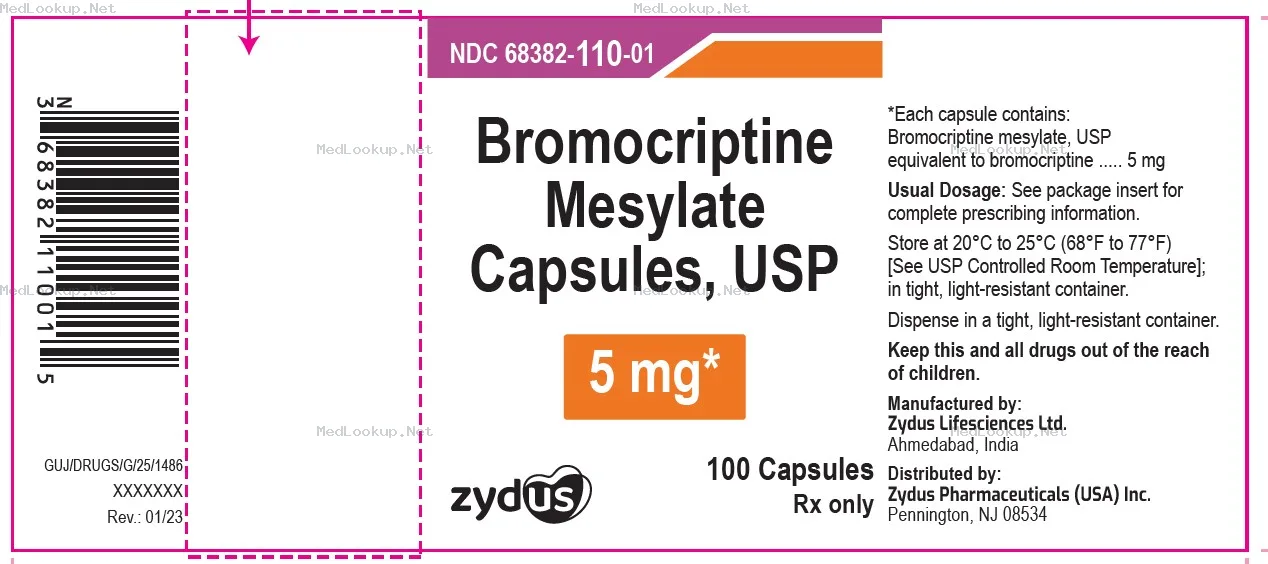
Bromocriptine Mesylate Capsules USP, 5 mg are white to off-white powder filled in size "3" empty Cellulose capsules with tan colored cap printed with "ZA 17" in black ink and white colored body printed with "5 mg" in black ink.
Drug interactions
Alcohol
Alcohol may potentiate bromocriptine mesylate -associated adverse reactions.
Dopamine Antagonists
The concomitant use of bromocriptine mesylate with dopamine antagonists resulted in a decreased efficacy of bromocriptine mesylate.
Strong and Moderate CYP3A4 Inhibitors
Avoid concomitant use of bromocriptine mesylate with strong CYP3A4 inhibitors. Follow the recommended bromocriptine mesylate dosage modifications during concomitant use with moderate CYP3A4 inhibitors [see Dosage and Administration (2.7)].
Bromocriptine is a substrate of CYP3A4 [see Clinical Pharmacology (12.3)]. Concomitant use with strong and moderate CYP3A4 inhibitors increases bromocriptine exposure [see Clinical Pharmacology (12.3)], which may increase the risk of bromocriptine mesylate-associated adverse reactions.
Ergot Alkaloids
Concomitant use of bromocriptine mesylate with other ergot alkaloids is not recommended. If use is unavoidable, dosage reduction may be necessary in those cases where high dosages of bromocriptine mesylate are being used (such as patients with Parkinson's disease).