
Banzel Tablet, Film Coated
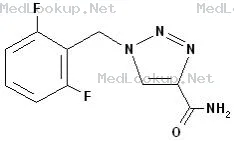
These highlights do not include all the information needed to use BANZEL ® safely and effectively. See full prescribing information for BANZEL ®. BANZEL ® (rufinamide) film - coated t ablet, for o ral u se BANZEL ® (rufinamide) o…
Uses and indications
BANZEL is indicated for adjunctive treatment of seizures associated with Lennox-Gastaut Syndrome in pediatric patients 1 year of age and older and in adults.
Contraindications
BANZEL is contraindicated in patients with Familial Short QT syndrome [ see Warnings and Precautions ( 5.3 ) ] .
Side effects
The following serious adverse reactions are described below and elsewhere in the labeling:
- Suicidal Behavior and Ideation [see Warnings and Precautions (
5.1
)]
- Central Nervous System Reactions [see Warnings and Precautions (
5.2
)]
- QT Shortening [see Warnings and Precautions (
5.3
)]
- Multi-Organ Hypersensitivity/Drug Reaction with Eosinophilia and Systemic Symptoms (DRESS) [see Warnings and Precautions (
5.4
)]
- Leukopenia [see Warnings and Precautions ( 5.7 )]
Precautions
• Monitor patients for new or worsening depression, suicidal thoughts/behavior, and unusual changes in mood or behavior (5.1)
• Central nervous system reactions can occur (5.2)
• Use caution when administering BANZEL with other drugs that shorten the QT interval (5.3)
• Discontinue BANZEL if multi-organ hypersensitivity reaction occurs (5.4)
• Withdraw BANZEL gradually to minimize the risk of precipitating seizures, seizure exacerbation, or status epilepticus (5.5) 5.1
Suicidal Behavior and Ideation
Antiepileptic drugs (AEDs), including BANZEL, increase the risk of suicidal thoughts or behavior in patients taking these drugs for any indication. Patients treated with any AED for any indication should be monitored for the emergence or worsening of depression, suicidal thoughts or behavior, and/or any unusual changes in mood or behavior.
Pooled analyses of 199 placebo-controlled clinical trials (mono- and adjunctive therapy) of 11 different AEDs showed that patients randomized to one of the AEDs had approximately twice the risk (adjusted Relative Risk 1.8, 95% CI: 1.2, 2.7) of suicidal thinking or behavior compared to patients randomized to placebo. In these trials, which had a median treatment duration of 12 weeks, the estimated incidence rate of suicidal behavior or ideation among 27,863 AED-treated patients was 0.43%, compared to 0.24% among 16,029 placebo-treated patients, representing an increase of approximately one case of suicidal thinking or behavior for every 530 patients treated. There were four suicides in drug-treated patients in the trials and none in placebo-treated patients, but the number is too small to allow any conclusion about drug effect on suicide.
The increased risk of suicidal thoughts or behavior with AEDs was observed as early as 1 week after starting drug treatment with AEDs and persisted for the duration of treatment assessed. Because most trials included in the analysis did not extend beyond 24 weeks, the risk of suicidal thoughts or behavior beyond 24 weeks could not be assessed.
The risk of suicidal thoughts or behavior was generally consistent among drugs in the data analyzed. The finding of increased risk with AEDs of varying mechanisms of action and across a range of indications suggests that the risk applies to all AEDs used for any indication. The risk did not vary substantially by age (5-100 years) in the clinical trials analyzed. Table 1 shows absolute and relative risk by indication for all evaluated AEDs.
Table 1: Absolute and Relative Risk of Suicidal Behavior and Ideation
Indication
Placebo Patients with Events Per 1000 Patients
Drug Patients with Events Per 1000 Patients
Relative Risk: Incidence of Events in Drug Patients/Incidence in Placebo Patients
Risk Difference: Additional Drug Patients with Events Per 1000 Patients
Epilepsy
1.0
3.4
3.5
2.4
Psychiatric
5.7
8.5
1.5
2.9
Other
1.0
1.8
1.9
0.9
Total
2.4
4.3
1.8
1.9
The relative risk for suicidal thoughts or behavior was higher in clinical trials for epilepsy than in clinical trials for psychiatric or other conditions, but the absolute risk differences were similar for the epilepsy and psychiatric indications.
Anyone considering prescribing BANZEL or any other AED must balance the risk of suicidal thoughts or behavior with the risk of untreated illness. Epilepsy and many other illnesses for which AEDs are prescribed are themselves associated with morbidity and mortality and an increased risk of suicidal thoughts and behavior. Should suicidal thoughts and behavior emerge during treatment, consider whether the emergence of these symptoms in any given patient may be related to the illness being treated. 5.2
C
entral Nervous System Reactions
Use of BANZEL has been associated with central nervous system-related adverse reactions in the controlled clinical trial of patients 4 years or older with Lennox-Gastaut Syndrome. The most significant of these can be classified into two general categories: 1) somnolence or fatigue, and 2) coordination abnormalities, dizziness, gait disturbances, and ataxia.
Somnolence was reported in 24% of BANZEL-treated patients compared to 13% of patients on placebo, and led to study discontinuation in 3% of BANZEL-treated patients compared to 0% of patients on placebo. Fatigue was reported in 10% of BANZEL-treated patients compared to 8% of patients on placebo. It led to study discontinuation in 1% of BANZEL-treated patients and 0% of patients on placebo.
Dizziness was reported in 2.7% of BANZEL-treated patients compared to 0% of patients on placebo, and did not lead to study discontinuation.
Ataxia and gait disturbance were reported in 5.4% and 1.4% of BANZEL-treated patients, respectively, compared to no patient on placebo. None of these reactions led to study discontinuation.
Accordingly, patients should be advised not to drive or operate machinery until they have gained sufficient experience on BANZEL to gauge whether it adversely affects their ability to drive or operate machinery. 5.3
QT Shortening
Formal cardiac ECG studies demonstrated shortening of the QT interval (mean = 20 msec, for doses
>
2400 mg twice daily) with BANZEL. In a placebo-controlled study of the QT interval, a higher percentage of BANZEL-treated subjects (46% at 2400 mg, 46% at 3200 mg, and 65% at 4800 mg) had a QT shortening of greater than 20 msec at Tmax compared to placebo (5-10%).
Reductions of the QT interval below 300 msec were not observed in the formal QT studies with doses up to 7200 mg per day. Moreover, there was no signal for drug-induced sudden death or ventricular arrhythmias.
The degree of QT shortening induced by BANZEL is without any known clinical risk. Familial Short QT syndrome is associated with an increased risk of sudden death and ventricular arrhythmias, particularly ventricular fibrillation. Such events in this syndrome are believed to occur primarily when the corrected QT interval falls below 300 msec. Non-clinical data also indicate that QT shortening is associated with ventricular fibrillation.
Patients with Familial Short QT syndrome should not be treated with BANZEL. Caution should be used when administering BANZEL with other drugs that shorten the QT interval
[
see
Contraindications
(4)
].
5.4
Multi-organ Hypersensitivity
/Drug Reaction with Eosinophilia and Systemic Symptoms (DRESS)
Drug Reaction with Eosinophilia and Systemic Symptoms (DRESS), also known as multi-organ hypersensitivity, has been reported in patients taking antiepileptic drugs, including BANZEL. DRESS may be fatal or life-threatening. DRESS typically, although not exclusively, presents with fever, rash, and/or lymphadenopathy, and/or facial swelling, in association with other organ system involvement, such as hepatitis, nephritis, hematological abnormalities, myocarditis, or myositis, sometimes resembling an acute viral infection. Eosinophilia is often present. It is important to note that early manifestations of hypersensitivity, such as fever or lymphadenopathy, may be present even though rash is not evident. Because this disorder is variable in its expression, other organ systems not noted here may be involved.
All cases of DRESS identified in clinical trials with BANZEL occurred in pediatric patients less than 12 years of age, occurred within 4 weeks of treatment initiation, and resolved or improved with BANZEL discontinuation. DRESS has also been reported in adult and pediatric patients taking BANZEL in the postmarketing setting.
If DRESS is suspected, the patient should be evaluated immediately, BANZEL should be discontinued, and alternative treatment should be started. 5.5
Withdrawal of AEDs
As with all antiepileptic drugs, BANZEL should be withdrawn gradually to minimize the risk of precipitating seizures, seizure exacerbation, or status epilepticus. If abrupt discontinuation of the drug is medically necessary, the transition to another AED should be made under close medical supervision. In clinical trials, BANZEL discontinuation was achieved by reducing the dose by approximately 25% every 2 days. 5.6
Status Epilepticus
Estimates of the incidence of treatment emergent status epilepticus among patients treated with BANZEL are difficult because standard definitions were not employed. In a controlled Lennox-Gastaut Syndrome trial, 3 of 74 (4.1%) BANZEL-treated patients had episodes that could be described as status epilepticus in the BANZEL-treated patients compared with none of the 64 patients in the placebo-treated patients. In all controlled trials that included patients with different epilepsies, 11 of 1240 (0.9%) BANZEL-treated patients had episodes that could be described as status epilepticus compared with none of 635 patients in the placebo-treated patients. 5.7
Leukopenia
BANZEL has been shown to reduce white cell count. Leukopenia (white cell count < 3X10⁹ L) was more commonly observed in BANZEL-treated patients 43 of 1171 (3.7%) than placebo-treated patients, 7 of 579 (1.2%) in all controlled trials.
Dosage
Pediatric patients (1 year to less than 17 years)
The recommended starting daily dose of BANZEL in pediatric patients with Lennox-Gastaut Syndrome is approximately 10 mg/kg administered in two equally divided doses. The dose should be increased by approximately 10 mg/kg increments every other day until a maximum daily dose of 45 mg/kg, not to exceed 3200 mg, administered in two equally divided doses, is reached. It is not known whether doses lower than the target doses are effective.
Adults (17 years and older)
The recommended starting daily dose of BANZEL in adults with Lennox-Gastaut Syndrome is 400 to 800 mg per day administered in two equally divided doses. The dose should be increased by 400-800 mg every other day until a maximum daily dose of 3200 mg, administered in two equally divided doses, is reached. It is not known whether doses lower than 3200 mg are effective.
Film-coated Tablets: 200 mg (pink) and 400 mg (pink). Tablets are scored on both sides.
Oral Suspension: 40 mg/mL. White to off-white opaque liquid.
Drug interactions
• Patients on valproate should begin at a BANZEL dose lower than 10 mg/kg per day (pediatric patients) or 400 mg per day (adults) (7.2)
• Hormonal contraceptives may be less effective with BANZEL; use additional non-hormonal forms of contraception (7.3) 7.1
Effects of BANZEL on other AEDs
Population pharmacokinetic analysis of average concentration at steady state of carbamazepine, lamotrigine, phenobarbital, phenytoin, topiramate, and valproate showed that typical rufinamide Cavss levels had little effect on the pharmacokinetics of other AEDs. Any effects, when they occur, have been more marked in the pediatric population.
Table 6 summarizes the drug-drug interactions of BANZEL with other AEDs.
Table 6: Summary of drug-drug interactions of BANZEL with other antiepileptic drugs
AED
Co-administered
Influence of Rufinamide on AED concentration
a)
Influence of AED on Rufinamide concentration
Carbamazepine
Decrease by 7 to 13%b)
Decrease by 19 to 26% Dependent on dose of carbamazepine
Lamotrigine
Decrease by 7 to 13%b)
No Effect
Phenobarbital
Increase by 8 to 13%b)
Decrease by 25 to 46%c) ’ d)
Independent of dose or concentration of phenobarbital
Phenytoin
Increase by 7 to 21%b)
Decrease by 25 to 46%c) ’ d)
Independent of dose or concentration of phenytoin
Topiramate
No Effect
No Effect
Valproate
No Effect
Increase by <16 to 70%c)
Dependent on concentration of valproate
Primidone
Not Investigated
Decrease by 25 to 46%c) ’ d)
Independent of dose or concentration of primidone
Benzodiazepines e)
Not Investigated
No Effect
a) Predictions are based on BANZEL concentrations at the maximum recommended dose of BANZEL. b) Maximum changes predicted to be in pediatric patients and in adult patients who achieve significantly higher levels of BANZEL, as the effect of rufinamide on these AEDs is concentration-dependent. c) Larger effects in pediatric patients at high doses/concentrations of AEDs. d) Phenobarbital, primidone and phenytoin were treated as a single covariate (phenobarbital-type inducers) to examine the effect of these agents on BANZEL clearance. e) All compounds of the benzodiazepine class were pooled to examine for ‘class effect’ on BANZEL clearance.
Phenytoin: The decrease in clearance of phenytoin estimated at typical levels of rufinamide (Cavss 15 μg/mL) is predicted to increase plasma levels of phenytoin by 7 to 21%. As phenytoin is known to have non-linear pharmacokinetics (clearance becomes saturated at higher doses), it is possible that exposure will be greater than the model prediction. 7.2
Effects of Other AEDs on BANZEL
Potent cytochrome P450 enzyme inducers, such as carbamazepine, phenytoin, primidone, and phenobarbital, appear to increase the clearance of BANZEL (see Table 6). Given that the majority of clearance of BANZEL is via a non-CYP-dependent route, the observed decreases in blood levels seen with carbamazepine, phenytoin, phenobarbital, and primidone are unlikely to be entirely attributable to induction of a P450 enzyme. Other factors explaining this interaction are not understood. Any effects, where they occurred, were likely to be more marked in the pediatric population.
Valproate
Patients stabilized on BANZEL before being prescribed valproate should begin valproate therapy at a low dose, and titrate to a clinically effective dose. Similarly, patients on valproate should begin at a BANZEL dose lower than 10 mg/kg per day (pediatric patients) or 400 mg per day (adults)
[
see
Dosage
and
Administration
(2.5), Clinical Pharmacology (12.3)
]. 7.3
Effects of BANZEL on
Hormonal Contraceptives
Female patients of childbearing age should be warned that the concurrent use of BANZEL with hormonal contraceptives may render this method of contraception less effective. Additional non-hormonal forms of contraception are recommended when using BANZEL
[
see
Use in Specific Populations (8.3),
Clinical Pharmacology (12.3) and
Patient Counseling
Information
(17)
].