
Anastrozole Tablet [Direct_Rx]
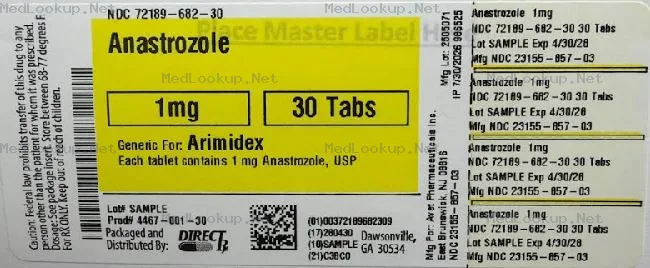
1 images
Anastrozole is used for 1.1 Adjuvant TreatmentAnastrozole is indicated for adjuvant treatment of postmenopausal women with hormone receptor-positive early…
Active ingredients
Strength1 mg
Dosage formTABLET
ManufacturerDirect_Rx
Registration number72189-682-30
Uses and indications
1.1 Adjuvant TreatmentAnastrozole is indicated for adjuvant treatment of postmenopausal women with hormone receptor-positive early breast cancer.1.2 First-Line TreatmentAnastrozole is indicated for the first-line treatment of postmenopausal women with hormone receptor-positive or hormone receptor unknown locally advanced or metastatic breast cancer.1.3 Second-Line TreatmentAnastrozole is indicated for the treatment…
1.1 Adjuvant TreatmentAnastrozole is indicated for adjuvant treatment of postmenopausal women with hormone receptor-positive early breast cancer.1.2 First-Line TreatmentAnastrozole is indicated for the first-line treatment of postmenopausal women with hormone receptor-positive or hormone receptor unknown locally advanced or metastatic breast cancer.1.3 Second-Line TreatmentAnastrozole is indicated for the treatment of advanced breast cancer in postmenopausal women with disease progression following tamoxifen therapy. Patients with ER-negative disease and patients who did not respond to previous tamoxifen therapy rarely responded to anastrozole.
Contraindications
HypersensitivityAnastrozole is contraindicated in any patient who has shown a hypersensitivity reaction to the drug or to any of the excipients. Observed reactions include anaphylaxis, angioedema, and urticaria [see Adverse Reactions (6.2)].
Side effects
Serious adverse reactions with anastrozole occurring in less than 1 in 10,000 patients, are: 1) skin reactions such as lesions, ulcers, or blisters; 2) allergic reactions with swelling of the face, lips, tongue, and/or throat. This may cause difficulty in swallowing and/or breathing; and 3) changes in blood tests of the liver function, including inflammation of the liver with symptoms that may include a general…
Serious adverse reactions with anastrozole occurring in less than 1 in 10,000 patients, are: 1) skin reactions such as lesions, ulcers, or blisters; 2) allergic reactions with swelling of the face, lips, tongue, and/or throat. This may cause difficulty in swallowing and/or breathing; and 3) changes in blood tests of the liver function, including inflammation of the liver with symptoms that may include a general feeling of not being well, with or without jaundice, liver pain or liver swelling [ see Adverse Reactions (6.2)].Common adverse reactions (occurring with an incidence of ≥10%) in women taking anastrozole included: hot flashes, asthenia, arthritis, pain, arthralgia, hypertension, depression, nausea and vomiting, rash, osteoporosis, fractures, back pain, insomnia, headache, bone pain, peripheral edema, increased cough, dyspnea, pharyngitis and lymphedema.In the ATAC trial, the most common reported adverse reaction (>0.1%) leading to discontinuation of therapy for both treatment groups was hot flashes, although there were fewer patients who discontinued therapy as a result of hot flashes in the anastrozole group.Because clinical trials are conducted under widely varying conditions, adverse reaction rates observed in the clinical trials of a drug cannot be directly compared to rates in the clinical trials of another drug and may not reflect the rates observed in practice.6.1 Clinical Trials ExperienceAdjuvant TherapyAdverse reaction data for adjuvant therapy are based on the ATAC trial [ see Clinical Studies (14.1)]. The median duration of adjuvant treatment for safety evaluation was 59.8 months and 59.6 months for patients receiving anastrozole 1 mg and tamoxifen 20 mg, respectively.Adverse reactions occurring with an incidence of at least 5% in either treatment group during treatment or within 14 days of the end of treatment are presented in Table 1.Table 1 — Adverse reactions occurring with an incidence of at least 5% in either treatment group during treatment, or within 14 days of the end of treatment in the ATAC trial *Body system and adverse reactions byCOSTART † preferred term †Anastrozole 1 mg(N §= 3,092)Tamoxifen 20 mg(N § = 3,094)Body as a wholeAsthenia575 (19)544 (18)Pain533 (17)485 (16)Back pain321 (10)309 (10)Headache314 (10)249 (8)Abdominal pain271 (9)276 (9)Infection285 (9)276 (9)Accidental injury311 (10)303 (10)Flu syndrome175 (6)195 (6)Chest pain200 (7)150 (5)Neoplasm162 (5)144 (5)Cyst138 (5)162 (5)CardiovascularVasodilatation1,104 (36)1,264 (41)Hypertension402 (13)349 (11)DigestiveNausea343 (11)335 (11)Constipation249 (8)252 (8)Diarrhea265 (9)216 (7)Dyspepsia206 (7)169 (6)Gastrointestinal disorder210 (7)158 (5)Hemic and lymphaticLymphedema304 (10)341 (11)Anemia113 (4)159 (5)Metabolic and nutritionalPeripheral edema311 (10)343 (11)Weight gain285 (9)274 (9)Hypercholesterolemia278 (9)108 (3.5)MusculoskeletalArthritis512 (17)445 (14)Arthralgia467 (15)344 (11)Osteoporosis325 (11)226 (7)Fracture315 (10)209 (7)Bone pain201 (7)185 (6)Arthrosis207 (7)156 (5)Joint Disorder184 (6)160 (5)Myalgia179 (6)160 (5)Nervous systemDepression413 (13)382 (12)Insomnia309 (10)281 (9)Dizziness236 (8)234 (8)Anxiety195 (6)180 (6)Paresthesia215 (7)145 (5)RespiratoryPharyngitis443 (14)422 (14)Cough increased261 (8)287 (9)Dyspnea234 (8)237 (8)Sinusitis184 (6)159 (5)Bronchitis167 (5)153 (5)Skin and appendagesRash333 (11)387 (13)Sweating145 (5)177 (6)Special SensesCataract Specified182 (6)213 (7)UrogenitalLeukorrhea86 (3)286 (9)Urinary tract infection244 (8)313 (10)Breast pain251 (8)169 (6)Breast Neoplasm164 (5)139 (5)Vulvovaginitis194 (6)150 (5)Vaginal Hemorrhage ¶122 (4)180 (6)Vaginitis125 (4)158 (5)*The combination arm was discontinued due to lack of efficacy benefit at 33 months of follow-up.†COSTART Coding Symbols for Thesaurus of Adverse Reaction Terms.‡A patient may have had more than 1 adverse reaction, including more than 1 adverse reaction in the same body system.§N=Number of patients receiving the treatment.¶Vaginal Hemorrhage without further diagnosis.Certain adverse reactions and combinations of adverse reactions were prospectively specified for analysis, based on the known pharmacologic properties and side effect profiles of the two drugs ( see Table 2).Table 2 — Number of Patients with Pre-specified Adverse Reactions in ATAC Trial*AnastrozoleN= 3,092 (%)TamoxifenN=3,094(%)Odds-ratio95% CIHot Flashes1,104 (36)1,264 (41)0.800.73 - 0.89Musculoskeletal Events †1,100 (36)911 (29)1.321.19 - 1.47Fatigue/Asthenia575 (19)544 (18)1.070.94 - 1.22Mood Disturbances597 (19)554 (18)1.100.97 - 1.25Nausea and Vomiting393 (13)384 (12)1.030.88 - 1.19All Fractures315 (10)209 (7)1.571.30 - 1.88Fractures of Spine, Hip, or Wrist133 (4)91 (3)1.481.13 - 1.95Wrist/Colles’ fractures67 (2)50 (2)Spine fractures43 (1)22 (1)Hip fractures28 (1)26 (1)Cataracts182 (6)213 (7)0.850.69 - 1.04Vaginal Bleeding167 (5)317 (10)0.500.41 - 0.61Ischemic Cardiovascular Disease127 (4)104 (3)1.230.95 - 1.60Vaginal Discharge109 (4)408 (13)0.240.19 - 0.30Venous Thromboembolic Events87 (3)140 (5)0.610.47 - 0.80Deep Venous Thromboembolic Events48 (2)74 (2)0.640.45 - 0.93Ischemic Cerebrovascular Event62 (2)88 (3)0.700.50 - 0.97Endometrial Cancer ‡4 (0.2)13 (0.6)0.310.10 - 0.94*Patients with multiple events in the same category are counted only once in that category.†Refers to joint symptoms, including joint disorder, arthritis, arthrosis and arthralgia.‡Percentages calculated based upon the numbers of patients with an intact uterus at baselineIschemic Cardiovascular EventsBetween treatment arms in the overall population of 6,186 patients, there was no statistical difference in ischemic cardiovascular events (4% anastrozole vs. 3% tamoxifen). In the overall population, angina pectoris was reported in 71/3,092 (2.3%) patients in the anastrozole arm and 51/3,094 (1.6%) patients in the tamoxifen arm; myocardial infarction was reported in 37/3,092 (1.2%) patients in the anastrozole arm and 34/3,094 (1.1%) patients in the tamoxifen arm. In women with pre-existing ischemic heart disease 465/6,186 (7.5%), the incidence of ischemic cardiovascular events was 17% in patients on anastrozole and 10% in patients on tamoxifen. In this patient population, angina pectoris was reported in 25/216 (11.6%) patients receiving anastrozole and 13/249 (5.2%) patients receiving tamoxifen; myocardial infarction was reported in 2/216 (0.9%) patients receiving anastrozole and 8/249 (3.2%) patients receiving tamoxifen. Bone Mineral Density Findings Results from the ATAC trial bone substudy at 12 and 24 months demonstrated that patients receiving Anastrozole had a mean decrease in both lumbar spine and total hip bone mineral density (BMD) compared to baseline. Patients receiving tamoxifen had a mean increase in both lumbar spine and total hip BMD compared to baseline. Because anastrozole lowers circulating estrogen levels it may cause a reduction in bone mineral density. A post-marketing trial assessed the combined effects of anastrozole and the bisphosphonate risedronate on changes from baseline in BMD and markers of bone resorption and formation in postmenopausal women with hormone receptor-positive early breast cancer. All patients received calcium and vitamin D supplementation. At 12 months, small reductions in lumbar spine bone mineral density were noted in patients not receiving bisphosphonates. Bisphosphonate treatment preserved bone density in most patients at risk of fracture.Postmenopausal women with early breast cancer scheduled to be treated with anastrozole should have their bone status managed according to treatment guidelines already available for postmenopausal women at similar risk of fragility fracture.Cholesterol During the ATAC trial, more patients receiving anastrozole were reported to have an elevated serum cholesterol compared to patients receiving tamoxifen (9% versus 3.5%, respectively). A post-marketing trial also evaluated any potential effects of anastrozole on lipid profile. In the primary analysis population for lipids (anastrozole alone), there was no clinically significant change in LDL-C from baseline to 12 months and HDL-C from baseline to 12 months. In secondary population for lipids (anastrozole + risedronate), there also was no clinically significant change in LDL-C and HDL-C from baseline to 12 months. In both populations for lipids, there was no clinically significant difference in total cholesterol (TC) or serum triglycerides (TG) at 12 months compared with baseline. In this trial, treatment for 12 months with anastrozole alone had a neutral effect on lipid profile. Combination treatment with anastrozole and risedronate also had a neutral effect on lipid profile. The trial provides evidence that postmenopausal women with early breast cancer scheduled to be treated with anastrozole should be managed using the current National Cholesterol Education Program guidelines for cardiovascular risk-based management of individual patients with LDL elevations. Other Adverse Reactions Patients receiving anastrozole had an increase in joint disorders (including arthritis, arthrosis and arthralgia) compared with patients receiving tamoxifen. Patients receiving anastrozole had an increase in the incidence of all fractures (specifically fractures of spine, hip and wrist) [315 (10%)] compared with patients receiving tamoxifen [209 (7%)]. Patients receiving anastrozole had a higher incidence of carpal tunnel syndrome [78 (2.5%)] compared with patients receiving tamoxifen [22 (0.7%)]. Vaginal bleeding occurred more frequently in the tamoxifen-treated patients versus the anastrozole -treated patients 317 (10%) versus167 (5%), respectively. Patients receiving anastrozole had a lower incidence of hot flashes, vaginal bleeding, vaginal discharge, endometrial cancer, venous thromboembolic events and ischemic cerebrovascular events compared with patients receiving tamoxifen. 10-year median follow-up Safety Results from the ATAC Trial Results are consistent with the previous analyses. Serious adverse reactions were similar between anastrozole (50%) and tamoxifen (51%). • Cardiovascular events were consistent with the known safety profiles of anastrozole and tamoxifen. • The cumulative incidences of all first fractures (both serious and non-serious, occurring either during or after treatment) was higher in the anastrozole group (15%) compared to the tamoxifen group (11%). This increased first fracture rate during treatment did not continue in the post-treatment follow-up period. • The cumulative incidence of new primary cancers was similar in the anastrozole group (13.7%) compared to the tamoxifen group (13.9%). Consistent with the previous analyses, endometrial cancer was higher in the tamoxifen group (0.8%) compared to the anastrozole group (0.2%). • The overall number of deaths (during or off-trial treatment) was similar between the treatment groups. There were more deaths related to breast cancer in the tamoxifen than in the anastrozole treatment group. First-Line TherapyAdverse reactions occurring with an incidence of at least 5% in either treatment group of trials 0030 and 0027 during or within 2 weeks of the end of treatment are shown in Table 3.Table 3 – Adverse Reactions Occurring with an Incidence of at Least 5% in Trials 0030 and 0027Body systemAdverse Reaction*Number (%) of subjectsAnastrozole(N=506)Tamoxifen(N=511)Whole bodyAsthenia83 (16)81 (16)Pain70 (14)73 (14)Back pain60 (12)68 (13)Headache47 (9)40 (8)Abdominal pain40 (8)38 (7)Chest pain37 (7)37 (7)Flu syndrome35 (7)30 (6)Pelvic pain23 (5)30 (6)CardiovascularVasodilation128 (25)106 (21)Hypertension25 (5)36 (7)DigestiveNausea94 (19)106 (21)Constipation47 (9)66 (13)Diarrhea40 (8)33 (6)Vomiting38 (8)36 (7)Anorexia26 (5)46 (9)Metabolic and NutritionalPeripheral edema51 (10)41 (8)MusculoskeletalBone pain54 (11)52 (10)NervousDizziness30 (6)22 (4)Insomnia30 (6)38 (7)Depression23 (5)32 (6)Hypertonia16 (3)26 (5)RespiratoryCough increased55 (11)52 (10)Dyspnea51 (10)47 (9)Pharyngitis49 (10)68 (13)Skin and appendagesRash38 (8)34 (8)UrogenitalLeukorrhea9 (2)31 (6)*A patient may have had more than 1 adverse event.Less frequent adverse experiences reported in patients receiving anastrozole 1 mg in either Trial 0030 or Trial 0027 were similar to those reported for second-line therapy. Based on results from second-line therapy and the established safety profile of tamoxifen, the incidences of 9 pre-specified adverse event categories potentially causally related to one or both of the therapies because of their pharmacology were statistically analyzed. No significant differences were seen between treatment groups. Table 4 – Number of Patients with Pre-specified Adverse Reactions in Trials 0030 and 0027Number (n) and Percentage of PatientsAdverse Reaction *Anastrozole1 mg(N=506)n (%)NOLVADEX20 mg(N=511)n (%)Depression23 (5)32 (6)Tumor Flare15 (3)18 (4)Thromboembolic Disease †18 (4)33 (6)Venous †515Coronary and Cerebral ‡1319Gastrointestinal Disturbance170 (34)196 (38)Hot Flushes134 (26)118 (23)Vaginal Dryness9 (2)3 (1)Lethargy6 (1)15 (3)Vaginal Bleeding5 (1)11 (2)Weight Gain11 (2)8 (2)*A patient may have had more than 1 adverse reaction.†Includes pulmonary embolus, thrombophlebitis, retinal vein thrombosis.‡Includes myocardial infarction, myocardial ischemia, angina pectoris, cerebrovascular accident,cerebral ischemia and cerebral infarct.Second-Line TherapyAnastrozole was tolerated in two controlled clinical trials (i.e., Trials 0004 and 0005), with less than 3.3% of the anastrozole-treated patients and 4.0% of the megestrol acetate-treated patients withdrawing due to an adverse reaction. The principal adverse reaction more common with anastrozole than megestrol acetate was diarrhea. Adverse reactions reported in greater than 5% of the patients in any of the treatment groups in these two controlled clinical trials, regardless of causality, are presented below: Table 5 – Number (n) and Percentage of Patients with Adverse Reactions in Trials 0004 and 0005Adverse Reaction *AnastrozoleAnastrozoleMegestrol Acetate1 mg10 mg160 mg(N=262)(N=246)(N=253)n%n%n%Asthenia42(16)33(13)47(19)Nausea41(16)48(20)28(11)Headache34(13)44(18)24(9)Hot Flashes32(12)29(11)21(8)Pain28(11)38(15)29(11)Back Pain28(11)26(11)19(8)Dyspnea24(9)27(11)53(21)Vomiting24(9)26(11)16(6)Cough Increased22(8)18(7)19(8)Diarrhea22(8)18(7)7(3)Constipation18(7)18(7)21(8)Abdominal Pain18(7)14(6)18(7)Anorexia18(7)19(8)11(4)Bone Pain17(6)26(12)19(8)Pharyngitis16(6)23(9)15(6)Dizziness16(6)12(5)15(6)Rash15(6)15(6)19(8)Dry Mouth15(6)11(4)13(5)Peripheral Edema14(5)21(9)28(11)Pelvic Pain14(5)17(7)13(5)Depression14(5)6(2)5(2)Chest Pain13(5)18(7)13(5)Paresthesia12(5)15(6)9(4)Vaginal Hemorrhage6(2)4(2)13(5)Weight Gain4(2)9(4)30(12)Sweating4(2)3(1)16(6)Increased Appetite0(0)1(0)13(5)*A patient may have had more than one adverse reaction.Other less frequent (2% to 5%) adverse reactions reported in patients receiving anastrozole1 mg in either Trial 0004 or Trial 0005are listed below. These adverse experiences are listed by body system and are in order of decreasing frequency within each body system regardless of assessed causality.Body as a Whole: Flu syndrome; fever; neck pain; malaise; accidental injury; infection Cardiovascular: Hypertension; thrombophlebitis Hepatic: Gamma GT increased; SGOT increased; SGPT increased Hematologic: Anemia; leukopenia Metabolic and Nutritional: Alkaline phosphatase increased; weight loss Mean serum total cholesterol levels increased by 0.5 mmol/L among patients receiving anastrozole. Increases in LDL cholesterol have been shown to contribute to these changes. Musculoskeletal: Myalgia; arthralgia; pathological fracture Nervous: Somnolence; confusion; insomnia; anxiety; nervousness Respiratory: Sinusitis; bronchitis; rhinitis Skin and Appendages: Hair thinning (alopecia); pruritus Urogenital: Urinary tract infection; breast pain The incidences of the following adverse reaction groups potentially causally related to one or both of the therapies because of their pharmacology, were statistically analyzed: weight gain, edema, thromboembolic disease, gastrointestinal disturbance, hot flushes, and vaginal dryness. These six groups, and the adverse reactions captured in the groups, were prospectively defined. The results are shown in the table below. Table 6 — Number (n) and Percentage of Patients with Pre-specified Adverse Reactions in Trials 0004 and 0005Adverse Reaction GroupAnastrozoleAnastrozoleMegestrolAcetate1 mg10 mg160 mg(N=262)(N=246)(N=253)n(%)n(%)n(%)Gastrointestinal Disturbance77(29)81(33)54(21)Hot Flushes33(13)29(12)35(14)Edema19(7)28(11)35(14)Thromboembolic Disease9(3)4(2)12(5)Vaginal Dryness5(2)3(1)2(1)Weight Gain4(2)10(4)30(12)6.2 Post-Marketing ExperienceThese adverse reactions are reported voluntarily from a population of uncertain size. Therefore, it is not always possible to estimate reliably their frequency or establish a causal relationship to drug exposure. The following have been reported in post-approval use of anastrozole: • Hepatobiliary events including increases in alkaline phosphatase, alanine aminotransferase, aspartate aminotransferase, gamma-GT, and bilirubin; hepatitis • Rash including cases of mucocutaneous disorders such as erythema multiforme and Stevens-Johnson syndrome • Cases of allergic reactions including angioedema, urticaria and anaphylaxis [ see Contraindications (4)] • Myalgia and hypercalcemia (with or without an increase in parathyroid hormone) • Tendon disorders including tendon rupture, tendonitis, tenosynovitis, and tenosynovitis stenosans (trigger finger)
Precautions
5.1 Ischemic Cardiovascular EventsIn women with pre-existing ischemic heart disease, an increased incidence of ischemic cardiovascular events was observed with anastrozole in the ATAC trial (17% of patients on anastrozole and 10% of patients on tamoxifen). Consider risk and benefits of anastrozole therapy in patients with pre-existing ischemic heart disease [see Adverse Reactions (6.1)].5.2 Bone EffectsResults from…
5.1 Ischemic Cardiovascular EventsIn women with pre-existing ischemic heart disease, an increased incidence of ischemic cardiovascular events was observed with anastrozole in the ATAC trial (17% of patients on anastrozole and 10% of patients on tamoxifen). Consider risk and benefits of anastrozole therapy in patients with pre-existing ischemic heart disease [see Adverse Reactions (6.1)].5.2 Bone EffectsResults from the ATAC trial bone substudy at 12 and 24 months demonstrated that patients receiving anastrozole had a mean decrease in both lumbar spine and total hip bone mineral density (BMD) compared to baseline. Patients receiving tamoxifen had a mean increase in both lumbar spine and total hip BMD compared to baseline. Consider bone mineral density monitoring in patients treated with anastrozole tablets[see Adverse Reactions (6.1)].5.3 CholesterolDuring the ATAC trial, more patients receiving anastrozole were reported to have elevated serum cholesterol compared to patients receiving tamoxifen (9% versus 3.5%, respectively) [see Adverse Reactions (6.1)].5.4 Embryo-Fetal ToxicityBased on findings from animal studies and its mechanism of action, anastrozole can cause fetal harm when administered to a pregnant woman. Anastrozole caused embryo-fetal toxicities in rats at maternal exposure that were 9 times the human clinical exposure, based on area under the curve (AUC). In rabbits, anastrozole caused pregnancy failure at doses equal to or greater than 16 times the recommended human dose on a mg/m 2 basis. Advise pregnant women and females of reproductive potential of the potential risk to a fetus. Advise females of reproductive potential to use effective contraception during therapy with anastrozole and for at least 3 weeks after the last dose [ see Use in Specific Populations ( 8.1, 8.3) and Clinical Pharmacology (12.1)].
Dosage
2.1 Recommended DoseThe dose of anastrozole is one 1 mg tablet taken once a day. For patients with advanced breast cancer, anastrozole tablets should be continued until tumor progression.Anastrozole tablets can be taken with or without food.For adjuvant treatment of early breast cancer in postmenopausal women, the optimal duration of therapy is unknown. In the ATAC trial, anastrozole was administered for five years…
2.1 Recommended DoseThe dose of anastrozole is one 1 mg tablet taken once a day. For patients with advanced breast cancer, anastrozole tablets should be continued until tumor progression.Anastrozole tablets can be taken with or without food.For adjuvant treatment of early breast cancer in postmenopausal women, the optimal duration of therapy is unknown. In the ATAC trial, anastrozole was administered for five years [see Clinical Studies (14.1)].No dosage adjustment is necessary for patients with renal impairment or for elderly patients [see Use in Specific Populations (8.6)].2.2 Patients with Hepatic ImpairmentNo changes in dose are recommended for patients with mild-to-moderate hepatic impairment. Anastrozole tablets have not been studied in patients with severe hepatic impairment [see Use in Specific Populations (8.7)].
Anastrozole Tablets, USP 1 mg are white, circular, biconvex tablets, debossed with ‘YL’ on one side, and ‘111’ on the other side.
Anastrozole Tablets, USP 1 mg are white, circular, biconvex tablets, debossed with ‘YL’ on one side, and ‘111’ on the other side.
Drug interactions
7.1 TamoxifenCo-administration of anastrozole and tamoxifen in breast cancer patients reduced anastrozole plasma concentration by 27%. However, the co-administration of anastrozole and tamoxifen did not affect the pharmacokinetics of tamoxifen or N-desmethyltamoxifen. At a median follow-up of 33 months, the combination of anastrozole and tamoxifen did not demonstrate any efficacy benefit when compared with tamoxifen…
7.1 TamoxifenCo-administration of anastrozole and tamoxifen in breast cancer patients reduced anastrozole plasma concentration by 27%. However, the co-administration of anastrozole and tamoxifen did not affect the pharmacokinetics of tamoxifen or N-desmethyltamoxifen. At a median follow-up of 33 months, the combination of anastrozole and tamoxifen did not demonstrate any efficacy benefit when compared with tamoxifen in all patients as well as in the hormone receptor-positive subpopulation. This treatment arm was discontinued from the trial [ see Clinical Studies (14.1)]. Based on clinical and pharmacokinetic results from the ATAC trial, tamoxifen should not be administered with anastrozole.7.2 EstrogenEstrogen-containing therapies should not be used with anastrozole as they may diminish its pharmacological action.7.3 WarfarinIn a study conducted in 16 male volunteers, anastrozole did not alter the exposure (as measured by Cmax and AUC) and anticoagulant activity (as measured by prothrombin time, activated partial thromboplastin time, and thrombin time) of both R- and S-warfarin.7.4 Cytochrome P450Based on in vitro and in vivo results, it is unlikely that co-administration of anastrozole 1 mg will affect other drugs as a result of inhibition of cytochrome P450 [see Clinical Pharmacology (12.3)].
References
Source: DailyMed, U.S. National Library of Medicine. Additional information compiled from online sources.
Important: The information on this page is provided for reference only and is not a substitute for diagnosis, prescribing, or treatment guidance from a doctor or pharmacist.
Noticed an error or something unclear on this page?