
Afinitor (Everolimus) Tablet For Suspension [Novartis Pharmaceuticals Corporation]
1 images
These highlights do not include all the information needed to use AFINITOR/AFINITOR DISPERZ safely and effectively. See full prescribing information for AFINITOR/AFINITOR DISPERZ.AFINITOR®: …
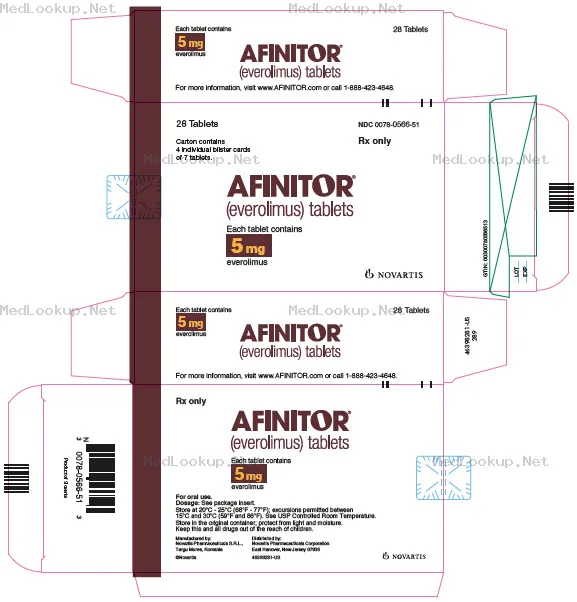
Active ingredients
Strength5 mg
Dosage formTABLET
ManufacturerNovartis Pharmaceuticals Corporation
Registration number0078-0566-51
Uses and indications
AFINITOR is a kinase inhibitor indicated for the treatment of:Postmenopausal women with advanced hormone receptor-positive, HER2-negative breast cancer in combination with exemestane after failure of treatment with letrozole or anastrozole. (1.1) Adults with progressive neuroendocrine tumors of pancreatic origin (PNET) and adults with progressive, well-differentiated, non-functional neuroendocrine tumors (NET) of gastrointestinal (GI) or lung origin that are unresectable, locally advanced or metastatic. Limitations of Use: AFINITOR is not indicated for the treatment of patients with functional carcinoid tumors. (1.2) Adults with advanced renal cell carcinoma (RCC) after failure of treatment with sunitinib or sorafenib. (1.3) Adults with renal angiomyolipoma and tuberous sclerosis complex (TSC), not requiring immediate surgery. (1.4) AFINITOR and AFINITOR DISPERZ are kinase inhibitors indicated for the treatment of adult and pediatric patients aged 1 year and older with TSC who have subependymal giant cell astrocytoma (SEGA) that requires therapeutic intervention but cannot be curatively resected. (1.5) AFINITOR DISPERZ is a kinase inhibitor indicated for the adjunctive treatment of adult and pediatric patients aged 2 years and older with TSC-associated partial-onset seizures. (1.6)1.1 Hormone Receptor-Positive, HER2-Negative Breast CancerAFINITOR® is indicated for the treatment of postmenopausal women with advanced hormone receptor-positive, HER2-negative breast cancer in combination with exemestane, after failure of treatment with letrozole or anastrozole.1.2 Neuroendocrine Tumors (NET)AFINITOR is indicated for the treatment of adult patients with progressive neuroendocrine tumors of pancreatic origin (PNET) with unresectable, locally advanced or metastatic disease. AFINITOR is indicated for the treatment of adult patients with progressive, well-differentiated, non-functional NET of gastrointestinal (GI) or lung origin with unresectable, locally advanced or metastatic disease.Limitations of Use: AFINITOR is not indicated for the treatment of patients with functional carcinoid tumors [see Clinical Studies (14.2)]. 1.3 Renal Cell Carcinoma (RCC) AFINITOR is indicated for the treatment of adult patients with advanced RCC after failure of treatment with sunitinib or sorafenib.1.4 Tuberous Sclerosis Complex (TSC)-Associated Renal AngiomyolipomaAFINITOR is indicated for the treatment of adult patients with renal angiomyolipoma and TSC, not requiring immediate surgery.1.5 Tuberous Sclerosis Complex (TSC)-Associated Subependymal Giant Cell Astrocytoma (SEGA)AFINITOR and AFINITOR DISPERZ® are indicated in adult and pediatric patients aged 1 year and older with TSC for the treatment of SEGA that requires therapeutic intervention but cannot be curatively resected.1.6 Tuberous Sclerosis Complex (TSC)-Associated Partial-Onset SeizuresAFINITOR DISPERZ is indicated for the adjunctive treatment of adult and pediatric patients aged 2 years and older with TSC-associated partial-onset seizures.
Contraindications
AFINITOR/AFINITOR DISPERZ is contraindicated in patients with clinically significant hypersensitivity to everolimus or to other rapamycin derivatives [see Warnings and Precautions (5.3)].
Side effects
Table 2 summarizes recommendations for dosage modifications of AFINITOR/AFINITOR DISPERZ for the management of adverse reactions. Table 2: Recommended Dosage Modifications for AFINITOR/AFINITOR DISPERZ for Adverse ReactionsAdverse ReactionSeverityDosage Modification Non-infectious pneumonitis [see Warnings and Precautions (5.1)] Grade 2Withhold until improvement to Grade 0 or 1. Resume at 50% of previous dose; change to every other day dosing if the reduced dose is lower than the lowest available strength. Permanently discontinue if toxicity does not resolve or improve to Grade 1 within 4 weeks. Grade 3Withhold until improvement to Grade 0 or 1. Resume at 50% of previous dose; change to every other day dosing if the reduced dose is lower than the lowest available strength.If toxicity recurs at Grade 3, permanently discontinue. Grade 4Permanently discontinue. Stomatitis [see Warnings and Precautions (5.5)] Grade 2Withhold until improvement to Grade 0 or 1. Resume at same dose. If recurs at Grade 2, withhold until improvement to Grade 0 or 1. Resume at 50% of previous dose; change to every other day dosing if the reduced dose is lower than the lowest available strength. Grade 3Withhold until improvement to Grade 0 or 1. Resume at 50% of previous dose; change to every other day dosing if the reduced dose is lower than the lowest available strength. Grade 4Permanently discontinue. Metabolic events (e.g., hyperglycemia, dyslipidemia) [see Warnings and Precautions (5.9)] Grade 3Withhold until improvement to Grade 0, 1, or 2. Resume at 50% of previous dose; change to every other day dosing if the reduced dose is lower than the lowest available strength. Grade 4Permanently discontinue. Other non-hematologic toxicities Grade 2If toxicity becomes intolerable, withhold until improvement to Grade 0 or 1. Resume at same dose. If toxicity recurs at Grade 2, withhold until improvement to Grade 0 or 1. Resume at 50% of previous dose; change to every other day dosing if the reduced dose is lower than the lowest available strength. Grade 3Withhold until improvement to Grade 0 or 1. Consider resuming at 50% of previous dose; change to every other day dosing if the reduced dose is lower than the lowest available strength.If recurs at Grade 3, permanently discontinue. Grade 4Permanently discontinue. Thrombocytopenia [see Warnings and Precautions (5.10)] Grade 2Withhold until improvement to Grade 0 or 1. Resume at same dose. Grade 3 OR Grade 4Withhold until improvement to Grade 0 or 1. Resume at 50% of previous dose; change to every other day dosing if the reduced dose is lower than the lowest available strength. Neutropenia [see Warnings and Precautions (5.10)] Grade 3Withhold until improvement to Grade 0, 1, or 2. Resume at same dose. Grade 4Withhold until improvement to Grade 0, 1, or 2. Resume at 50% of previous dose; change to every other day dosing if the reduced dose is lower than the lowest available strength. Febrile neutropenia [see Warnings and Precautions (5.10)] Grade 3Withhold until improvement to Grade 0, 1, or 2, and no fever. Resume at 50% of previous dose; change to every other day dosing if the reduced dose is lower than the lowest available strength. Grade 4Permanently discontinue.
The following serious adverse reactions are described elsewhere in the labeling:Non-Infectious Pneumonitis [see Warnings and Precautions (5.1)] Infections [see Warnings and Precautions (5.2)] Severe Hypersensitivity Reactions [see Warnings and Precautions (5.3)] Angioedema with Concomitant Use of ACE inhibitors [see Warnings and Precautions (5.4)] Stomatitis [see Warnings and Precautions (5.5)] Renal Failure [see Warnings and Precautions (5.6)] Impaired Wound Healing [see Warnings and Precautions (5.7)] Metabolic Disorders [see Warnings and Precautions (5.9)] Myelosuppression [see Warnings and Precautions (5.10)] Radiation Sensitization and Radiation Recall [see Warnings and Precautions (5.12)]
The following serious adverse reactions are described elsewhere in the labeling:Non-Infectious Pneumonitis [see Warnings and Precautions (5.1)] Infections [see Warnings and Precautions (5.2)] Severe Hypersensitivity Reactions [see Warnings and Precautions (5.3)] Angioedema with Concomitant Use of ACE inhibitors [see Warnings and Precautions (5.4)] Stomatitis [see Warnings and Precautions (5.5)] Renal Failure [see Warnings and Precautions (5.6)] Impaired Wound Healing [see Warnings and Precautions (5.7)] Metabolic Disorders [see Warnings and Precautions (5.9)] Myelosuppression [see Warnings and Precautions (5.10)] Radiation Sensitization and Radiation Recall [see Warnings and Precautions (5.12)]
Precautions
Non-Infectious Pneumonitis: Monitor for clinical symptoms or radiological changes. Withhold or permanently discontinue based on severity. (2.9, 5.1) Infections: Monitor for signs and symptoms of infection. Withhold or permanently discontinue based on severity. (2.9, 5.2) Severe Hypersensitivity Reactions: Permanently discontinue for clinically significant hypersensitivity. (5.3) Angioedema: Patients taking concomitant angiotensin-converting-enzyme (ACE) inhibitors may be at increased risk for angioedema. Permanently discontinue for angioedema. (5.4, 7.2) Stomatitis: Initiate dexamethasone alcohol-free mouthwash when starting treatment. (5.5, 6.1) Renal Failure: Monitor renal function prior to treatment and periodically thereafter. (5.6) Risk of Impaired Wound Healing: Withhold for at least 1 week prior to elective surgery. Do not administer for at least 2 weeks following major surgery and until adequate wound healing. The safety of resumption of treatment after resolution of wound healing complications has not been established. (5.7) Geriatric Patients: Monitor and adjust dose for adverse reactions. (5.8) Metabolic Disorders: Monitor serum glucose and lipids prior to treatment and periodically thereafter. Withhold or permanently discontinue based on severity. (2.9, 5.9) Myelosuppression: Monitor hematologic parameters prior to treatment and periodically thereafter. Withhold or permanently discontinue based on severity. (2.9, 5.10) Risk of Infection or Reduced Immune Response with Vaccination: Avoid live vaccines and close contact with those who have received live vaccines. Complete recommended childhood vaccinations prior to starting treatment. (5.11) Radiation Sensitization and Radiation Recall: Severe radiation reactions may occur. (5.12, 6.2) Embryo-Fetal Toxicity: Can cause fetal harm. Advise patients of reproductive potential of the potential risk to a fetus and to use effective contraception. (5.13, 8.1, 8.3) 5.1 Non-infectious PneumonitisNon-infectious pneumonitis is a class effect of rapamycin derivatives. Non-infectious pneumonitis was reported in up to 19% of patients treated with AFINITOR/AFINITOR DISPERZ in clinical trials, some cases were reported with pulmonary hypertension (including pulmonary arterial hypertension) as a secondary event. The incidence of Grade 3 and 4 non-infectious pneumonitis was up to 4% and up to 0.2%, respectively [see Adverse Reactions (6.1)]. Fatal outcomes have been observed.Consider a diagnosis of non-infectious pneumonitis in patients presenting with non-specific respiratory signs and symptoms. Consider opportunistic infections, such as pneumocystis jiroveci pneumonia (PJP) in the differential diagnosis. Advise patients to report promptly any new or worsening respiratory symptoms.Continue AFINITOR/AFINITOR DISPERZ without dose alteration in patients who develop radiological changes suggestive of non-infectious pneumonitis and have few or no symptoms. Imaging appears to overestimate the incidence of clinical pneumonitis. For Grade 2 to 4 non-infectious pneumonitis, withhold or permanently discontinue AFINITOR/AFINITOR DISPERZ based on severity [see Dosage and Administration (2.9)]. Corticosteroids may be indicated until clinical symptoms resolve. Administer prophylaxis for PJP when concomitant use of corticosteroids or other immunosuppressive agents are required. The development of pneumonitis has been reported even at a reduced dose.5.2 InfectionsAFINITOR/AFINITOR DISPERZ has immunosuppressive properties and may predispose patients to bacterial, fungal, viral, or protozoal infections, including infections with opportunistic pathogens [see Adverse Reactions (6.1)]. Localized and systemic infections, including pneumonia, mycobacterial infections, other bacterial infections, invasive fungal infections (e.g., aspergillosis, candidiasis, or PJP), and viral infections (e.g., reactivation of hepatitis B virus) have occurred. Some of these infections have been severe (e.g., sepsis, septic shock, or resulting in multisystem organ failure) or fatal. The incidence of Grade 3 and 4 infections was up to 10% and up to 3%, respectively. The incidence of serious infections was reported at a higher frequency in patients < 6 years of age [see Use in Specific Populations (8.4)]. Complete treatment of preexisting invasive fungal infections prior to starting treatment. Monitor for signs and symptoms of infection. Withhold or permanently discontinue AFINITOR/AFINITOR DISPERZ based on severity of infection [see Dosage and Administration (2.9)]. Administer prophylaxis for PJP when concomitant use of corticosteroids or other immunosuppressive agents are required.5.3 Severe Hypersensitivity Reactions Hypersensitivity reactions to AFINITOR/AFINITOR DISPERZ have been observed and include anaphylaxis, dyspnea, flushing, chest pain, and angioedema (e.g., swelling of the airways or tongue, with or without respiratory impairment) [see Contraindications (4)]. The incidence of Grade 3 hypersensitivity reactions was up to 1%. Permanently discontinue AFINITOR/AFINITOR DISPERZ for the development of clinically significant hypersensitivity. 5.4 Angioedema With Concomitant Use of Angiotensin-Converting Enzyme (ACE) InhibitorsPatients taking concomitant ACE inhibitors with AFINITOR/AFINITOR DISPERZ may be at increased risk for angioedema (e.g., swelling of the airways or tongue, with or without respiratory impairment). In a pooled analysis of randomized double-blind oncology clinical trials, the incidence of angioedema in patients taking AFINITOR with an ACE inhibitor was 6.8% compared to 1.3% in the control arm with an ACE inhibitor. Permanently discontinue AFINITOR/AFINITOR DISPERZ for angioedema. 5.5 StomatitisStomatitis, including mouth ulcers and oral mucositis, has occurred in patients treated with AFINITOR/AFINITOR DISPERZ at an incidence ranging from 44% to 78% across clinical trials. Grades 3-4 stomatitis was reported in 4% to 9% of patients [see Adverse Reactions (6.1)]. Stomatitis most often occurs within the first 8 weeks of treatment. When starting AFINITOR/AFINITOR DISPERZ, initiating dexamethasone alcohol-free oral solution as a swish and spit mouthwash reduces the incidence and severity of stomatitis [see Adverse Reactions (6.1)]. If stomatitis does occur, mouthwashes and/or other topical treatments are recommended. Avoid alcohol-, hydrogen peroxide-, iodine-, or thyme- containing products, as they may exacerbate the condition. Do not administer antifungal agents, unless fungal infection has been diagnosed.5.6 Renal FailureCases of renal failure (including acute renal failure), some with a fatal outcome, have occurred in patients taking AFINITOR. Elevations of serum creatinine and proteinuria have been reported in patients taking AFINITOR/AFINITOR DISPERZ [see Adverse Reactions (6.1)]. The incidence of Grade 3 and 4 elevations of serum creatinine was up to 2% and up to 1%, respectively. The incidence of Grade 3 and 4 proteinuria was up to 1% and up to 0.5%, respectively. Monitor renal function prior to starting AFINITOR/AFINITOR DISPERZ and annually thereafter. Monitor renal function at least every 6 months in patients who have additional risk factors for renal failure.5.7 Risk of Impaired Wound HealingImpaired wound healing can occur in patients who receive drugs that inhibit the VEGF signaling pathway. Therefore, AFINITOR/AFINITOR DISPERZ have the potential to adversely affect wound healing. Withhold AFINITOR/AFINITOR DISPERZ for at least 1 week prior to elective surgery. Do not administer for at least 2 weeks following major surgery and until adequate wound healing. The safety of resumption of treatment upon resolution of wound healing complications has not been established. 5.8 Geriatric PatientsIn the randomized hormone receptor-positive, HER2-negative breast cancer study (BOLERO-2), the incidence of deaths due to any cause within 28 days of the last AFINITOR dose was 6% in patients ≥ 65 years of age compared to 2% in patients < 65 years of age. Adverse reactions leading to permanent treatment discontinuation occurred in 33% of patients ≥ 65 years of age compared to 17% in patients < 65 years of age. Careful monitoring and appropriate dose adjustments for adverse reactions are recommended [see Dosage and Administration (2.9), Use in Specific Populations (8.5)].5.9 Metabolic DisordersHyperglycemia, hypercholesterolemia, and hypertriglyceridemia have been reported in patients taking AFINITOR/AFINITOR DISPERZ at an incidence up to 75%, 86%, and 73%, respectively. The incidence of these Grade 3 and 4 laboratory abnormalities was up to 15% and up to 0.4%, respectively [see Adverse Reactions (6.1)]. In non-diabetic patients, monitor fasting serum glucose prior to starting AFINITOR/AFINITOR DISPERZ and annually thereafter. In diabetic patients, monitor fasting serum glucose more frequently as clinically indicated. Monitor lipid profile prior to starting AFINITOR/AFINITOR DISPERZ and annually thereafter. When possible, achieve optimal glucose and lipid control prior to starting AFINITOR/AFINITOR DISPERZ. For Grade 3 to 4 metabolic events, withhold or permanently discontinue AFINITOR/AFINITOR DISPERZ based on severity [see Dosage and Administration (2.9)]. 5.10 MyelosuppressionAnemia, lymphopenia, neutropenia, and thrombocytopenia have been reported in patients taking AFINITOR/AFINITOR DISPERZ. The incidence of these Grade 3 and 4 laboratory abnormalities was up to 16% and up to 2%, respectively [see Adverse Reactions (6.1)]. Monitor complete blood count (CBC) prior to starting AFINITOR/AFINITOR DISPERZ every 6 months for the first year of treatment and annually thereafter. Withhold or permanently discontinue AFINITOR/AFINITOR DISPERZ based on severity [see Dosage and Administration (2.9)]. 5.11 Risk of Infection or Reduced Immune Response With VaccinationThe safety of immunization with live vaccines during AFINITOR/AFINITOR DISPERZ therapy has not been studied. Due to the potential increased risk of infection, avoid the use of live vaccines and close contact with individuals who have received live vaccines during treatment with AFINITOR/AFINITOR DISPERZ. Due to the potential increased risk of infection or reduced immune response with vaccination, complete the recommended childhood series of vaccinations according to American Council on Immunization Practices (ACIP) guidelines prior to the start of therapy. An accelerated vaccination schedule may be appropriate.5.12 Radiation Sensitization and Radiation Recall Radiation sensitization and recall, in some cases severe, involving cutaneous and visceral organs (including radiation esophagitis and pneumonitis) have been reported in patients treated with radiation prior to, during, or subsequent to AFINITOR/AFINITOR DISPERZ treatment [see Adverse Reactions (6.2)]. Monitor patients closely when AFINITOR/AFINITOR DISPERZ is administered during or sequentially with radiation treatment. 5.13 Embryo-Fetal ToxicityBased on animal studies and the mechanism of action, AFINITOR/AFINITOR DISPERZ can cause fetal harm when administered to a pregnant woman. In animal studies, everolimus caused embryo-fetal toxicities in rats when administered during the period of organogenesis at maternal exposures that were lower than human exposures at the clinical dose of 10 mg once daily. Advise pregnant women of the potential risk to a fetus. Advise female patients of reproductive potential to avoid becoming pregnant and to use effective contraception during treatment with AFINITOR/AFINITOR DISPERZ and for 8 weeks after the last dose. Advise male patients with female partners of reproductive potential to use effective contraception during treatment with AFINITOR/AFINITOR DISPERZ and for 4 weeks after the last dose [see Use in Specific Populations (8.1, 8.3)].
Dosage
Do not combine AFINITOR and AFINITOR DISPERZ to achieve the total daily dose. (2.1)Breast Cancer:10 mg orally once daily. (2.2)NET:10 mg orally once daily. (2.3)RCC:10 mg orally once daily. (2.4)TSC-Associated Renal Angiomyolipoma:10 mg orally once daily. (2.5)TSC-Associated SEGA:4.5 mg/m2 orally once daily; adjust dose to attain trough concentrations of 5-15 ng/mL. (2.6, 2.8)TSC-Associated Partial-Onset Seizures:5 mg/m2 orally once daily; adjust dose to attain trough concentrations of 5-15 ng/mL. (2.7, 2.8)2.1 Important Dosage InformationAFINITOR and AFINITOR DISPERZ are two different dosage forms. Select the recommended dosage form based on the indication [see Indications and Usage (1)]. Do not combine AFINITOR and AFINITOR DISPERZ to achieve the total dose.2.2 Recommended Dosage for Hormone Receptor-Positive, HER2-Negative Breast CancerThe recommended dosage of AFINITOR is 10 mg orally once daily until disease progression or unacceptable toxicity. 2.3 Recommended Dosage for Neuroendocrine Tumors (NET)The recommended dosage of AFINITOR is 10 mg orally once daily until disease progression or unacceptable toxicity.2.4 Recommended Dosage for Renal Cell Carcinoma (RCC)The recommended dosage of AFINITOR is 10 mg orally once daily until disease progression or unacceptable toxicity.2.5 Recommended Dosage for Tuberous Sclerosis Complex (TSC)-Associated Renal AngiomyolipomaThe recommended dosage of AFINITOR is 10 mg orally once daily until disease progression or unacceptable toxicity. 2.6 Recommended Dosage for Tuberous Sclerosis Complex (TSC)-Associated Subependymal Giant Cell Astrocytoma (SEGA)The recommended starting dosage of AFINITOR/AFINITOR DISPERZ is 4.5 mg/m2 orally once daily until disease progression or unacceptable toxicity [see Dosage and Administration (2.8)]. 2.7 Recommended Dosage for Tuberous Sclerosis Complex (TSC)-Associated Partial-Onset SeizuresThe recommended starting dosage of AFINITOR DISPERZ is 5 mg/m2 orally once daily until disease progression or unacceptable toxicity [see Dosage and Administration (2.8)]. 2.8 Therapeutic Drug Monitoring (TDM) and Dose Titration for Tuberous Sclerosis Complex (TSC)-Associated Subependymal Giant Cell Astrocytoma (SEGA) and TSC-Associated Partial-Onset SeizuresMonitor everolimus whole blood trough concentrations at time points recommended in Table 1. Titrate the dose to attain trough concentrations of 5 ng/mL to 15 ng/mL. Adjust the dose using the following equation: New dose* = current dose x (target concentration divided by current concentration)*The maximum dose increment at any titration must not exceed 5 mg. Multiple dose titrations may be required to attain the target trough concentration.When possible, use the same assay and laboratory for TDM throughout treatment.Table 1: Recommended Timing of Therapeutic Drug MonitoringAbbreviation: P-gp, P-glycoprotein.EventWhen to Assess Trough Concentrations After Event Initiation of AFINITOR/AFINITOR DISPERZ1 to 2 weeks Modification of AFINITOR/AFINITOR DISPERZ dose1 to 2 weeks Switch between AFINITOR and AFINITOR DISPERZ1 to 2 weeksInitiation or discontinuation of moderate CYP3A inhibitor and P-gp inhibitor2 weeksInitiation or discontinuation of cannabidiol oral solution2 weeksInitiation or discontinuation of strong CYP3A inducer and P-gp inducer2 weeks Change in hepatic function2 weeks Stable dose with changing body surface area (BSA)Every 3 to 6 months Stable dose with stable BSAEvery 6 to 12 months2.9 Dosage Modifications for Adverse ReactionsTable 2 summarizes recommendations for dosage modifications of AFINITOR/AFINITOR DISPERZ for the management of adverse reactions. Table 2: Recommended Dosage Modifications for AFINITOR/AFINITOR DISPERZ for Adverse ReactionsAdverse ReactionSeverityDosage Modification Non-infectious pneumonitis [see Warnings and Precautions (5.1)] Grade 2Withhold until improvement to Grade 0 or 1. Resume at 50% of previous dose; change to every other day dosing if the reduced dose is lower than the lowest available strength. Permanently discontinue if toxicity does not resolve or improve to Grade 1 within 4 weeks. Grade 3Withhold until improvement to Grade 0 or 1. Resume at 50% of previous dose; change to every other day dosing if the reduced dose is lower than the lowest available strength.If toxicity recurs at Grade 3, permanently discontinue. Grade 4Permanently discontinue. Stomatitis [see Warnings and Precautions (5.5)] Grade 2Withhold until improvement to Grade 0 or 1. Resume at same dose. If recurs at Grade 2, withhold until improvement to Grade 0 or 1. Resume at 50% of previous dose; change to every other day dosing if the reduced dose is lower than the lowest available strength. Grade 3Withhold until improvement to Grade 0 or 1. Resume at 50% of previous dose; change to every other day dosing if the reduced dose is lower than the lowest available strength. Grade 4Permanently discontinue. Metabolic events (e.g., hyperglycemia, dyslipidemia) [see Warnings and Precautions (5.9)] Grade 3Withhold until improvement to Grade 0, 1, or 2. Resume at 50% of previous dose; change to every other day dosing if the reduced dose is lower than the lowest available strength. Grade 4Permanently discontinue. Other non-hematologic toxicities Grade 2If toxicity becomes intolerable, withhold until improvement to Grade 0 or 1. Resume at same dose. If toxicity recurs at Grade 2, withhold until improvement to Grade 0 or 1. Resume at 50% of previous dose; change to every other day dosing if the reduced dose is lower than the lowest available strength. Grade 3Withhold until improvement to Grade 0 or 1. Consider resuming at 50% of previous dose; change to every other day dosing if the reduced dose is lower than the lowest available strength.If recurs at Grade 3, permanently discontinue. Grade 4Permanently discontinue. Thrombocytopenia [see Warnings and Precautions (5.10)] Grade 2Withhold until improvement to Grade 0 or 1. Resume at same dose. Grade 3 OR Grade 4Withhold until improvement to Grade 0 or 1. Resume at 50% of previous dose; change to every other day dosing if the reduced dose is lower than the lowest available strength. Neutropenia [see Warnings and Precautions (5.10)] Grade 3Withhold until improvement to Grade 0, 1, or 2. Resume at same dose. Grade 4Withhold until improvement to Grade 0, 1, or 2. Resume at 50% of previous dose; change to every other day dosing if the reduced dose is lower than the lowest available strength. Febrile neutropenia [see Warnings and Precautions (5.10)] Grade 3Withhold until improvement to Grade 0, 1, or 2, and no fever. Resume at 50% of previous dose; change to every other day dosing if the reduced dose is lower than the lowest available strength. Grade 4Permanently discontinue.2.10 Dosage Modifications for Hepatic ImpairmentThe recommended dosages of AFINITOR/AFINITOR DISPERZ for patients with hepatic impairment are described in Table 3 [see Use in Specific Populations (8.6)]: Table 3: Recommended Dosage Modifications for Patients With Hepatic ImpairmentAbbreviations: NET, Neuroendocrine Tumors; RCC, Renal Cell Carcinoma; SEGA, Subependymal Giant Cell Astrocytoma; TSC, Tuberous Sclerosis Complex.IndicationDose Modification for AFINITOR/AFINITOR DISPERZ Breast Cancer, NET, RCC, and TSC-Associated Renal Angiomyolipoma Mild hepatic impairment (Child-Pugh class A) – 7.5 mg orally once daily; decrease the dose to 5 mg orally once daily if a dose of 7.5 mg once daily is not tolerated.Moderate hepatic impairment (Child-Pugh class B) – 5 mg orally once daily; decrease the dose to 2.5 mg orally once daily if a dose of 5 mg once daily is not tolerated.Severe hepatic impairment (Child-Pugh class C) – 2.5 mg orally once daily if the desired benefit outweighs the risk; do not exceed a dose of 2.5 mg once daily. TSC-Associated SEGA and TSC-Associated Partial-Onset Seizures Severe hepatic impairment (Child-Pugh class C) – 2.5 mg/m2 orally once daily.Adjust dose based on everolimus trough concentrations as recommended [see Dosage and Administration (2.8)].2.11 Dosage Modifications for Drug InteractionsStrong or Moderate CYP3A Inhibitor and P-glycoprotein (P-gp) InhibitorAvoid the coadministration of a strong CYP3A inhibitor and P-gp inhibitor [see Drug Interactions (7.1)].Reduce the dosage for AFINITOR/AFINITOR DISPERZ with a moderate CYP3A inhibitor and P-gp as recommended in Table 4 [see Drug Interactions (7.1), Clinical Pharmacology (12.3)].Table 4: Recommended Dosage Modifications with a Moderate CYP3A Inhibitor and P-gp InhibitorIndicationDosage Modification for AFINITOR/AFINITOR DISPERZ Breast Cancer, NET, RCC, and TSC-Associated Renal Angiomyolipoma Reduce dose to 2.5 mg once daily.May increase dose to 5 mg once daily if tolerated.Resume dosage administered prior to inhibitor initiation, once the inhibitor is discontinued for 3 days. TSC-Associated SEGA and TSC-Associated Partial-Onset Seizures Reduce the daily dose by 50%.Change to every other day dosing if the reduced dose is lower than the lowest available strength.Resume dosage administered prior to inhibitor initiation, once the inhibitor is discontinued for 3 days.Assess trough concentrations when initiating and discontinuing the inhibitor [see Dosage and Administration (2.8)].Cannabidiol Oral SolutionReduce the dosage of AFINITOR/AFINITOR DISPERZ when coadministered with cannabidiol oral solution as recommended in Table 5 [see Clinical Pharmacology (12.3)]. The effects of other cannabidiol products on everolimus exposure are unknown.Table 5: Recommended Dosage Modifications with Cannabidiol Oral SolutionIndicationDosage Modification for AFINITOR/AFINITOR DISPERZ Breast Cancer, NET, RCC, and TSC-Associated Renal Angiomyolipoma Reduce dose to 5 mg once daily.May increase dose to 7.5 mg once daily if tolerated.Resume dosage administered prior to cannabidiol oral solution initiation, once cannabidiol oral solution is discontinued for 3 days. TSC-Associated SEGA and TSC-Associated Partial-Onset Seizures Reduce the daily dose by 50%.Change to every other day dosing if the reduced dose is lower than the lowest available strength.Resume dosage administered prior to cannabidiol oral solution initiation, once cannabidiol oral solution is discontinued for 3 days.Assess trough concentrations when initiating and discontinuing the inhibitor [see Dosage and Administration (2.8)].Strong CYP3A Inducer and P-gp InducerIncrease the dosage for AFINITOR/AFINITOR DISPERZ with a strong CYP3A inducer and P-gp inducer as recommended in Table 6 [see Drug Interactions (7.1), Clinical Pharmacology (12.3)].Table 6: Recommended Dosage Modifications with a Strong CYP3A Inducer and P-gp InducerIndicationDosage Modification for AFINITOR/AFINITOR DISPERZ Breast Cancer, NET, RCC, and TSC-Associated Renal Angiomyolipoma Avoid coadministration where alternatives exist.If coadministration cannot be avoided, double the daily dose using increments of 5 mg or less. Multiple increments may be required.Resume the dosage administered prior to inducer initiation, once an inducer is discontinued for 5 days. TSC-Associated SEGA and TSC-Associated Partial-Onset Seizures Double the daily dose using increments of 5 mg or less. Multiple increments may be required.Addition of another strong CYP3A4 inducer in a patient already receiving treatment with a strong CYP3A4 inducer may not require additional dosage modification.Assess trough concentrations when initiating and discontinuing the inducer [see Dosage and Administration (2.8)].Resume the dosage administered before starting any inducer, once all inducers are discontinued for 5 days.2.12 Administration and PreparationAdminister AFINITOR/AFINITOR DISPERZ at the same time each day.Administer AFINITOR/AFINITOR DISPERZ consistently either with or without food [see Clinical Pharmacology (12.3)].If a dose of AFINITOR/AFINITOR DISPERZ is missed, it can be administered up to 6 hours after the time it is normally administered. After more than 6 hours, the dose should be skipped for that day. The next day, AFINITOR/AFINITOR DISPERZ should be administered at its usual time. Double doses should not be administered to make up for the dose that was missed.AFINITORAFINITOR should be swallowed whole with a glass of water. Do not break or crush tablets.AFINITOR DISPERZWear gloves to avoid possible contact with everolimus when preparing suspensions of AFINITOR DISPERZ for another person.Administer as a suspension only.Administer suspension immediately after preparation. Discard suspension if not administered within 60 minutes after preparation.Prepare suspension in water only.Using an Oral Syringe to Prepare Oral Suspension:Place the prescribed dose into a 10-mL syringe. Do not exceed a total of 10 mg per syringe. If higher doses are required, prepare an additional syringe. Do not break or crush tablets.Draw approximately 5 mL of water and 4 mL of air into the syringe.Place the filled syringe into a container (tip up) for 3 minutes, until the tablets are in suspension.Gently invert the syringe 5 times immediately prior to administration.After administration of the prepared suspension, draw approximately 5 mL of water and 4 mL of air into the same syringe, and swirl the contents to suspend remaining particles. Administer the entire contents of the syringe.Using a Small Drinking Glass to Prepare Oral Suspension:Place the prescribed dose into a small drinking glass (maximum size 100 mL) containing approximately 25 mL of water. Do not exceed a total of 10 mg per glass. If higher doses are required, prepare an additional glass. Do not break or crush tablets.Allow 3 minutes for suspension to occur.Stir the contents gently with a spoon, immediately prior to drinking.After administration of the prepared suspension, add 25 mL of water and stir with the same spoon to re-suspend remaining particles. Administer the entire contents of the glass.
AFINITOR and AFINITOR DISPERZ are two different dosage forms. Select the recommended dosage form based on the indication [see Indications and Usage (1)]. Do not combine AFINITOR and AFINITOR DISPERZ to achieve the total dose.
The recommended dosage of AFINITOR is 10 mg orally once daily until disease progression or unacceptable toxicity.
The recommended starting dosage of AFINITOR/AFINITOR DISPERZ is 4.5 mg/m2 orally once daily until disease progression or unacceptable toxicity [see Dosage and Administration (2.8)].
The recommended starting dosage of AFINITOR DISPERZ is 5 mg/m2 orally once daily until disease progression or unacceptable toxicity [see Dosage and Administration (2.8)].
Table 2 summarizes recommendations for dosage modifications of AFINITOR/AFINITOR DISPERZ for the management of adverse reactions. Table 2: Recommended Dosage Modifications for AFINITOR/AFINITOR DISPERZ for Adverse ReactionsAdverse ReactionSeverityDosage Modification Non-infectious pneumonitis [see Warnings and Precautions (5.1)] Grade 2Withhold until improvement to Grade 0 or 1. Resume at 50% of previous dose; change to every other day dosing if the reduced dose is lower than the lowest available strength. Permanently discontinue if toxicity does not resolve or improve to Grade 1 within 4 weeks. Grade 3Withhold until improvement to Grade 0 or 1. Resume at 50% of previous dose; change to every other day dosing if the reduced dose is lower than the lowest available strength.If toxicity recurs at Grade 3, permanently discontinue. Grade 4Permanently discontinue. Stomatitis [see Warnings and Precautions (5.5)] Grade 2Withhold until improvement to Grade 0 or 1. Resume at same dose. If recurs at Grade 2, withhold until improvement to Grade 0 or 1. Resume at 50% of previous dose; change to every other day dosing if the reduced dose is lower than the lowest available strength. Grade 3Withhold until improvement to Grade 0 or 1. Resume at 50% of previous dose; change to every other day dosing if the reduced dose is lower than the lowest available strength. Grade 4Permanently discontinue. Metabolic events (e.g., hyperglycemia, dyslipidemia) [see Warnings and Precautions (5.9)] Grade 3Withhold until improvement to Grade 0, 1, or 2. Resume at 50% of previous dose; change to every other day dosing if the reduced dose is lower than the lowest available strength. Grade 4Permanently discontinue. Other non-hematologic toxicities Grade 2If toxicity becomes intolerable, withhold until improvement to Grade 0 or 1. Resume at same dose. If toxicity recurs at Grade 2, withhold until improvement to Grade 0 or 1. Resume at 50% of previous dose; change to every other day dosing if the reduced dose is lower than the lowest available strength. Grade 3Withhold until improvement to Grade 0 or 1. Consider resuming at 50% of previous dose; change to every other day dosing if the reduced dose is lower than the lowest available strength.If recurs at Grade 3, permanently discontinue. Grade 4Permanently discontinue. Thrombocytopenia [see Warnings and Precautions (5.10)] Grade 2Withhold until improvement to Grade 0 or 1. Resume at same dose. Grade 3 OR Grade 4Withhold until improvement to Grade 0 or 1. Resume at 50% of previous dose; change to every other day dosing if the reduced dose is lower than the lowest available strength. Neutropenia [see Warnings and Precautions (5.10)] Grade 3Withhold until improvement to Grade 0, 1, or 2. Resume at same dose. Grade 4Withhold until improvement to Grade 0, 1, or 2. Resume at 50% of previous dose; change to every other day dosing if the reduced dose is lower than the lowest available strength. Febrile neutropenia [see Warnings and Precautions (5.10)] Grade 3Withhold until improvement to Grade 0, 1, or 2, and no fever. Resume at 50% of previous dose; change to every other day dosing if the reduced dose is lower than the lowest available strength. Grade 4Permanently discontinue.
The recommended dosages of AFINITOR/AFINITOR DISPERZ for patients with hepatic impairment are described in Table 3 [see Use in Specific Populations (8.6)]: Table 3: Recommended Dosage Modifications for Patients With Hepatic ImpairmentAbbreviations: NET, Neuroendocrine Tumors; RCC, Renal Cell Carcinoma; SEGA, Subependymal Giant Cell Astrocytoma; TSC, Tuberous Sclerosis Complex.IndicationDose Modification for AFINITOR/AFINITOR DISPERZ Breast Cancer, NET, RCC, and TSC-Associated Renal Angiomyolipoma Mild hepatic impairment (Child-Pugh class A) – 7.5 mg orally once daily; decrease the dose to 5 mg orally once daily if a dose of 7.5 mg once daily is not tolerated.Moderate hepatic impairment (Child-Pugh class B) – 5 mg orally once daily; decrease the dose to 2.5 mg orally once daily if a dose of 5 mg once daily is not tolerated.Severe hepatic impairment (Child-Pugh class C) – 2.5 mg orally once daily if the desired benefit outweighs the risk; do not exceed a dose of 2.5 mg once daily. TSC-Associated SEGA and TSC-Associated Partial-Onset Seizures Severe hepatic impairment (Child-Pugh class C) – 2.5 mg/m2 orally once daily.Adjust dose based on everolimus trough concentrations as recommended [see Dosage and Administration (2.8)].
Strong or Moderate CYP3A Inhibitor and P-glycoprotein (P-gp) InhibitorAvoid the coadministration of a strong CYP3A inhibitor and P-gp inhibitor [see Drug Interactions (7.1)].Reduce the dosage for AFINITOR/AFINITOR DISPERZ with a moderate CYP3A inhibitor and P-gp as recommended in Table 4 [see Drug Interactions (7.1), Clinical Pharmacology (12.3)].Table 4: Recommended Dosage Modifications with a Moderate CYP3A Inhibitor and P-gp InhibitorIndicationDosage Modification for AFINITOR/AFINITOR DISPERZ Breast Cancer, NET, RCC, and TSC-Associated Renal Angiomyolipoma Reduce dose to 2.5 mg once daily.May increase dose to 5 mg once daily if tolerated.Resume dosage administered prior to inhibitor initiation, once the inhibitor is discontinued for 3 days. TSC-Associated SEGA and TSC-Associated Partial-Onset Seizures Reduce the daily dose by 50%.Change to every other day dosing if the reduced dose is lower than the lowest available strength.Resume dosage administered prior to inhibitor initiation, once the inhibitor is discontinued for 3 days.Assess trough concentrations when initiating and discontinuing the inhibitor [see Dosage and Administration (2.8)].Cannabidiol Oral SolutionReduce the dosage of AFINITOR/AFINITOR DISPERZ when coadministered with cannabidiol oral solution as recommended in Table 5 [see Clinical Pharmacology (12.3)]. The effects of other cannabidiol products on everolimus exposure are unknown.Table 5: Recommended Dosage Modifications with Cannabidiol Oral SolutionIndicationDosage Modification for AFINITOR/AFINITOR DISPERZ Breast Cancer, NET, RCC, and TSC-Associated Renal Angiomyolipoma Reduce dose to 5 mg once daily.May increase dose to 7.5 mg once daily if tolerated.Resume dosage administered prior to cannabidiol oral solution initiation, once cannabidiol oral solution is discontinued for 3 days. TSC-Associated SEGA and TSC-Associated Partial-Onset Seizures Reduce the daily dose by 50%.Change to every other day dosing if the reduced dose is lower than the lowest available strength.Resume dosage administered prior to cannabidiol oral solution initiation, once cannabidiol oral solution is discontinued for 3 days.Assess trough concentrations when initiating and discontinuing the inhibitor [see Dosage and Administration (2.8)].Strong CYP3A Inducer and P-gp InducerIncrease the dosage for AFINITOR/AFINITOR DISPERZ with a strong CYP3A inducer and P-gp inducer as recommended in Table 6 [see Drug Interactions (7.1), Clinical Pharmacology (12.3)].Table 6: Recommended Dosage Modifications with a Strong CYP3A Inducer and P-gp InducerIndicationDosage Modification for AFINITOR/AFINITOR DISPERZ Breast Cancer, NET, RCC, and TSC-Associated Renal Angiomyolipoma Avoid coadministration where alternatives exist.If coadministration cannot be avoided, double the daily dose using increments of 5 mg or less. Multiple increments may be required.Resume the dosage administered prior to inducer initiation, once an inducer is discontinued for 5 days. TSC-Associated SEGA and TSC-Associated Partial-Onset Seizures Double the daily dose using increments of 5 mg or less. Multiple increments may be required.Addition of another strong CYP3A4 inducer in a patient already receiving treatment with a strong CYP3A4 inducer may not require additional dosage modification.Assess trough concentrations when initiating and discontinuing the inducer [see Dosage and Administration (2.8)].Resume the dosage administered before starting any inducer, once all inducers are discontinued for 5 days.
AFINITORTablets, white to slightly yellow and elongated with a bevelled edge:2.5 mg: engraved with “LCL” on one side and “NVR” on the other.5 mg: engraved with “5” on one side and “NVR” on the other.7.5 mg: engraved with “7P5” on one side and “NVR” on the other.10 mg: engraved with “UHE” on one side and “NVR” on the other.AFINITOR DISPERZTablets for oral suspension, white to slightly yellowish, round, and flat with a bevelled edge:2 mg: engraved with “D2” on one side and “NVR” on the other.3 mg: engraved with “D3” on one side and “NVR” on the other.5 mg: engraved with “D5” on one side and “NVR” on the other.
Drug interactions
Strong or Moderate CYP3A Inhibitor and P-glycoprotein (P-gp) InhibitorAvoid the coadministration of a strong CYP3A inhibitor and P-gp inhibitor [see Drug Interactions (7.1)].Reduce the dosage for AFINITOR/AFINITOR DISPERZ with a moderate CYP3A inhibitor and P-gp as recommended in Table 4 [see Drug Interactions (7.1), Clinical Pharmacology (12.3)].Table 4: Recommended Dosage Modifications with a Moderate CYP3A Inhibitor and P-gp InhibitorIndicationDosage Modification for AFINITOR/AFINITOR DISPERZ Breast Cancer, NET, RCC, and TSC-Associated Renal Angiomyolipoma Reduce dose to 2.5 mg once daily.May increase dose to 5 mg once daily if tolerated.Resume dosage administered prior to inhibitor initiation, once the inhibitor is discontinued for 3 days. TSC-Associated SEGA and TSC-Associated Partial-Onset Seizures Reduce the daily dose by 50%.Change to every other day dosing if the reduced dose is lower than the lowest available strength.Resume dosage administered prior to inhibitor initiation, once the inhibitor is discontinued for 3 days.Assess trough concentrations when initiating and discontinuing the inhibitor [see Dosage and Administration (2.8)].Cannabidiol Oral SolutionReduce the dosage of AFINITOR/AFINITOR DISPERZ when coadministered with cannabidiol oral solution as recommended in Table 5 [see Clinical Pharmacology (12.3)]. The effects of other cannabidiol products on everolimus exposure are unknown.Table 5: Recommended Dosage Modifications with Cannabidiol Oral SolutionIndicationDosage Modification for AFINITOR/AFINITOR DISPERZ Breast Cancer, NET, RCC, and TSC-Associated Renal Angiomyolipoma Reduce dose to 5 mg once daily.May increase dose to 7.5 mg once daily if tolerated.Resume dosage administered prior to cannabidiol oral solution initiation, once cannabidiol oral solution is discontinued for 3 days. TSC-Associated SEGA and TSC-Associated Partial-Onset Seizures Reduce the daily dose by 50%.Change to every other day dosing if the reduced dose is lower than the lowest available strength.Resume dosage administered prior to cannabidiol oral solution initiation, once cannabidiol oral solution is discontinued for 3 days.Assess trough concentrations when initiating and discontinuing the inhibitor [see Dosage and Administration (2.8)].Strong CYP3A Inducer and P-gp InducerIncrease the dosage for AFINITOR/AFINITOR DISPERZ with a strong CYP3A inducer and P-gp inducer as recommended in Table 6 [see Drug Interactions (7.1), Clinical Pharmacology (12.3)].Table 6: Recommended Dosage Modifications with a Strong CYP3A Inducer and P-gp InducerIndicationDosage Modification for AFINITOR/AFINITOR DISPERZ Breast Cancer, NET, RCC, and TSC-Associated Renal Angiomyolipoma Avoid coadministration where alternatives exist.If coadministration cannot be avoided, double the daily dose using increments of 5 mg or less. Multiple increments may be required.Resume the dosage administered prior to inducer initiation, once an inducer is discontinued for 5 days. TSC-Associated SEGA and TSC-Associated Partial-Onset Seizures Double the daily dose using increments of 5 mg or less. Multiple increments may be required.Addition of another strong CYP3A4 inducer in a patient already receiving treatment with a strong CYP3A4 inducer may not require additional dosage modification.Assess trough concentrations when initiating and discontinuing the inducer [see Dosage and Administration (2.8)].Resume the dosage administered before starting any inducer, once all inducers are discontinued for 5 days.
Strong CYP3A inhibitor and P-gp inhibitor: Avoid coadministration. (2.11, 7.1) Moderate CYP3A inhibitor and P-gp inhibitor: Reduce the dosage as recommended. (2.11, 7.1) Cannabidiol oral solution: Reduce the dosage as recommended. (2.11, 7.1) Strong CYP3A inducer and P-gp inducer: Increase the dosage as recommended. (2.11, 7.1) 7.1 Effect of Other Drugs on AFINITOR/AFINITOR DISPERZStrong or Moderate CYP3A Inhibitor and P-gp InhibitorAvoid the coadministration of a strong CYP3A inhibitor and P-gp inhibitor [see Dosage and Administration (2.11), Clinical Pharmacology (12.3)].Reduce the dosage for AFINITOR/AFINITOR DISPERZ with a moderate CYP3A inhibitor and Pg-p inhibitor as recommended [see Dosage and Administration (2.11), Clinical Pharmacology (12.3)].Cannabidiol Oral SolutionReduce the dosage of AFINITOR/AFINITOR DISPERZ when coadministered with cannabidiol oral solution [see Dosage and Administration (2.11)]. Coadministration with cannabidiol oral solution increases everolimus exposure [see Clinical Pharmacology (12.3)], which may increase the risk of everolimus adverse reactions. The effects of other cannabidiol products on everolimus exposure are unknown.Strong CYP3A Inducer and P-gp InducerIncrease the dosage for AFINITOR/AFINITOR DISPERZ with a strong CYP3A inducer and Pg-p inducer as recommended [see Dosage and Administration (2.11), Clinical Pharmacology (12.3)]. 7.2 Effects of Combination Use of Angiotensin Converting Enzyme (ACE) Inhibitors Patients taking concomitant ACE inhibitors with AFINITOR/AFINITOR DISPERZ may be at increased risk for angioedema. Avoid the concomitant use of ACE inhibitors with AFINITOR/AFINITOR DISPERZ [see Warnings and Precautions (5.4)].
Strong CYP3A inhibitor and P-gp inhibitor: Avoid coadministration. (2.11, 7.1) Moderate CYP3A inhibitor and P-gp inhibitor: Reduce the dosage as recommended. (2.11, 7.1) Cannabidiol oral solution: Reduce the dosage as recommended. (2.11, 7.1) Strong CYP3A inducer and P-gp inducer: Increase the dosage as recommended. (2.11, 7.1) 7.1 Effect of Other Drugs on AFINITOR/AFINITOR DISPERZStrong or Moderate CYP3A Inhibitor and P-gp InhibitorAvoid the coadministration of a strong CYP3A inhibitor and P-gp inhibitor [see Dosage and Administration (2.11), Clinical Pharmacology (12.3)].Reduce the dosage for AFINITOR/AFINITOR DISPERZ with a moderate CYP3A inhibitor and Pg-p inhibitor as recommended [see Dosage and Administration (2.11), Clinical Pharmacology (12.3)].Cannabidiol Oral SolutionReduce the dosage of AFINITOR/AFINITOR DISPERZ when coadministered with cannabidiol oral solution [see Dosage and Administration (2.11)]. Coadministration with cannabidiol oral solution increases everolimus exposure [see Clinical Pharmacology (12.3)], which may increase the risk of everolimus adverse reactions. The effects of other cannabidiol products on everolimus exposure are unknown.Strong CYP3A Inducer and P-gp InducerIncrease the dosage for AFINITOR/AFINITOR DISPERZ with a strong CYP3A inducer and Pg-p inducer as recommended [see Dosage and Administration (2.11), Clinical Pharmacology (12.3)]. 7.2 Effects of Combination Use of Angiotensin Converting Enzyme (ACE) Inhibitors Patients taking concomitant ACE inhibitors with AFINITOR/AFINITOR DISPERZ may be at increased risk for angioedema. Avoid the concomitant use of ACE inhibitors with AFINITOR/AFINITOR DISPERZ [see Warnings and Precautions (5.4)].
References
Source: DailyMed, U.S. National Library of Medicine. Additional information compiled from online sources.
Important: The information on this page is provided for reference only and is not a substitute for diagnosis, prescribing, or treatment guidance from a doctor or pharmacist.