
Adderall Tablet [Teva Pharmaceuticals Usa, Inc.]
1 images
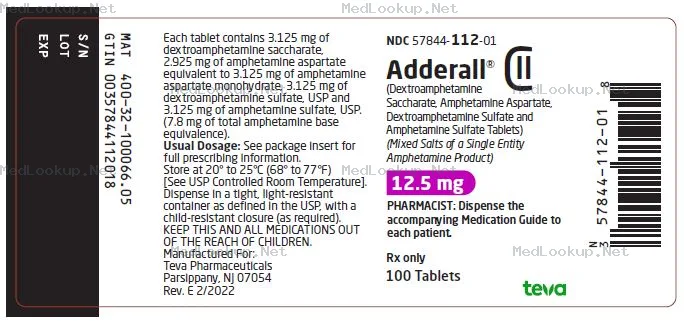
Adderall® CII (Dextroamphetamine Saccharate, Amphetamine Aspartate, Dextroamphetamine Sulfate and Amphetamine Sulfate Tablets is used for Adderall® (Dextroamphe…
Strength1.25 mg
Dosage formTABLET
ManufacturerTeva Pharmaceuticals Usa, Inc.
Registration number57844-105-01
Uses and indications
Adderall® (Dextroamphetamine saccharate, amphetamine aspartate, dextroamphetamine sulfate and amphetamine sulfate tablets (Mixed salts of a single entity amphetamine product)) is indicated for the treatment of Attention Deficit Hyperactivity Disorder (ADHD) and Narcolepsy.
Contraindications
In patients known to be hypersensitive to amphetamine, or other components of Adderall®. Hypersensitivity reactions such as angioedema and anaphylactic reactions have been reported in patients treated with other amphetamine products [see ADVERSE REACTIONS].Patients taking monoamine oxidase inhibitors (MAOIs), or within 14 days of stopping MAOIs (including MAOIs such as linezolid or intravenous methylene blue), because of an increased risk of hypertensive crisis [see WARNINGS and DRUG INTERACTIONS].
Side effects
Exacerbation of Preexisting PsychosisCNS stimulants may exacerbate symptoms of behavior disturbance and thought disorder in patients with a pre-existing psychotic disorder.Induction of a Manic Episode in Patients with Bipolar DisorderCNS stimulants may induce a manic or mixed episode in patients. Prior to initiating treatment, screen patients for risk factors for developing a manic episode (e.g., comorbid or history of depressive symptoms or a family history of suicide, bipolar disorder, or depression). New Psychotic or Manic SymptomsCNS stimulants, at recommended doses, may cause psychotic or manic symptoms (e.g., hallucinations, delusional thinking, or mania) in patients without a prior history of psychotic illness or mania. In a pooled analysis of multiple short-term, placebo-controlled studies of CNS stimulants, psychotic or manic symptoms occurred in approximately 0.1% of CNS stimulant-treated patients, compared with 0% of placebo-treated patients. If such symptoms occur, consider discontinuing Adderall®.
Advise patients that Adderall®, at recommended doses, can cause psychotic or manic symptoms, even in patients without prior history of psychotic symptoms or mania [see WARNINGS].
CardiovascularPalpitations, tachycardia, elevation of blood pressure, sudden death, myocardial infarction. There have been isolated reports of cardiomyopathy associated with chronic amphetamine use.Central Nervous SystemPsychotic episodes at recommended doses, overstimulation, restlessness, irritability, euphoria, dyskinesia, dysphoria, depression, tremor, motor and verbal tics, aggression, anger, logorrhea, dermatillomania.Eye DisordersVision blurred, mydriasis.GastrointestinalDryness of the mouth, unpleasant taste, diarrhea, constipation, intestinal ischemia, and other gastrointestinal disturbances. Anorexia and weight loss may occur as undesirable effects.AllergicUrticaria, rash, hypersensitivity reactions including angioedema and anaphylaxis. Serious skin rashes, including Stevens-Johnson syndrome and toxic epidermal necrolysis have been reported.EndocrineImpotence, changes in libido, frequent or prolonged erections.SkinAlopecia.MusculoskeletalRhabdomyolysis.To report SUSPECTED ADVERSE REACTIONS, contact Teva at 1-888-838-2872 or FDA at 1-800-FDA-1088 or www.fda.gov/medwatch.
Precautions
Abuse, Misuse, and AddictionAdderall® has a high potential for abuse and misuse. The use of Adderall® exposes individuals to the risks of abuse and misuse, which can lead to the development of a substance use disorder, including addiction. Adderall® can be diverted for non-medical use into illicit channels or distribution [see DRUG ABUSE AND DEPENDENCE: Abuse]. Misuse and abuse of CNS stimulants, including Adderall®, can result in overdose and death [see OVERDOSAGE], and this risk is increased with higher doses or unapproved methods of administration, such as snorting or injection.Before prescribing Adderall® assess each patient’s risk for abuse, misuse, and addiction. Educate patients and their families about these risks and proper disposal of any unused drug. Advise patients to store amphetamine sulfate in a safe place, preferably locked, and instruct patients to not give Adderall® to anyone else. Throughout Adderall® treatment, reassess each patient’s risk of abuse, misuse, and addiction and frequently monitor for signs and symptoms of abuse, misuse, and addiction.Risks to Patients with Serious Cardiac DiseaseSudden death has been reported in patients with structural cardiac abnormalities or other serious cardiac disease who were treated with CNS stimulant treatment at the recommended ADHD dosages.Avoid Adderall® use in patients with known structural cardiac abnormalities, cardiomyopathy, serious cardiac arrhythmia, coronary artery disease, or other serious cardiac disease.Increased Blood Pressure and Heart RateCNS stimulants cause an increase in blood pressure (mean increase about 2 to 4 mm Hg) and heart rate (mean increase about 3 to 6 bpm). Some patients may have larger increases. Monitor all Adderall®-treated patients for potential tachycardia and hypertension.Psychiatric Adverse ReactionsExacerbation of Preexisting PsychosisCNS stimulants may exacerbate symptoms of behavior disturbance and thought disorder in patients with a pre-existing psychotic disorder.Induction of a Manic Episode in Patients with Bipolar DisorderCNS stimulants may induce a manic or mixed episode in patients. Prior to initiating treatment, screen patients for risk factors for developing a manic episode (e.g., comorbid or history of depressive symptoms or a family history of suicide, bipolar disorder, or depression). New Psychotic or Manic SymptomsCNS stimulants, at recommended doses, may cause psychotic or manic symptoms (e.g., hallucinations, delusional thinking, or mania) in patients without a prior history of psychotic illness or mania. In a pooled analysis of multiple short-term, placebo-controlled studies of CNS stimulants, psychotic or manic symptoms occurred in approximately 0.1% of CNS stimulant-treated patients, compared with 0% of placebo-treated patients. If such symptoms occur, consider discontinuing Adderall®.Long-Term Suppression of Growth in Pediatric PatientsCNS stimulants have been associated with weight loss and slowing of growth rate in pediatric patients. Closely monitor growth (weight and height) in Adderall®-treated pediatric patients treated with CNS stimulants.Pediatric patients who are not growing or gaining weight as expected may need to have their treatment interrupted [see PRECAUTIONS, PEDIATRIC USE].SeizuresThere is some clinical evidence that stimulants may lower the convulsive threshold in patients with prior history of seizure, in patients with prior EEG abnormalities in absence of seizures, and very rarely, in patients without a history of seizures and no prior EEG evidence of seizures. In the presence of seizures, the drug should be discontinued.Peripheral Vasculopathy, Including Raynaud’s PhenomenonStimulants, including Adderall®, used to treat ADHD are associated with peripheral vasculopathy, including Raynaud’s phenomenon. Signs and symptoms are usually intermittent and mild; however, sequelae include digital ulceration and/or soft tissue breakdown. Effects of peripheral vasculopathy, including Raynaud’s phenomenon, were observed in postmarketing reports and at the therapeutic dosage of CNS stimulants in all age groups throughout the course of treatment. Signs and symptoms generally improved after dosage reduction or discontinuation of the CNS stimulant. Careful observation for digital changes is necessary during Adderall® treatment. Further clinical evaluation (e.g., rheumatology referral) may be appropriate for Adderall®-treated patients who develop signs or symptoms of peripheral vasculopathy.Serotonin SyndromeSerotonin syndrome, a potentially life-threatening reaction, may occur when amphetamines are used in combination with other drugs that affect the serotonergic neurotransmitter systems such as monoamine oxidase inhibitors (MAOIs), selective serotonin reuptake inhibitors (SSRIs), serotonin norepinephrine reuptake inhibitors (SNRIs), triptans, tricyclic antidepressants, fentanyl, lithium, tramadol, tryptophan, buspirone, and St. John’s Wort [see DRUG INTERACTIONS]. The coadministration with cytochrome P450 (CYP2D6) inhibitors increase the risk with increased exposure to Adderall®. In these situations, consider an alternative non-serotonergic drug or an alternative drug that does not inhibit CYP2D6 [see DRUG INTERACTIONS].Serotonin syndrome symptoms may include mental status changes (e.g., agitation, hallucinations, delirium, and coma), autonomic instability (e.g., tachycardia, labile blood pressure, dizziness, diaphoresis, flushing, hyperthermia), neuromuscular symptoms (e.g., tremor, rigidity, myoclonus, hyperreflexia, incoordination), seizures, and/or gastrointestinal symptoms (e.g., nausea, vomiting, diarrhea).Concomitant use of Adderall® with MAOI drugs is contraindicated [see CONTRAINDICATIONS].Discontinue treatment with Adderall® and any concomitant serotonergic agents immediately if the above symptoms occur, and initiate supportive symptomatic treatment. If concomitant use of Adderall® with other serotonergic drugs or CYP2D6 inhibitors is clinically warranted, initiate Adderall® with lower doses, monitor patients for the emergence of serotonin syndrome during drug initiation or titration, and inform patients of the increased risk for serotonin syndrome.Motor and Verbal Tics, and Worsening of Tourette’s SyndromeCNS stimulants, including amphetamine sulfate, have been associated with the onset or exacerbation of motor and verbal tics. Worsening of Tourette’s syndrome has also been reported. Before initiating Adderall®, assess the family history and clinically evaluate patients for tics or Tourette’s syndrome. Regularly monitor patients for the emergence or worsening of tics or Tourette’s syndrome with Adderall®, and discontinue treatment if clinically appropriate.
Information for PatientsAdvise the patient to read the FDA-approved patient labeling (Medication Guide).Abuse, Misuse, and AddictionEducate patients and their families about the risks of abuse, misuse, and addiction of Adderall®, which can lead to overdose and death, and proper disposal of any unused drug [see WARNINGS, DRUG ABUSE AND DEPENDENCE, OVERDOSAGE]. Advise patients to store Adderall® in a safe place, preferably locked, and instruct patients to not give Adderall® to anyone else.Risks to Patients with Serious Cardiac DiseaseAdvise patients that there are potential risks to patients with serious cardiac disease, including sudden death, with Adderall® use. Instruct patients to contact a healthcare provider immediately if they develop symptoms such as exertional chest pain, unexplained syncope, or other symptoms suggestive of cardiac disease [see WARNINGS].Increased Blood Pressure and Heart RateAdvise patients that Adderall® can elevate blood pressure and heart rate [see WARNINGS].Psychiatric Adverse ReactionsAdvise patients that Adderall®, at recommended doses, can cause psychotic or manic symptoms, even in patients without prior history of psychotic symptoms or mania [see WARNINGS].Long-Term Suppression of Growth in Pediatric PatientsAdvise patients that Adderall® may cause slowing of growth including weight loss [see WARNINGS].Circulation Problems in Fingers and Toes [Peripheral Vasculopathy, Including Raynaud’s Phenomenon]Instruct patients beginning treatment with Adderall® about the risk of peripheral vasculopathy, including Raynaud’s phenomenon, and associated signs and symptoms: fingers or toes may feel numb, cool, painful, and/or may change color from pale, to blue, to red.Instruct patients to report to their physician any new numbness, pain, skin color change, or sensitivity to temperature in fingers or toes.Instruct patients to call their physician immediately with any signs of unexplained wounds appearing on fingers or toes while taking Adderall®.Further clinical evaluation (e.g., rheumatology referral) may be appropriate for certain patients.Serotonin SyndromeCaution patients about the risk of serotonin syndrome with concomitant use of Adderall® and other serotonergic drugs including SSRIs, SNRIs, triptans, tricyclic antidepressants, fentanyl, lithium, tramadol, tryptophan, buspirone, St. John's Wort, and with drugs that impair metabolism of serotonin (in particular MAOIs, both those intended to treat psychiatric disorders and also others such as linezolid [see CONTRAINDICATIONS, WARNINGS, and DRUG INTERACTIONS]. Advise patients to contact their healthcare provider or report to the emergency room if they experience signs or symptoms of serotonin syndrome.Motor and Verbal Tics, and Worsening of Tourette’s SyndromeAdvise patients that motor and verbal tics and worsening of Tourette’s Syndrome may occur during treatment with Adderall®. Instruct the patients to notify their healthcare provider if emergence or worsening of tics or Tourette’s syndrome occurs [see WARNINGS].Drug InteractionsMAO InhibitorsConcomitant use of MAOIs and CNS stimulants can cause hypertensive crisis. Potential outcomes include death, stroke, myocardial infarction, aortic dissection, ophthalmological complications, eclampsia, pulmonary edema, and renal failure. Do not administer Adderall® concomitantly or within 14 days after discontinuing MAOI [see CONTRAINDICATIONS and WARNINGS].Serotonergic DrugsThe concomitant use of Adderall® and serotonergic drugs increases the risk of serotonin syndrome. Initiate with lower doses and monitor patients for signs and symptoms of serotonin syndrome, particularly during Adderall® initiation or dosage increase. If serotonin syndrome occurs, discontinue Adderall® and the concomitant serotonergic drug(s) [see WARNINGS and PRECAUTIONS].CYP2D6 InhibitorsThe concomitant use of Adderall® and CYP2D6 inhibitors may increase the exposure of Adderall® compared to the use of the drug alone and increase the risk of serotonin syndrome. Initiate with lower doses and monitor patients for signs and symptoms of serotonin syndrome particularly during Adderall® initiation and after a dosage increase. If serotonin syndrome occurs, discontinue Adderall® and the CYP2D6 inhibitor [see WARNINGS, OVERDOSAGE].Acidifying AgentsLower blood levels and efficacy of amphetamines. Increase dose based on clinical response. Examples of acidifying agents include gastrointestinal acidifying agents and urinary acidifying agents.Adrenergic BlockersAdrenergic blockers are inhibited by amphetamines.Alkalinizing AgentsIncrease blood levels and potentiate the action of amphetamine. Co-administration of Adderall® and gastrointestinal alkalinizing agents should be avoided. Examples of alkalinizing agents include gastrointestinal alkalinizing agents and urinary alkalinizing agents.Tricyclic AntidepressantsMay enhance the activity of tricyclic or sympathomimetic agents causing striking and sustained increases in the concentration of d-amphetamine in the brain; cardiovascular effects can be potentiated. Monitor frequently and adjust or use alternative therapy based on clinical response. AntihistaminesAmphetamines may counteract the sedative effect of antihistamines.AntihypertensivesAmphetamines may antagonize the hypotensive effects of antihypertensives.ChlorpromazineChlorpromazine blocks dopamine and norepinephrine receptors, thus inhibiting the central stimulant effects of amphetamines, and can be used to treat amphetamine poisoning.EthosuximideAmphetamines may delay intestinal absorption of ethosuximide.HaloperidolHaloperidol blocks dopamine receptors, thus inhibiting the central stimulant effects of amphetamines.Lithium CarbonateThe anorectic and stimulatory effects of amphetamines may be inhibited by lithium carbonate.MeperidineAmphetamines potentiate the analgesic effect of meperidine.Methenamine TherapyUrinary excretion of amphetamines is increased, and efficacy is reduced, by acidifying agents used in methenamine therapy.NorepinephrineAmphetamines enhance the adrenergic effect of norepinephrine.PhenobarbitalAmphetamines may delay intestinal absorption of phenobarbital; coadministration of phenobarbital may produce a synergistic anticonvulsant action.PhenytoinAmphetamines may delay intestinal absorption of phenytoin; coadministration of phenytoin may produce a synergistic anticonvulsant action.PropoxypheneIn cases of propoxyphene overdosage, amphetamine CNS stimulation is potentiated and fatal convulsions can occur.Proton Pump InhibitorsTime to maximum concentration (Tmax) of amphetamine is decreased compared to when administered alone. Monitor patients for changes in clinical effect and adjust therapy based on clinical response. An example of a proton pump inhibitor is omeprazole.Veratrum AlkaloidsAmphetamines inhibit the hypotensive effect of veratrum alkaloids.Drug/Laboratory Test InteractionsAmphetamines can cause a significant elevation in plasma corticosteroid levels. This increase is greatest in the evening. Amphetamines may interfere with urinary steroid determinations.Carcinogenesis/Mutagenesis and Impairment of FertilityNo evidence of carcinogenicity was found in studies in which d,l-amphetamine (enantiomer ratio of 1:1) was administered to mice and rats in the diet for 2 years at doses of up to 30 mg/kg/day in male mice, 19 mg/kg/day in female mice, and 5 mg/kg/day in male and female rats. These doses are approximately 2.4, 1.5, and 0.8 times, respectively, the maximum recommended human dose of 30 mg/day [child] on a mg/m2 body surface area basis.Amphetamine, in the enantiomer ratio present in Adderall® (immediate-release)(d- to l- ratio of 3:1), was not clastogenic in the mouse bone marrow micronucleus test in vivo and was negative when tested in the E. coli component of the Ames test in vitro. d, l-Amphetamine (1:1 enantiomer ratio) has been reported to produce a positive response in the mouse bone marrow micronucleus test, an equivocal response in the Ames test, and negative responses in the in vitro sister chromatid exchange and chromosomal aberration assays.Amphetamine, in the enantiomer ratio present in Adderall® (immediate-release)(d- to l- ratio of 3:1), did not adversely affect fertility or early embryonic development in the rat at doses of up to 20 mg/kg/day (approximately 5 times the maximum recommended human dose of 30 mg/day on a mg/m2 body surface area basis).PregnancyTeratogenic EffectsAmphetamine, in the enantiomer ratio present in Adderall® (d- to l- ratio of 3:1), had no apparent effects on embryofetal morphological development or survival when orally administered to pregnant rats and rabbits throughout the period of organogenesis at doses of up to 6 and 16 mg/kg/day, respectively. These doses are approximately 1.5 and 8 times, respectively, the maximum recommended human dose of 30 mg/day [child] on a mg/m2 body surface area basis. Fetal malformations and death have been reported in mice following parenteral administration of d-amphetamine doses of 50 mg/kg/day (approximately 6 times that of a human dose of 30 mg/day [child] on a mg/m2 basis) or greater to pregnant animals. Administration of these doses was also associated with severe maternal toxicity.A number of studies in rodents indicate that prenatal or early postnatal exposure to amphetamine (d- or d,l-), at doses similar to those used clinically, can result in long-term neurochemical and behavioral alterations. Reported behavioral effects include learning and memory deficits, altered locomotor activity, and changes in sexual function.There are no adequate and well-controlled studies in pregnant women. There has been one report of severe congenital bony deformity, tracheo-esophageal fistula, and anal atresia (vater association) in a baby born to a woman who took dextroamphetamine sulfate with lovastatin during the first trimester of pregnancy. Amphetamines should be used during pregnancy only if the potential benefit justifies the potential risk to the fetus.Nonteratogenic EffectsInfants born to mothers dependent on amphetamines have an increased risk of premature delivery and low birth weight. Also, these infants may experience symptoms of withdrawal as demonstrated by dysphoria, including agitation, and significant lassitude.Usage in Nursing MothersAmphetamines are excreted in human milk. Mothers taking amphetamines should be advised to refrain from nursing.Pediatric UseLong-term effects of amphetamines in children have not been well established. Amphetamines are not recommended for use in children under 3 years of age with Attention Deficit Hyperactivity Disorder described under INDICATIONS AND USAGE.Geriatric UseAdderall® has not been studied in the geriatric population.
Information for PatientsAdvise the patient to read the FDA-approved patient labeling (Medication Guide).Abuse, Misuse, and AddictionEducate patients and their families about the risks of abuse, misuse, and addiction of Adderall®, which can lead to overdose and death, and proper disposal of any unused drug [see WARNINGS, DRUG ABUSE AND DEPENDENCE, OVERDOSAGE]. Advise patients to store Adderall® in a safe place, preferably locked, and instruct patients to not give Adderall® to anyone else.Risks to Patients with Serious Cardiac DiseaseAdvise patients that there are potential risks to patients with serious cardiac disease, including sudden death, with Adderall® use. Instruct patients to contact a healthcare provider immediately if they develop symptoms such as exertional chest pain, unexplained syncope, or other symptoms suggestive of cardiac disease [see WARNINGS].Increased Blood Pressure and Heart RateAdvise patients that Adderall® can elevate blood pressure and heart rate [see WARNINGS].Psychiatric Adverse ReactionsAdvise patients that Adderall®, at recommended doses, can cause psychotic or manic symptoms, even in patients without prior history of psychotic symptoms or mania [see WARNINGS].Long-Term Suppression of Growth in Pediatric PatientsAdvise patients that Adderall® may cause slowing of growth including weight loss [see WARNINGS].Circulation Problems in Fingers and Toes [Peripheral Vasculopathy, Including Raynaud’s Phenomenon]Instruct patients beginning treatment with Adderall® about the risk of peripheral vasculopathy, including Raynaud’s phenomenon, and associated signs and symptoms: fingers or toes may feel numb, cool, painful, and/or may change color from pale, to blue, to red.Instruct patients to report to their physician any new numbness, pain, skin color change, or sensitivity to temperature in fingers or toes.Instruct patients to call their physician immediately with any signs of unexplained wounds appearing on fingers or toes while taking Adderall®.Further clinical evaluation (e.g., rheumatology referral) may be appropriate for certain patients.Serotonin SyndromeCaution patients about the risk of serotonin syndrome with concomitant use of Adderall® and other serotonergic drugs including SSRIs, SNRIs, triptans, tricyclic antidepressants, fentanyl, lithium, tramadol, tryptophan, buspirone, St. John's Wort, and with drugs that impair metabolism of serotonin (in particular MAOIs, both those intended to treat psychiatric disorders and also others such as linezolid [see CONTRAINDICATIONS, WARNINGS, and DRUG INTERACTIONS]. Advise patients to contact their healthcare provider or report to the emergency room if they experience signs or symptoms of serotonin syndrome.Motor and Verbal Tics, and Worsening of Tourette’s SyndromeAdvise patients that motor and verbal tics and worsening of Tourette’s Syndrome may occur during treatment with Adderall®. Instruct the patients to notify their healthcare provider if emergence or worsening of tics or Tourette’s syndrome occurs [see WARNINGS].Drug InteractionsMAO InhibitorsConcomitant use of MAOIs and CNS stimulants can cause hypertensive crisis. Potential outcomes include death, stroke, myocardial infarction, aortic dissection, ophthalmological complications, eclampsia, pulmonary edema, and renal failure. Do not administer Adderall® concomitantly or within 14 days after discontinuing MAOI [see CONTRAINDICATIONS and WARNINGS].Serotonergic DrugsThe concomitant use of Adderall® and serotonergic drugs increases the risk of serotonin syndrome. Initiate with lower doses and monitor patients for signs and symptoms of serotonin syndrome, particularly during Adderall® initiation or dosage increase. If serotonin syndrome occurs, discontinue Adderall® and the concomitant serotonergic drug(s) [see WARNINGS and PRECAUTIONS].CYP2D6 InhibitorsThe concomitant use of Adderall® and CYP2D6 inhibitors may increase the exposure of Adderall® compared to the use of the drug alone and increase the risk of serotonin syndrome. Initiate with lower doses and monitor patients for signs and symptoms of serotonin syndrome particularly during Adderall® initiation and after a dosage increase. If serotonin syndrome occurs, discontinue Adderall® and the CYP2D6 inhibitor [see WARNINGS, OVERDOSAGE].Acidifying AgentsLower blood levels and efficacy of amphetamines. Increase dose based on clinical response. Examples of acidifying agents include gastrointestinal acidifying agents and urinary acidifying agents.Adrenergic BlockersAdrenergic blockers are inhibited by amphetamines.Alkalinizing AgentsIncrease blood levels and potentiate the action of amphetamine. Co-administration of Adderall® and gastrointestinal alkalinizing agents should be avoided. Examples of alkalinizing agents include gastrointestinal alkalinizing agents and urinary alkalinizing agents.Tricyclic AntidepressantsMay enhance the activity of tricyclic or sympathomimetic agents causing striking and sustained increases in the concentration of d-amphetamine in the brain; cardiovascular effects can be potentiated. Monitor frequently and adjust or use alternative therapy based on clinical response. AntihistaminesAmphetamines may counteract the sedative effect of antihistamines.AntihypertensivesAmphetamines may antagonize the hypotensive effects of antihypertensives.ChlorpromazineChlorpromazine blocks dopamine and norepinephrine receptors, thus inhibiting the central stimulant effects of amphetamines, and can be used to treat amphetamine poisoning.EthosuximideAmphetamines may delay intestinal absorption of ethosuximide.HaloperidolHaloperidol blocks dopamine receptors, thus inhibiting the central stimulant effects of amphetamines.Lithium CarbonateThe anorectic and stimulatory effects of amphetamines may be inhibited by lithium carbonate.MeperidineAmphetamines potentiate the analgesic effect of meperidine.Methenamine TherapyUrinary excretion of amphetamines is increased, and efficacy is reduced, by acidifying agents used in methenamine therapy.NorepinephrineAmphetamines enhance the adrenergic effect of norepinephrine.PhenobarbitalAmphetamines may delay intestinal absorption of phenobarbital; coadministration of phenobarbital may produce a synergistic anticonvulsant action.PhenytoinAmphetamines may delay intestinal absorption of phenytoin; coadministration of phenytoin may produce a synergistic anticonvulsant action.PropoxypheneIn cases of propoxyphene overdosage, amphetamine CNS stimulation is potentiated and fatal convulsions can occur.Proton Pump InhibitorsTime to maximum concentration (Tmax) of amphetamine is decreased compared to when administered alone. Monitor patients for changes in clinical effect and adjust therapy based on clinical response. An example of a proton pump inhibitor is omeprazole.Veratrum AlkaloidsAmphetamines inhibit the hypotensive effect of veratrum alkaloids.Drug/Laboratory Test InteractionsAmphetamines can cause a significant elevation in plasma corticosteroid levels. This increase is greatest in the evening. Amphetamines may interfere with urinary steroid determinations.Carcinogenesis/Mutagenesis and Impairment of FertilityNo evidence of carcinogenicity was found in studies in which d,l-amphetamine (enantiomer ratio of 1:1) was administered to mice and rats in the diet for 2 years at doses of up to 30 mg/kg/day in male mice, 19 mg/kg/day in female mice, and 5 mg/kg/day in male and female rats. These doses are approximately 2.4, 1.5, and 0.8 times, respectively, the maximum recommended human dose of 30 mg/day [child] on a mg/m2 body surface area basis.Amphetamine, in the enantiomer ratio present in Adderall® (immediate-release)(d- to l- ratio of 3:1), was not clastogenic in the mouse bone marrow micronucleus test in vivo and was negative when tested in the E. coli component of the Ames test in vitro. d, l-Amphetamine (1:1 enantiomer ratio) has been reported to produce a positive response in the mouse bone marrow micronucleus test, an equivocal response in the Ames test, and negative responses in the in vitro sister chromatid exchange and chromosomal aberration assays.Amphetamine, in the enantiomer ratio present in Adderall® (immediate-release)(d- to l- ratio of 3:1), did not adversely affect fertility or early embryonic development in the rat at doses of up to 20 mg/kg/day (approximately 5 times the maximum recommended human dose of 30 mg/day on a mg/m2 body surface area basis).PregnancyTeratogenic EffectsAmphetamine, in the enantiomer ratio present in Adderall® (d- to l- ratio of 3:1), had no apparent effects on embryofetal morphological development or survival when orally administered to pregnant rats and rabbits throughout the period of organogenesis at doses of up to 6 and 16 mg/kg/day, respectively. These doses are approximately 1.5 and 8 times, respectively, the maximum recommended human dose of 30 mg/day [child] on a mg/m2 body surface area basis. Fetal malformations and death have been reported in mice following parenteral administration of d-amphetamine doses of 50 mg/kg/day (approximately 6 times that of a human dose of 30 mg/day [child] on a mg/m2 basis) or greater to pregnant animals. Administration of these doses was also associated with severe maternal toxicity.A number of studies in rodents indicate that prenatal or early postnatal exposure to amphetamine (d- or d,l-), at doses similar to those used clinically, can result in long-term neurochemical and behavioral alterations. Reported behavioral effects include learning and memory deficits, altered locomotor activity, and changes in sexual function.There are no adequate and well-controlled studies in pregnant women. There has been one report of severe congenital bony deformity, tracheo-esophageal fistula, and anal atresia (vater association) in a baby born to a woman who took dextroamphetamine sulfate with lovastatin during the first trimester of pregnancy. Amphetamines should be used during pregnancy only if the potential benefit justifies the potential risk to the fetus.Nonteratogenic EffectsInfants born to mothers dependent on amphetamines have an increased risk of premature delivery and low birth weight. Also, these infants may experience symptoms of withdrawal as demonstrated by dysphoria, including agitation, and significant lassitude.Usage in Nursing MothersAmphetamines are excreted in human milk. Mothers taking amphetamines should be advised to refrain from nursing.Pediatric UseLong-term effects of amphetamines in children have not been well established. Amphetamines are not recommended for use in children under 3 years of age with Attention Deficit Hyperactivity Disorder described under INDICATIONS AND USAGE.Geriatric UseAdderall® has not been studied in the geriatric population.
Dosage
Regardless of indication, amphetamines should be administered at the lowest effective dosage, and dosage should be individually adjusted according to the therapeutic needs and response of the patient. Late evening doses should be avoided because of the resulting insomnia.
Drug interactions
MAO InhibitorsConcomitant use of MAOIs and CNS stimulants can cause hypertensive crisis. Potential outcomes include death, stroke, myocardial infarction, aortic dissection, ophthalmological complications, eclampsia, pulmonary edema, and renal failure. Do not administer Adderall® concomitantly or within 14 days after discontinuing MAOI [see CONTRAINDICATIONS and WARNINGS].Serotonergic DrugsThe concomitant use of Adderall® and serotonergic drugs increases the risk of serotonin syndrome. Initiate with lower doses and monitor patients for signs and symptoms of serotonin syndrome, particularly during Adderall® initiation or dosage increase. If serotonin syndrome occurs, discontinue Adderall® and the concomitant serotonergic drug(s) [see WARNINGS and PRECAUTIONS].CYP2D6 InhibitorsThe concomitant use of Adderall® and CYP2D6 inhibitors may increase the exposure of Adderall® compared to the use of the drug alone and increase the risk of serotonin syndrome. Initiate with lower doses and monitor patients for signs and symptoms of serotonin syndrome particularly during Adderall® initiation and after a dosage increase. If serotonin syndrome occurs, discontinue Adderall® and the CYP2D6 inhibitor [see WARNINGS, OVERDOSAGE].Acidifying AgentsLower blood levels and efficacy of amphetamines. Increase dose based on clinical response. Examples of acidifying agents include gastrointestinal acidifying agents and urinary acidifying agents.Adrenergic BlockersAdrenergic blockers are inhibited by amphetamines.Alkalinizing AgentsIncrease blood levels and potentiate the action of amphetamine. Co-administration of Adderall® and gastrointestinal alkalinizing agents should be avoided. Examples of alkalinizing agents include gastrointestinal alkalinizing agents and urinary alkalinizing agents.Tricyclic AntidepressantsMay enhance the activity of tricyclic or sympathomimetic agents causing striking and sustained increases in the concentration of d-amphetamine in the brain; cardiovascular effects can be potentiated. Monitor frequently and adjust or use alternative therapy based on clinical response. AntihistaminesAmphetamines may counteract the sedative effect of antihistamines.AntihypertensivesAmphetamines may antagonize the hypotensive effects of antihypertensives.ChlorpromazineChlorpromazine blocks dopamine and norepinephrine receptors, thus inhibiting the central stimulant effects of amphetamines, and can be used to treat amphetamine poisoning.EthosuximideAmphetamines may delay intestinal absorption of ethosuximide.HaloperidolHaloperidol blocks dopamine receptors, thus inhibiting the central stimulant effects of amphetamines.Lithium CarbonateThe anorectic and stimulatory effects of amphetamines may be inhibited by lithium carbonate.MeperidineAmphetamines potentiate the analgesic effect of meperidine.Methenamine TherapyUrinary excretion of amphetamines is increased, and efficacy is reduced, by acidifying agents used in methenamine therapy.NorepinephrineAmphetamines enhance the adrenergic effect of norepinephrine.PhenobarbitalAmphetamines may delay intestinal absorption of phenobarbital; coadministration of phenobarbital may produce a synergistic anticonvulsant action.PhenytoinAmphetamines may delay intestinal absorption of phenytoin; coadministration of phenytoin may produce a synergistic anticonvulsant action.PropoxypheneIn cases of propoxyphene overdosage, amphetamine CNS stimulation is potentiated and fatal convulsions can occur.Proton Pump InhibitorsTime to maximum concentration (Tmax) of amphetamine is decreased compared to when administered alone. Monitor patients for changes in clinical effect and adjust therapy based on clinical response. An example of a proton pump inhibitor is omeprazole.Veratrum AlkaloidsAmphetamines inhibit the hypotensive effect of veratrum alkaloids.
Amphetamines can cause a significant elevation in plasma corticosteroid levels. This increase is greatest in the evening. Amphetamines may interfere with urinary steroid determinations.
Amphetamines can cause a significant elevation in plasma corticosteroid levels. This increase is greatest in the evening. Amphetamines may interfere with urinary steroid determinations.
References
Source: DailyMed, U.S. National Library of Medicine. Additional information compiled from online sources.
Important: The information on this page is provided for reference only and is not a substitute for diagnosis, prescribing, or treatment guidance from a doctor or pharmacist.