
Actos (Pioglitazone) Tablet [Takeda Pharmaceuticals America, Inc.]
1 images
These highlights do not include all the information needed to use ACTOS® safely and effectively. See full prescribing information for ACTOS.ACTOS: Monotherapy…
Active ingredients
Strength15 mg
Dosage formTABLET
ManufacturerTakeda Pharmaceuticals America, Inc.
Registration number64764-151-02
Uses and indications
Monotherapy and Combination TherapyACTOS is indicated as an adjunct to diet and exercise to improve glycemic control in adults with type 2 diabetes mellitus in multiple clinical settings [see Clinical Studies (14)].Important Limitations of UseACTOS exerts its antihyperglycemic effect only in the presence of endogenous insulin. ACTOS should not be used to treat type 1 diabetes or diabetic ketoacidosis, as it would not be effective in these settings.Use caution in patients with liver disease [see Warnings and Precautions (5.3)].
Contraindications
•Initiation in patients with established NYHA Class III or IV heart failure [see Boxed Warning].•Use in patients with known hypersensitivity to pioglitazone or any other component of ACTOS.
Side effects
The following serious adverse reactions are discussed elsewhere in the labeling:• Congestive heart failure [see Boxed Warning and Warnings and Precautions (5.1)] • Edema [see Warnings and Precautions (5.5) ] • Fractures [see Warnings and Precautions (5.6) ]
Precautions
•Congestive heart failure: Fluid retention may occur and can exacerbate or lead to congestive heart failure. Combination use with insulin and use in congestive heart failure NYHA Class I and II may increase risk. Monitor patients for signs and symptoms. (5.1)•Hypoglycemia: When used with insulin or an insulin secretagogue, a lower dose of the insulin or insulin secretagogue may be needed to reduce the risk of hypoglycemia. (5.2)•Hepatic effects: Postmarketing reports of hepatic failure, sometimes fatal. Causality cannot be excluded. If liver injury is detected, promptly interrupt ACTOS and assess patient for probable cause, then treat cause if possible, to resolution or stabilization. Do not restart ACTOS if liver injury is confirmed and no alternate etiology can be found. (5.3)•Bladder cancer: May increase the risk of bladder cancer. Do not use in patients with active bladder cancer. Use caution when using in patients with a prior history of bladder cancer. (5.4)•Edema: Dose-related edema may occur. (5.5)•Fractures: Increased incidence in female patients. Apply current standards of care for assessing and maintaining bone health. (5.6)•Macular edema: Postmarketing reports. Recommend regular eye exams in all patients with diabetes according to current standards of care with prompt evaluation for acute visual changes. (5.7)•Macrovascular outcomes: There have been no clinical studies establishing conclusive evidence of macrovascular risk reduction with ACTOS. (5.8)5.1 Congestive Heart FailureACTOS, like other thiazolidinediones, can cause dose-related fluid retention when used alone or in combination with other antidiabetic medications and is most common when ACTOS is used in combination with insulin. Fluid retention may lead to or exacerbate congestive heart failure. Patients should be observed for signs and symptoms of congestive heart failure. If congestive heart failure develops, it should be managed according to current standards of care and discontinuation or dose reduction of ACTOS must be considered [see Boxed Warning, Contraindications (4) , and Adverse Reactions (6.1)].5.2 HypoglycemiaPatients receiving ACTOS in combination with insulin or other antidiabetic medications (particularly insulin secretagogues such as sulfonylureas) may be at risk for hypoglycemia. A reduction in the dose of the concomitant antidiabetic medication may be necessary to reduce the risk of hypoglycemia [see Dosage and Administration (2.2) ].5.3 Hepatic EffectsThere have been postmarketing reports of fatal and non-fatal hepatic failure in patients taking ACTOS, although the reports contain insufficient information necessary to establish the probable cause. There has been no evidence of drug-induced hepatotoxicity in the ACTOS controlled clinical trial database to date [see Adverse Reactions (6.1)].Patients with type 2 diabetes may have fatty liver disease or cardiac disease with episodic congestive heart failure, both of which may cause liver test abnormalities, and they may also have other forms of liver disease, many of which can be treated or managed. Therefore, obtaining a liver test panel (serum alanine aminotransferase [ALT], aspartate aminotransferase [AST], alkaline phosphatase, and total bilirubin) and assessing the patient is recommended before initiating ACTOS therapy. In patients with abnormal liver tests, ACTOS should be initiated with caution.Measure liver tests promptly in patients who report symptoms that may indicate liver injury, including fatigue, anorexia, right upper abdominal discomfort, dark urine or jaundice. In this clinical context, if the patient is found to have abnormal liver tests (ALT greater than 3 times the upper limit of the reference range), ACTOS treatment should be interrupted and investigation done to establish the probable cause. ACTOS should not be restarted in these patients without another explanation for the liver test abnormalities.Patients who have serum ALT greater than three times the reference range with serum total bilirubin greater than two times the reference range without alternative etiologies are at risk for severe drug-induced liver injury, and should not be restarted on ACTOS. For patients with lesser elevations of serum ALT or bilirubin and with an alternate probable cause, treatment with ACTOS can be used with caution.5.4 Urinary Bladder TumorsTumors were observed in the urinary bladder of male rats in the two-year carcinogenicity study [see Nonclinical Toxicology (13.1)]. In addition, during the three year PROactive clinical trial, 14 patients out of 2605 (0.54%) randomized to ACTOS and 5 out of 2633 (0.19%) randomized to placebo were diagnosed with bladder cancer. After excluding patients in whom exposure to study drug was less than one year at the time of diagnosis of bladder cancer, there were 6 (0.23%) cases on ACTOS and two (0.08%) cases on placebo. After completion of the trial, a large subset of patients was observed for up to 10 additional years, with little additional exposure to ACTOS. During the 13 years of both PROactive and observational follow-up, the occurrence of bladder cancer did not differ between patients randomized to ACTOS or placebo (HR =1.00; [95% CI: 0.59−1.72]).Findings regarding the risk of bladder cancer in patients exposed to ACTOS vary among observational studies; some did not find an increased risk of bladder cancer associated with ACTOS, while others did.A large prospective10-year observational cohort study conducted in the United States found no statistically significant increase in the risk of bladder cancer in diabetic patients ever exposed to ACTOS, compared to those never exposed to ACTOS (HR =1.06 [95% CI 0.89−1.26]).A retrospective cohort study conducted with data from the United Kingdom found a statistically significant association between ever exposure to ACTOS and bladder cancer (HR: 1.63; [95% CI: 1.22−2.19]).Associations between cumulative dose or cumulative duration of exposure to ACTOS and bladder cancer were not detected in some studies including the 10-year observational study in the U.S., but were in others. Inconsistent findings and limitations inherent in these and other studies preclude conclusive interpretations of the observational data.ACTOS may be associated with an increase in the risk of urinary bladder tumors. There are insufficient data to determine whether pioglitazone is a tumor promoter for urinary bladder tumors. Consequently, ACTOS should not be used in patients with active bladder cancer and the benefits of glycemic control versus unknown risks for cancer recurrence with ACTOS should be considered in patients with a prior history of bladder cancer.5.5 EdemaIn controlled clinical trials, edema was reported more frequently in patients treated with ACTOS than in placebo-treated patients and is dose-related [see Adverse Reactions (6.1)]. In postmarketing experience, reports of new onset or worsening edema have been received.ACTOS should be used with caution in patients with edema. Because thiazolidinediones, including ACTOS, can cause fluid retention, which can exacerbate or lead to congestive heart failure, ACTOS should be used with caution in patients at risk for congestive heart failure. Patients treated with ACTOS should be monitored for signs and symptoms of congestive heart failure [see Boxed Warning, Warnings and Precautions (5.1) and Patient Counseling Information (17)].5.6 FracturesIn PROactive (the Prospective Pioglitazone Clinical Trial in Macrovascular Events), 5238 patients with type 2 diabetes and a history of macrovascular disease were randomized to ACTOS (N=2605), force-titrated up to 45 mg daily or placebo (N=2633) in addition to standard of care. During a mean follow-up of 34.5 months, the incidence of bone fracture in females was 5.1% (44/870) for ACTOS versus 2.5% (23/905) for placebo. This difference was noted after the first year of treatment and persisted during the course of the study. The majority of fractures observed in female patients were nonvertebral fractures including lower limb and distal upper limb. No increase in the incidence of fracture was observed in men treated with ACTOS (1.7%) versus placebo (2.1%). The risk of fracture should be considered in the care of patients, especially female patients, treated with ACTOS and attention should be given to assessing and maintaining bone health according to current standards of care.5.7 Macular EdemaMacular edema has been reported in postmarketing experience in diabetic patients who were taking ACTOS or another thiazolidinedione. Some patients presented with blurred vision or decreased visual acuity, but others were diagnosed on routine ophthalmologic examination.Most patients had peripheral edema at the time macular edema was diagnosed. Some patients had improvement in their macular edema after discontinuation of the thiazolidinedione.Patients with diabetes should have regular eye exams by an ophthalmologist according to current standards of care. Patients with diabetes who report any visual symptoms should be promptly referred to an ophthalmologist, regardless of the patient's underlying medications or other physical findings [see Adverse Reactions (6.1)].5.8 Macrovascular OutcomesThere have been no clinical studies establishing conclusive evidence of macrovascular risk reduction with ACTOS.
Dosage
•Initiate ACTOS at 15 mg or 30 mg once daily. Limit initial dose to 15 mg once daily in patients with NYHA Class I or II heart failure. (2.1)•If there is inadequate glycemic control, the dose can be increased in 15 mg increments up to a maximum of 45 mg once daily. (2.1)•Obtain liver tests before starting ACTOS. If abnormal, use caution when treating with ACTOS, investigate the probable cause, treat (if possible) and follow appropriately. Monitoring liver tests while on ACTOS is not recommended in patients without liver disease. (5.3)2.1 Recommendations for All PatientsACTOS should be taken once daily and can be taken without regard to meals.The recommended starting dose for patients without congestive heart failure is 15 mg or 30 mg once daily.The recommended starting dose for patients with congestive heart failure (NYHA Class I or II) is 15 mg once daily.The dose can be titrated in increments of 15 mg up to a maximum of 45 mg once daily based on glycemic response as determined by HbA1c.After initiation of ACTOS or with dose increase, monitor patients carefully for adverse reactions related to fluid retention such as weight gain, edema, and signs and symptoms of congestive heart failure [see Boxed Warning and Warnings and Precautions (5.5) ].Liver tests (serum alanine and aspartate aminotransferases, alkaline phosphatase, and total bilirubin) should be obtained prior to initiating ACTOS. Routine periodic monitoring of liver tests during treatment with ACTOS is not recommended in patients without liver disease. Patients who have liver test abnormalities prior to initiation of ACTOS or who are found to have abnormal liver tests while taking ACTOS should be managed as described under Warnings and Precautions [see Warnings and Precautions (5.3) and Clinical Pharmacology (12.3)].2.2 Concomitant Use with an Insulin Secretagogue or InsulinIf hypoglycemia occurs in a patient co-administered ACTOS and an insulin secretagogue (e.g., sulfonylurea), the dose of the insulin secretagogue should be reduced.If hypoglycemia occurs in a patient co-administered ACTOS and insulin, the dose of insulin should be decreased by 10% to 25%. Further adjustments to the insulin dose should be individualized based on glycemic response.2.3 Concomitant Use with Strong CYP2C8 InhibitorsCoadministration of ACTOS and gemfibrozil, a strong CYP2C8 inhibitor, increases pioglitazone exposure approximately 3-fold. Therefore, the maximum recommended dose of ACTOS is 15 mg daily when used in combination with gemfibrozil or other strong CYP2C8 inhibitors [see Drug Interactions (7.1) and Clinical Pharmacology (12.3)].
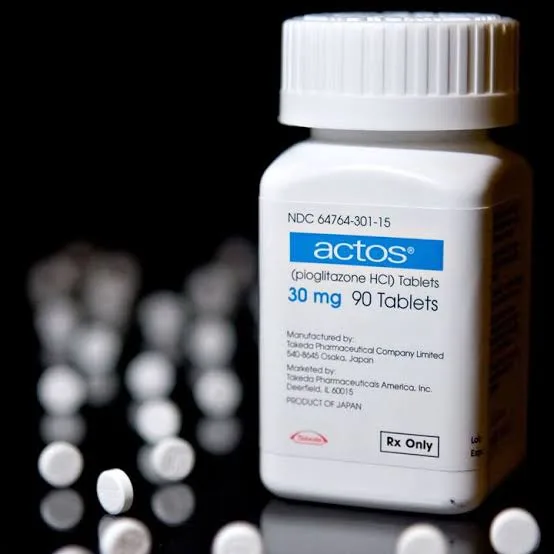
Round tablet contains pioglitazone as follows:•15 mg: White to off-white, debossed with "ACTOS" on one side and "15" on the other•30 mg: White to off-white, debossed with "ACTOS" on one side and "30" on the other•45 mg: White to off-white, debossed with "ACTOS" on one side and "45" on the other
Round tablet contains pioglitazone as follows:•15 mg: White to off-white, debossed with "ACTOS" on one side and "15" on the other•30 mg: White to off-white, debossed with "ACTOS" on one side and "30" on the other•45 mg: White to off-white, debossed with "ACTOS" on one side and "45" on the other
Drug interactions
•Strong CYP2C8 inhibitors (e.g., gemfibrozil) increase pioglitazone concentrations. Limit ACTOS dose to 15 mg daily. (2.3, 7.1)•CYP2C8 inducers (e.g., rifampin) may decrease pioglitazone concentrations. (7.2)•Topiramate may decrease pioglitazone concentrations. (7.3)7.1 Strong CYP2C8 InhibitorsAn inhibitor of CYP2C8 (e.g., gemfibrozil) significantly increases the exposure (area under the serum concentration-time curve or AUC) and half-life (t1/2) of pioglitazone. Therefore, the maximum recommended dose of ACTOS is 15 mg daily if used in combination with gemfibrozil or other strong CYP2C8 inhibitors [see Dosage and Administration (2.3) and Clinical Pharmacology (12.3)]. 7.2 CYP2C8 InducersAn inducer of CYP2C8 (e.g., rifampin) may significantly decrease the exposure (AUC) of pioglitazone. Therefore, if an inducer of CYP2C8 is started or stopped during treatment with ACTOS, changes in diabetes treatment may be needed based on clinical response without exceeding the maximum recommended daily dose of 45 mg for ACTOS [see Clinical Pharmacology (12.3)].7.3 TopiramateA decrease in the exposure of pioglitazone and its active metabolites were noted with concomitant administration of pioglitazone and topiramate [see Clinical Pharmacology (12.3)]. The clinical relevance of this decrease is unknown; however, when ACTOS and topiramate are used concomitantly, monitor patients for adequate glycemic control.
References
Source: DailyMed, U.S. National Library of Medicine. Additional information compiled from online sources.
Important: The information on this page is provided for reference only and is not a substitute for diagnosis, prescribing, or treatment guidance from a doctor or pharmacist.