
Abiraterone Acetate Tablet
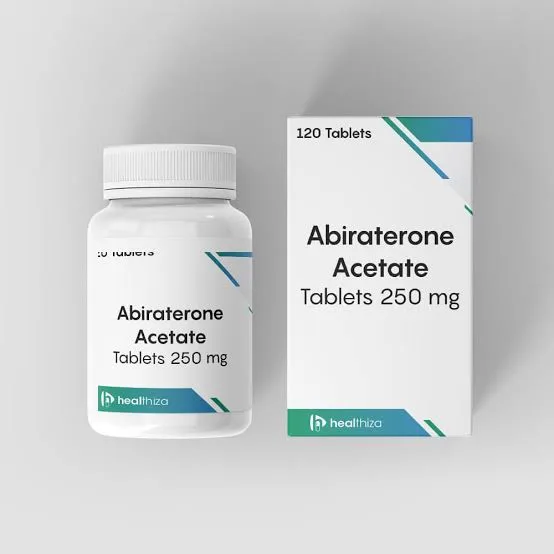
1 images
These highlights do not include all the information needed to use ABIRATERONE ACETATE TABLETS safely and effectively. See full prescribing information for ABIRATERONE ACETATE TABLETS. ABIRATERONE ACETATE tablets, for oral use Ini…
Active ingredients
Drug classMiscellaneous antineoplastics
Strength250 mg
Dosage formTABLET
Registration number60219-1165-7
Uses and indications
Abiraterone acetate tablets are indicated in combination with prednisone for the treatment of patients with
• Metastatic castration-resistant prostate cancer (CRPC)
• Metastatic high-risk castration-sensitive prostate cancer (CSPC)
Contraindications
None.
Side effects
Abiraterone acetate may cause hypertension, hypokalemia, and fluid retention as a consequence of increased mineralocorticoid levels resulting from CYP17 inhibition [see Clinical Pharmacology (12.1)] . Monitor patients for hypertension, hypokalemia, and fluid retention at least…
Abiraterone acetate may cause hypertension, hypokalemia, and fluid retention as a consequence of increased mineralocorticoid levels resulting from CYP17 inhibition
[see Clinical Pharmacology (12.1)]
. Monitor patients for hypertension, hypokalemia, and fluid retention at least once a month. Control hypertension and correct hypokalemia before and during treatment with abiraterone acetate.
In the combined data from 4 placebo-controlled trials using prednisone 5 mg twice daily in combination with 1,000 mg abiraterone acetate daily, grades 3 to 4 hypokalemia were detected in 4% of patients on the abiraterone acetate arm and 2% of patients on the placebo arm. Grades 3 to 4 hypertension were observed in 2% of patients each arm and grades 3 to 4 fluid retention in 1% of patients each arm.
In LATITUDE (a randomized placebo-controlled, multicenter clinical trial), which used prednisone 5 mg daily in combination with 1,000 mg abiraterone acetate daily, grades 3 to 4 hypokalemia were detected in 10% of patients on the abiraterone acetate arm and 1% of patients on the placebo arm, grades 3 to 4 hypertension were observed in 20% of patients on the abiraterone acetate arm and 10% of patients on the placebo arm. Grades 3 to 4 fluid retention occurred in 1% of patients each arm
[see Adverse Reactions (6)]
.
Closely monitor patients whose underlying medical conditions might be compromised by increases in blood pressure, hypokalemia or fluid retention, such as those with heart failure, recent myocardial infarction, cardiovascular disease, or ventricular arrhythmia. In postmarketing experience, QT prolongation and Torsades de Pointes have been observed in patients who develop hypokalemia while taking abiraterone acetate.
The safety of abiraterone acetate in patients with left ventricular ejection fraction <50% or New York Heart Association (NYHA) Class III or IV heart failure (in COU-AA-301) or NYHA Class II to IV heart failure (in COU-AA-302 and LATITUDE) has not been established because these patients were excluded from these randomized clinical trials
[see Clinical Studies (14)]
.
The following are discussed in more detail in other sections of the labeling: • Hypokalemia, Fluid Retention, and Cardiovascular Adverse Reactions due to Mineralocorticoid Excess
[see Warnings and Precautions (5.1)]
.
• Adrenocortical Insufficiency
[see Warnings and Precautions (5.2)]
.
• Hepatotoxicity
[see Warnings and Precautions (5.3)]
.
• Increased Fractures and Mortality in Combination with Radium Ra 223 Dichloride
[see Warnings and Precautions (5.4)]
.
Precautions
• Mineralocorticoid excess: Closely monitor patients with cardiovascular disease. Control hypertension and correct hypokalemia before treatment. Monitor blood pressure, serum potassium and symptoms of fluid retention at least monthly. (5.1) • Adrenocortical insufficiency…
• Mineralocorticoid excess: Closely monitor patients with cardiovascular disease. Control hypertension and correct hypokalemia before treatment. Monitor blood pressure, serum potassium and symptoms of fluid retention at least monthly. (5.1)
• Adrenocortical insufficiency: Monitor for symptoms and signs of adrenocortical insufficiency. Increased dosage of corticosteroids may be indicated before, during and after stressful situations. (5.2)
• Hepatotoxicity: Can be severe and fatal. Monitor liver function and modify, interrupt, or discontinue abiraterone acetate dosing as recommended. (5.3)
• Increased fractures and mortality in combination with radium Ra 223 dichloride: Use of abiraterone acetate plus prednisone/prednisolone in combination with radium Ra 223 dichloride is not recommended. (5.4)
• Embryo-Fetal Toxicity: Abiraterone acetate can cause fetal harm. Advise males with female partners of reproductive potential to use effective contraception. (5.5, 8.1, 8.3)
• Hypoglycemia: Severe hypoglycemia has been reported in patients with pre-existing diabetes who are taking medications containing thiazolidinediones (including pioglitazone) or repaglinide. Monitor blood glucose in patients with diabetes and assess if antidiabetic agent dose modifications are required. (5.6) 5.1 Hypokalemia, Fluid Retention, and Cardiovascular
Adverse Reactions due to Mineralocorticoid Excess
Abiraterone acetate may cause hypertension, hypokalemia, and fluid retention as a consequence of increased mineralocorticoid levels resulting from CYP17 inhibition
[see Clinical Pharmacology (12.1)]
. Monitor patients for hypertension, hypokalemia, and fluid retention at least once a month. Control hypertension and correct hypokalemia before and during treatment with abiraterone acetate.
In the combined data from 4 placebo-controlled trials using prednisone 5 mg twice daily in combination with 1,000 mg abiraterone acetate daily, grades 3 to 4 hypokalemia were detected in 4% of patients on the abiraterone acetate arm and 2% of patients on the placebo arm. Grades 3 to 4 hypertension were observed in 2% of patients each arm and grades 3 to 4 fluid retention in 1% of patients each arm.
In LATITUDE (a randomized placebo-controlled, multicenter clinical trial), which used prednisone 5 mg daily in combination with 1,000 mg abiraterone acetate daily, grades 3 to 4 hypokalemia were detected in 10% of patients on the abiraterone acetate arm and 1% of patients on the placebo arm, grades 3 to 4 hypertension were observed in 20% of patients on the abiraterone acetate arm and 10% of patients on the placebo arm. Grades 3 to 4 fluid retention occurred in 1% of patients each arm
[see Adverse Reactions (6)]
.
Closely monitor patients whose underlying medical conditions might be compromised by increases in blood pressure, hypokalemia or fluid retention, such as those with heart failure, recent myocardial infarction, cardiovascular disease, or ventricular arrhythmia. In postmarketing experience, QT prolongation and Torsades de Pointes have been observed in patients who develop hypokalemia while taking abiraterone acetate.
The safety of abiraterone acetate in patients with left ventricular ejection fraction <50% or New York Heart Association (NYHA) Class III or IV heart failure (in COU-AA-301) or NYHA Class II to IV heart failure (in COU-AA-302 and LATITUDE) has not been established because these patients were excluded from these randomized clinical trials
[see Clinical Studies (14)]
. 5.2 Adrenocortical Insufficiency
Adrenal insufficiency occurred in 0.3% of 2,230 patients taking abiraterone acetate and in 0.1% of 1,763 patients taking placebo in the combined data of the 5 randomized, placebo-controlled clinical studies. Adrenocortical insufficiency was reported in patients receiving abiraterone acetate in combination with prednisone, following interruption of daily steroids and/or with concurrent infection or stress.
Monitor patients for symptoms and signs of adrenocortical insufficiency, particularly if patients are withdrawn from prednisone, have prednisone dose reductions, or experience unusual stress. Symptoms and signs of adrenocortical insufficiency may be masked by adverse reactions associated with mineralocorticoid excess seen in patients treated with abiraterone acetate. If clinically indicated, perform appropriate tests to confirm the diagnosis of adrenocortical insufficiency. Increased dosage of corticosteroids may be indicated before, during and after stressful situations
[see Warnings and Precautions (5.1)]
. 5.3 Hepatotoxicity
In postmarketing experience, there have been abiraterone acetate-associated severe hepatic toxicity, including fulminant hepatitis, acute liver failure and deaths
[see Adverse Reactions (6.2)]
.
In the combined data of 5 randomized clinical trials, grade 3 to 4 ALT or AST increases (at least 5 x ULN) were reported in 6% of 2,230 patients who received abiraterone acetate, typically during the first 3 months after starting treatment. Patients whose baseline ALT or AST were elevated were more likely to experience liver test elevation than those beginning with normal values. Treatment discontinuation due to ALT and AST increases or abnormal hepatic function occurred in 1.1% of 2,230 patients taking abiraterone acetate. In these clinical trials, no deaths clearly related to abiraterone acetate were reported due to hepatotoxicity events.
Measure serum transaminases (ALT and AST) and bilirubin levels prior to starting treatment with abiraterone acetate, every two weeks for the first three months of treatment and monthly thereafter. In patients with baseline moderate hepatic impairment receiving a reduced abiraterone acetate dose of 250 mg, measure ALT, AST, and bilirubin prior to the start of treatment, every week for the first month, every two weeks for the following two months of treatment and monthly thereafter. Promptly measure serum total bilirubin, AST, and ALT if clinical symptoms or signs suggestive of hepatotoxicity develop. Elevations of AST, ALT, or bilirubin from the patient’s baseline should prompt more frequent monitoring. If at any time AST or ALT rise above five times the ULN, or the bilirubin rises above three times the ULN, interrupt abiraterone acetate treatment and closely monitor liver function.
Re-treatment with abiraterone acetate at a reduced dose level may take place only after return of liver function tests to the patient’s baseline or to AST and ALT less than or equal to 2.5 x ULN and total bilirubin less than or equal to 1.5 x ULN
[see Dosage and Administration (2.4)]
.
Permanently discontinue abiraterone acetate for patients who develop a concurrent elevation of ALT greater than 3 x ULN and total bilirubin greater than 2 x ULN in the absence of biliary obstruction or other causes responsible for the concurrent elevation
[see Dosage and Administration (2.4)]
.
The safety of abiraterone acetate re-treatment of patients who develop AST or ALT greater than or equal to 20 x ULN and/or bilirubin greater than or equal to 10 x ULN is unknown. 5.4 Increased
Fractures and Mortality in Combination with Radium Ra 223 Dichloride
Abiraterone acetate plus prednisone/prednisolone is not recommended for use in combination with radium Ra 223 dichloride outside of clinical trials.
The clinical efficacy and safety of concurrent initiation of abiraterone acetate plus prednisone/prednisolone and radium Ra 223 dichloride was assessed in a randomized, placebo-controlled multicenter study (ERA-223 trial) in 806 patients with asymptomatic or mildly symptomatic castration-resistant prostate cancer with bone metastases. The study was unblinded early based on an Independent Data Monitoring Committee recommendation.
At the primary analysis, increased incidences of fractures (28.6% vs 11.4%) and deaths (38.5% vs 35.5%) have been observed in patients who received abiraterone acetate plus prednisone/prednisolone in combination with radium Ra 223 dichloride compared to patients who received placebo in combination with abiraterone acetate plus prednisone/prednisolone. 5.5 Embryo-Fetal
Toxicity
The safety and efficacy of abiraterone acetate have not been established in females. Based on animal reproductive studies and mechanism of action, abiraterone acetate can cause fetal harm and loss of pregnancy when administered to a pregnant female. In animal reproduction studies, oral administration of abiraterone acetate to pregnant rats during organogenesis caused adverse developmental effects at maternal exposures approximately ≥ 0.03 times the human exposure (AUC) at the recommended dose. Advise males with female partners of reproductive potential to use effective contraception during treatment with abiraterone acetate and for 3 weeks after the last dose of abiraterone acetate
[see Use in Specific Populations (8.1, 8.3)]
. Abiraterone acetate should not be handled by females who are or may become pregnant
[see How Supplied/Storage and Handling (16)]
. 5.6 Hypoglycemia
Severe hypoglycemia has been reported when abiraterone acetate was administered to patients with pre-existing diabetes receiving medications containing thiazolidinediones (including pioglitazone) or repaglinide
[see Drug Interactions (7.2)]
. Monitor blood glucose in patients with diabetes during and after discontinuation of treatment with abiraterone acetate. Assess if antidiabetic drug dosage needs to be adjusted to minimize the risk of hypoglycemia.
Dosage
Metastatic castration-resistant prostate cancer: • Abiraterone acetate tablets 1,000 mg orally once daily with prednisone 5 mg orally twice daily. (2.1) Metastatic castration-sensitive prostate cancer: • Abiraterone acetate tablets 1,000 mg orally once daily with prednisone 5 mg…
Metastatic castration-resistant prostate cancer: • Abiraterone acetate tablets 1,000 mg orally once daily with prednisone 5 mg orally
twice
daily. (2.1)
Metastatic castration-sensitive prostate cancer: • Abiraterone acetate tablets 1,000 mg orally once daily with prednisone 5 mg orally
once
daily. (2.2)
Patients receiving abiraterone acetate tablets should also receive a gonadotropin-releasing hormone (GnRH) analog concurrently or should have had bilateral orchiectomy. Abiraterone acetate tablets must be taken as a single dose once daily on an empty stomach. Do not eat food 2 hours before and 1 hour after taking abiraterone acetate tablets. The tablets must be swallowed whole with water. Do not crush or chew tablets. (2.3)
Dose Modification: • For patients with baseline moderate hepatic impairment (Child-Pugh Class B), reduce the abiraterone acetate tablets starting dose to 250 mg once daily. (2.4)
• For patients who develop hepatotoxicity during treatment, hold abiraterone acetate tablets until recovery. Retreatment may be initiated at a reduced dose. Abiraterone acetate tablets should be discontinued if patients develop severe hepatotoxicity. (2.4) 2.1 Recommended Dose for Metastatic CRPC
The recommended dose of abiraterone acetate tablets is 1,000 mg (two 500 mg tablets or four 250 mg tablets) orally once daily with prednisone 5 mg orally
twice
daily. 2.2 Recommended Dose for
Metastatic High-risk CSPC
The recommended dose of abiraterone acetate tablets is 1,000 mg (two 500 mg tablets or four 250 mg tablets) orally once daily with prednisone 5 mg administered orally
once
daily. 2.3 Important Administration Instructions
Patients receiving abiraterone acetate tablets should also receive a gonadotropin-releasing hormone (GnRH) analog concurrently or should have had bilateral orchiectomy.
Abiraterone acetate tablets must be taken as a single dose once daily on an empty stomach. Do not eat food 2 hours before and 1 hour after taking abiraterone acetate tablets. The tablets must be swallowed whole with water. Do not crush or chew tablets. 2.4 Dose Modification Guidelines in Hepatic Impairment and Hepatotoxicity
Hepatic Impairment
In patients with baseline moderate hepatic impairment (Child-Pugh Class B), reduce the recommended dose of abiraterone acetate tablets to 250 mg once daily. In patients with moderate hepatic impairment monitor ALT, AST, and bilirubin prior to the start of treatment, every week for the first month, every two weeks for the following two months of treatment and monthly thereafter. If elevations in ALT and/or AST greater than 5 x upper limit of normal (ULN) or total bilirubin greater than 3 x ULN occur in patients with baseline moderate hepatic impairment, discontinue abiraterone acetate tablets and do not re-treat patients with abiraterone acetate tablets
[see Use in Specific Populations (8.6)
and
Clinical Pharmacology (12.3)]
.
Do not use abiraterone acetate tablets in patients with baseline severe hepatic impairment (Child-Pugh Class C).
Hepatotoxicity
For patients who develop hepatotoxicity during treatment with abiraterone acetate tablets (ALT and/or AST greater than 5 x ULN or total bilirubin greater than 3 x ULN), interrupt treatment with abiraterone acetate tablets
[see Warnings and Precautions (5.3)]
. Treatment may be restarted at a reduced dose of 750 mg once daily following return of liver function tests to the patient’s baseline or to AST and ALT less than or equal to 2.5 x ULN and total bilirubin less than or equal to 1.5 x ULN. For patients who resume treatment, monitor serum transaminases and bilirubin at a minimum of every two weeks for three months and monthly thereafter.
If hepatotoxicity recurs at the dose of 750 mg once daily, re-treatment may be restarted at a reduced dose of 500 mg once daily following return of liver function tests to the patient’s baseline or to AST and ALT less than or equal to 2.5 x ULN and total bilirubin less than or equal to 1.5 x ULN.
If hepatotoxicity recurs at the reduced dose of 500 mg once daily, discontinue treatment with abiraterone acetate tablets. Permanently discontinue abiraterone acetate tablets for patients who develop a concurrent elevation of ALT greater than 3 x ULN and total bilirubin greater than 2 x ULN in the absence of biliary obstruction or other causes responsible for the concurrent elevation
[see Warnings and Precautions (5.3)]
. 2.5 Dose Modification Guidelines for Strong CYP3A4 Inducers
Avoid concomitant strong CYP3A4 inducers (e.g., phenytoin, carbamazepine, rifampin, rifabutin, rifapentine, phenobarbital) during abiraterone acetate tablets treatment.
If a strong CYP3A4 inducer must be co-administered, increase the abiraterone acetate tablets dosing frequency to twice a day only during the co-administration period (e.g., from 1,000 mg once daily to 1,000 mg twice a day). Reduce the dose back to the previous dose and frequency, if the concomitant strong CYP3A4 inducer is discontinued
[see Drug Interactions (7.1)
and
Clinical Pharmacology (12.3)]
.
Abiraterone acetate tablets USP, 250 mg are white to off-white, oval-shaped, uncoated tablets debossed with “AN65” on one side and plain on the other side.
Abiraterone acetate tablets USP, 500 mg are purple, oval-shaped, film-coated tablets debossed with “1754” on one side and plain on the other side.
Drug interactions
• CYP3A4 Inducers: Avoid concomitant strong CYP3A4 inducers during abiraterone acetate tablets treatment. If a strong CYP3A4 inducer must be co-administered, increase the abiraterone acetate tablets dosing frequency. (2.5, 7.1) • CYP2D6 Substrates: Avoid co-administration of…
• CYP3A4 Inducers: Avoid concomitant strong CYP3A4 inducers during abiraterone acetate tablets treatment. If a strong CYP3A4 inducer must be co-administered, increase the abiraterone acetate tablets dosing frequency. (2.5, 7.1)
• CYP2D6 Substrates: Avoid co-administration of abiraterone acetate tablets with CYP2D6 substrates that have a narrow therapeutic index. If an alternative treatment cannot be used, exercise caution and consider a dose reduction of the concomitant CYP2D6 substrate. (7.2) 7.1 Drugs that Inhibit or Induce CYP3A4 Enzymes
Based on
in vitro
data, abiraterone acetate is a substrate of CYP3A4.
In a dedicated drug interaction trial, co-administration of rifampin, a strong CYP3A4 inducer, decreased exposure of abiraterone by 55%. Avoid concomitant strong CYP3A4 inducers during abiraterone acetate treatment. If a strong CYP3A4 inducer must be co-administered, increase the abiraterone acetate dosing frequency
[see Dosage and Administration (2.5)
and
Clinical Pharmacology (12.3)]
.
In a dedicated drug interaction trial, co-administration of ketoconazole, a strong inhibitor of CYP3A4, had no clinically meaningful effect on the pharmacokinetics of abiraterone
[see Clinical Pharmacology (12.3)]
. 7.2 Effects of Abiraterone on Drug Metabolizing Enzymes
Abiraterone acetate is an inhibitor of the hepatic drug-metabolizing enzymes CYP2D6 and CYP2C8. In a CYP2D6 drug-drug interaction trial, the Cmax and AUC of dextromethorphan (CYP2D6 substrate) were increased 2.8- and 2.9-fold, respectively, when dextromethorphan was given with abiraterone acetate 1,000 mg daily and prednisone 5 mg twice daily. Avoid co-administration of abiraterone acetate with substrates of CYP2D6 with a narrow therapeutic index (e.g., thioridazine). If alternative treatments cannot be used, consider a dose reduction of the concomitant CYP2D6 substrate drug
[see Clinical Pharmacology (12.3)]
.
In a CYP2C8 drug-drug interaction trial in healthy subjects, the AUC of pioglitazone (CYP2C8 substrate) was increased by 46% when pioglitazone was given together with a single dose of 1,000 mg abiraterone acetate. Therefore, patients should be monitored closely for signs of toxicity related to a CYP2C8 substrate with a narrow therapeutic index if used concomitantly with abiraterone acetate
[see Clinical Pharmacology (12.3)
and
Warnings and Precautions (5.6)
]
.
References
Source: DailyMed, U.S. National Library of Medicine. Additional information compiled from online sources.
Important: The information on this page is provided for reference only and is not a substitute for diagnosis, prescribing, or treatment guidance from a doctor or pharmacist.
Noticed an error or something unclear on this page?